

The everyday language around batteries has settled into something convenient: we “charge” them, they “run out,” we “top them up” when we can. The underlying image is a tank, or perhaps a reservoir: electricity poured in through the top, drawn out through the bottom, the quantity diminishing until it reaches empty. It is a useful metaphor for predicting how a device will behave. It is not what the battery is doing.
A battery does not store electricity. It stores chemical energy, held in two materials whose molecular structure places them at different electrochemical potentials, creating a system that wants to resolve the imbalance. When you connect a device and complete the circuit, you are not opening a tap on stored electrical fluid. You are initiating a chemical reaction. The electricity your phone uses is the by-product of that reaction, released as the battery’s materials transform.
The tank model predicts battery behaviour well under normal conditions and fails exactly when you need to understand it most: why batteries degrade, why cold temperatures reduce range, why certain charging patterns damage cells faster than others, why a battery can show full charge on a voltage gauge and still be unable to deliver current on demand.
What a battery actually contains
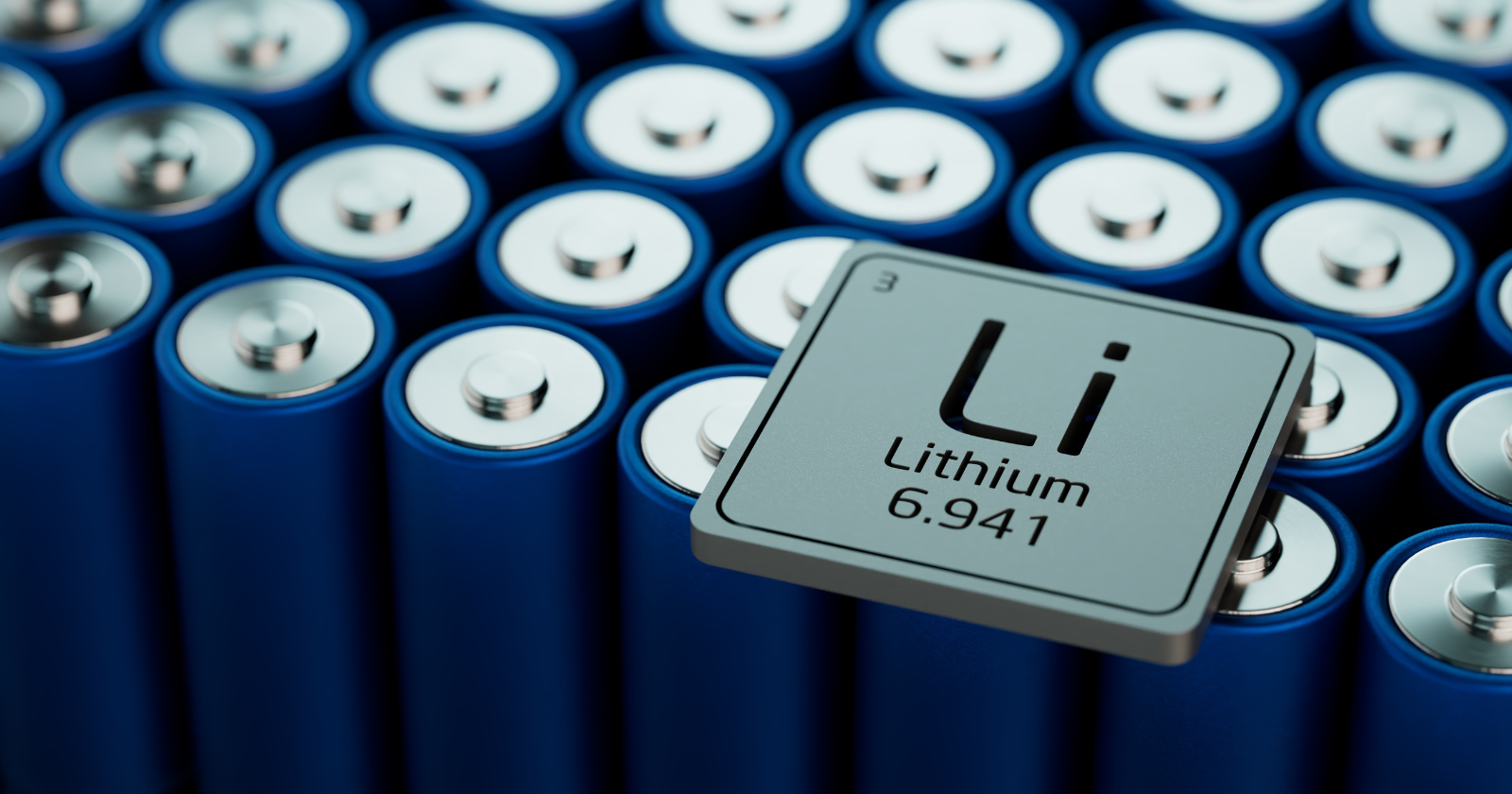
A lithium-ion cell, the kind in most phones, laptops, and electric vehicles, contains two electrodes and a separator material between them soaked in electrolyte. The anode, which releases electrons during discharge, is typically made of graphite that has been loaded with lithium ions. The cathode, which receives electrons, is a lithium metal oxide compound: the specific formulation varies by application, with common options including lithium cobalt oxide, lithium iron phosphate, and nickel-manganese-cobalt blends.
The electrolyte, usually a lithium salt dissolved in an organic solvent, sits between the two electrodes. It has a property that is fundamental to how the whole system works: it conducts lithium ions but not electrons. This is not a flaw in the design. It is the mechanism.
When a device is connected and the circuit is complete, two things happen simultaneously. At the anode, lithium ions leave the graphite and travel through the electrolyte toward the cathode. They cannot take their associated electrons with them through the electrolyte, because the electrolyte blocks electron flow. So the electrons take the only other route available: out through the external circuit, through the device, and back to the cathode from the other side. That movement of electrons through the external circuit is the electrical current powering the screen, the processor, the radio.
The battery is not releasing stored electricity. It is running a chemical reaction and harvesting the electron flow that the reaction produces.
The electrochemical potential difference
The reason this reaction produces usable energy is that the anode and cathode materials sit at different electrochemical potentials. The anode, loaded with lithium, is in a higher-energy state than the cathode, which has a stronger affinity for lithium ions. The reaction is spontaneous in the thermodynamic sense: the system moves toward lower energy, the lithium ions redistribute, and the energy released in that redistribution is what the circuit captures.
Voltage measures this potential difference. A higher cell voltage means a steeper energetic gradient: more energy released per unit of charge transferred. Different lithium-ion chemistries are partly distinguished by the size of that gradient and by how stably it can be maintained across many charge cycles.
When a battery is flat, the materials have not disappeared. The chemical reaction has reached its endpoint: the lithium ions have moved from anode to cathode, the potential difference has collapsed, and there is no longer a driving force to push electrons through the circuit. The materials are transformed rather than depleted. Charging reverses this: applying electrical energy from an external source drives the lithium ions back from the cathode into the anode, restoring the high-energy state and the potential difference. You are not refilling a tank. You are rebuilding a chemical configuration.
Why batteries degrade
The tank model has no good account of degradation. If electricity is just a fluid being stored and retrieved, there is no obvious reason why the tank should gradually hold less of it with each cycle. The chemistry explains degradation in concrete terms, and each mechanism it identifies is a consequence of the physical and chemical stresses the electrodes undergo during cycling.
The graphite anode expands when lithium ions intercalate into it during charging and contracts when they leave during discharge. Over hundreds of cycles, this repeated mechanical stress can cause the graphite structure to crack. Cracking increases the surface area exposed to the electrolyte, which accelerates a secondary reaction in which the electrolyte decomposes at the anode surface, forming a layer called the solid-electrolyte interphase. This layer grows thicker with each cycle, consuming lithium that is then no longer available to participate in the main reaction.
Under certain conditions, particularly fast charging or charging at low temperatures, lithium ions arrive at the anode faster than they can be absorbed into the graphite structure. Rather than intercalating, they plate directly onto the anode surface as metallic lithium. These metallic deposits, called dendrites, are thin and irregular. They can grow across the separator, breach it, and cause a short circuit between the anode and cathode. This is the failure mode behind some high-profile lithium-ion fires.
Cold temperatures slow the movement of lithium ions through the electrolyte, reducing the rate at which the reaction can proceed. The battery is not “weaker” in the cold in some vague sense: the underlying electrochemistry is intact, but the reaction kinetics are slower, which limits the current the cell can deliver at any instant. An electric vehicle showing significantly reduced range on a winter morning is experiencing this directly.
What the chemistry frame changes
None of this requires abandoning the everyday metaphor entirely. For most purposes, treating a battery as a container with a level is fine. The metaphor predicts what we usually want to predict: how long the device will last, when to plug it in, roughly how long charging will take.
The chemistry frame becomes useful at the edges of those questions, where the tank model gives unsatisfying answers. Why does charging at 100 per cent all night degrade the battery? Because the cathode material, held at maximum lithium loading for extended periods, undergoes structural stress at the atomic scale. Why does running the battery down to zero repeatedly shorten its life? Because deep discharge causes similar structural damage at the anode. Why does a fast charger that seems fine at room temperature damage the cell in winter? Because the reaction kinetics cannot accommodate the charge rate the charger is pushing.
All of these are chemistry answers. None of them appear naturally from the tank model, which has no internal account of why the container should behave differently depending on how it is handled.
There is a broader observation worth making here, which the battery happens to illustrate well. Many of the objects we use daily are operating by mechanisms that bear almost no resemblance to the model in our heads. The model is good enough to use the object, and fails precisely when understanding the mechanism would be most useful: when things go wrong, when decisions about care or maintenance arise, when the object’s behaviour in an edge case needs to be explained. The battery stores chemistry. Until that replaces the tank in the working mental model, much of the confusion around battery behaviour in edge cases — in cold weather, over years of use, under fast charging — will persist.