
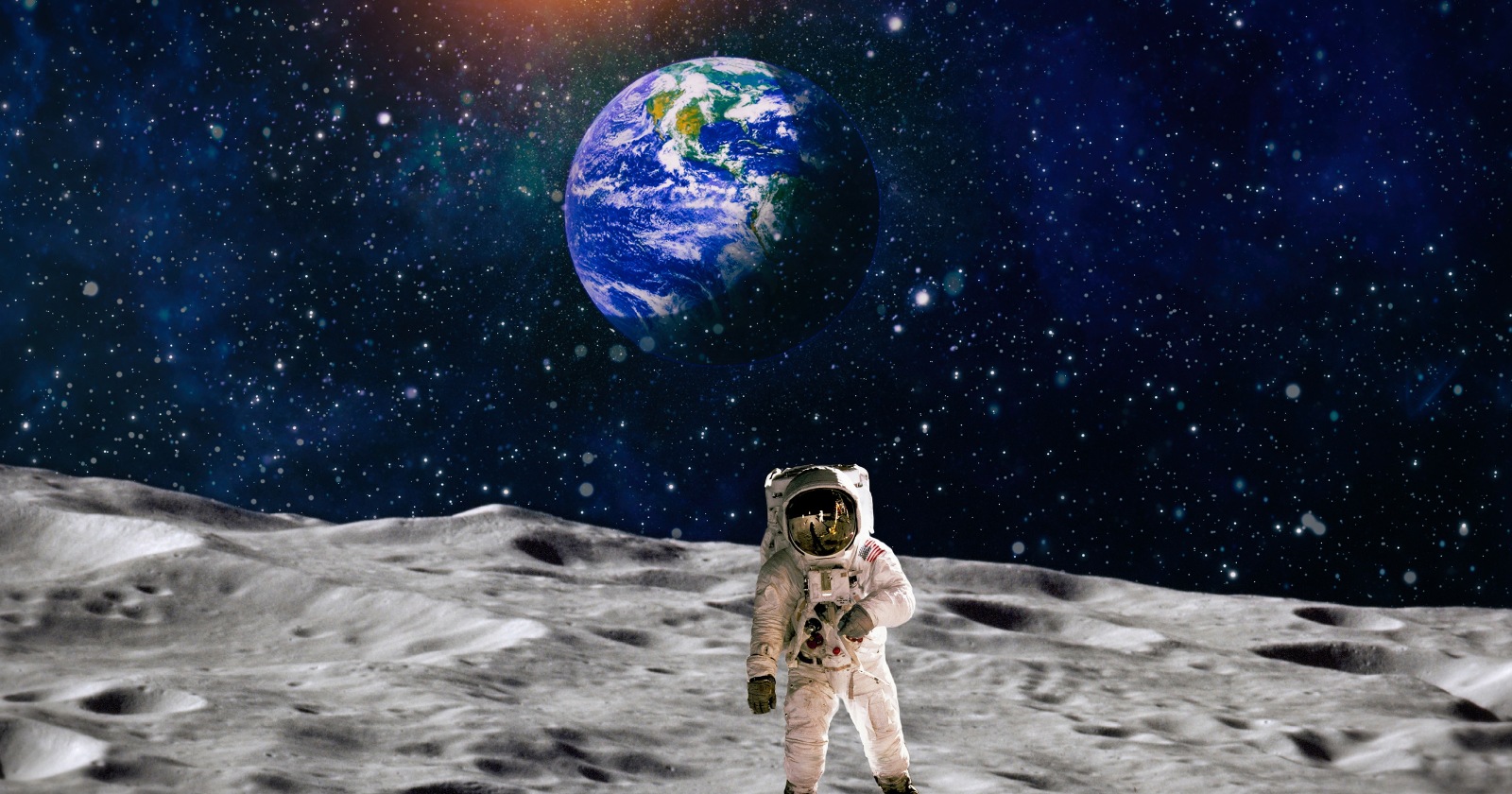
The phenomenon has a name. The author and space philosopher Frank White coined the phrase “the Overview Effect” after an experience on an airplane led him to a hypothesis: that future people living off-world would see Earth as a whole system, without borders or boundaries, and that this shift in perspective would define their experience of spaceflight. He first used the term publicly in 1985, then gave it its first full explanation in his 1987 book The Overview Effect. White began interviewing astronauts as data to test the hypothesis, and their accounts proved strikingly consistent with what he had predicted. Across later editions, he has continued to refine the concept, but the central insight remains: many people who see Earth from beyond its surface return with a changed sense of the planet, humanity, and their own place in the larger whole.
We are writers, not psychologists. What follows is a reading of the public literature and the accounts astronauts have written themselves, not a clinical claim about what happens in the brain in microgravity.
What the accounts have in common
Rusty Schweickart wrote one of the earliest careful descriptions, from Apollo 9, in an essay called “No Frames, No Boundaries”. He reflected on how, after circling Earth 151 times across ten days, his sense of identification with the whole planet quietly displaced his identification with any particular part of it. Edgar Mitchell, after Apollo 14, talked about a sense of instant global consciousness and an impatience with the way the world’s politics carved the planet up. Michael Collins, orbiting alone behind the Moon, came back with a similar observation: that the planet ought to be seen from a distance, regularly, by the people deciding things on it.
The shared elements are recognisable across decades and across very different astronauts. A sense of Earth’s thinness and fragility. The absence of visible borders. A loosening of national or ideological identification. A reordering of what feels urgent. Astronauts who have lived on the International Space Station for six months or longer describe these moments with particular consistency, often referencing specific repeated views: the terminator line crossing the surface, weather systems moving as a single living thing, lightning storms seen from above.
Others have been careful not to overdramatise it. Chris Hadfield, who commanded the ISS during a five-month stay, has told interviewers that the personal changes modern astronauts undergo are more gradual and predictable than those of the Apollo generation, supported by better psychological preparation, and that the experience tends to deepen rather than transform.
What the research actually shows
The most often-cited piece of research on this is a 2016 paper by David Yaden and colleagues in the journal Psychology of Consciousness, titled “The Overview Effect: Awe and Self-Transcendent Experience in Space Flight”. The authors analysed written and interview-derived accounts from astronauts and framed the experience using existing psychological work on awe and self-transcendence.
This is one study, not settled consensus. It is a thematic analysis of self-reported accounts. The sample is small. The astronauts are a highly selected group: trained, screened, and primed to articulate what they see. The analysis identifies patterns in language. It does not measure changes in brain function, hormone levels, or long-term psychological state.
That is not a criticism of the paper. It is a limitation built into the question. Nobody can run a controlled trial of seeing Earth from low Earth orbit. What the Yaden paper does well is take the accounts seriously and connect them to a broader literature on awe, including work by Dacher Keltner and others on the way awe experiences appear to pull attention away from the self and toward something larger.
What it does not do is prove that the overview effect is a single, neurologically defined experience, or that it produces durable behavioural change after astronauts come home. Some accounts suggest lasting shifts. Others suggest the changes soften with time. The data to settle that question does not really exist.
Why the briefing does not seem to be enough
This is the part that has interested us most.
Many of the astronauts who describe the experience were told to expect it. Newer arrivals to the ISS have often had it spelled out for them by veterans. Schweickart’s writing has been read by generations of astronaut candidates. Frank White has spoken to astronaut groups. The idea has been in public conversation about spaceflight for forty years.
And still, in account after account, astronauts say the actual moment was different from anything they had imagined.
There is a reasonable everyday parallel. People who have small children are told, in detail, by friends and family and books and films, what the first weeks will feel like. They believe they have absorbed it. Then it arrives, and the gap between knowing and being inside the experience turns out to be much wider than expected. The same gap appears around grief, around long illness, around moving to a country whose language one does not yet speak.
The pattern is not surprising once it is named. Anticipatory understanding is built out of concepts. The thing itself is not a concept. Astronauts seem to be reporting a version of this gap at unusually large scale, which is part of why their accounts have stayed interesting.
There is no need to invoke special neurological mechanisms to make sense of it. The view from orbit is genuinely unfamiliar to the human visual system. The body is in a state, microgravity, that no briefing fully simulates. The duration matters. The accumulating effect of seeing the same Earth from the same window, again and again, while doing ordinary work, is not the same as looking at a photograph or watching a film.
What it does not show
A small industry has grown up around the idea that the overview effect can be reproduced, or approximated, through virtual reality, immersive domes, high-altitude flights, or guided meditative practice. Some of this work is interesting. None of it has shown that the full experience travels intact across these media.
There has been research using VR simulations of Earth views to try to elicit awe and related states. The results suggest that immersive media can produce something in the awe family. They do not show that this is the same thing astronauts describe after six months in orbit.
A related point is worth making plainly. The astronaut population is self-selected, highly trained, in unusual physical conditions, and operating under significant professional stakes. Generalising from their reports to the rest of us is interesting as speculation, less so as evidence.
What we keep coming back to
What the accounts establish, taken together, is that a particular view, under particular conditions, over a long enough stay, appears to do something to people that briefings cannot fully prepare them for.
What they do not establish is a clean mechanism, a guaranteed effect, or a transferable practice. The reasonable framing is that an unusual perceptual experience, available to a tiny number of people, has produced a consistent enough body of reports to be worth taking seriously without yet being fully understood.
It is also worth noticing what astronauts who speak about it tend to do next. Most of them try to bring some version of the view back into ordinary life. They write. They speak in schools. They work on environmental projects. They describe the view to anyone who will listen. The instinct is not to keep it private. The instinct is to translate.
Whether the translation lands seems to depend on the listener. The astronauts have largely given up expecting anyone who has not been up there to feel what they felt. They keep talking about it anyway.
