

More bodies were retrieved from the wrecked Russian nuclear submarine Kursk on Saturday, while a video shot inside the wreckage showed for the first time just how formidable the blast which sent the ship to the bottom must have been.
However, there were conflicting reports about the exact number of bodies which have been recovered from the sub.
The Interfax news agency cited an official with the navy’s general staff as saying that 15 new bodies had been pulled from the Kursk late Saturday, bringing to 32 the number recovered since the vessel was placed in dry dock early this week.
But the ITAR-TASS news agency, quoting Russian Prosecutor General Vladimir Ustinov, who heads the team of investigators, reported that only two new bodies had been retrieved, bringing the number recovered since the Kursk was put in dry dock to 19.
Work to recover more bodies was to go on through the night, Interfax quoted the official with the navy’s general staff as saying.
The previous count given by Russian authorities stood at 17 corpses.
The first three bodies since the ship was lifted earlier this month were recovered Thursday, and retrieving operations have been going on since then.
The Kursk, one of Russia’s most modern submarines and the pride of the northern fleet, sank on August 12 last year following two as yet unexplained explosions in the front end, which housed a store of torpedoes.
All 118 men on board died in the disaster. Twelve bodies were recovered in an underwater operation in November last year.
Saturday, the first seven bodies which had been retrieved earlier this week were flown to their families, ITAR-TASS news agency reported.
A mourning ceremony had been earlier held for four of them in the Russian northern fleet central military hospital in Murmansk, in Russia’s northwest, near the Roslyakovo base where the ship now lies in dry dock.
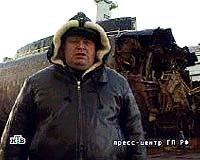
Earlier that day, Russian investigators displayed for the press a video showing damage caused by the colossal force of the blast which ripped open the vessel’s hull and sent it to the bottom.
The film showed the vessel ripped open from the stern to the conning tower, with much of the destruction apparently being caused by exploding torpedoes rather than by the initial blast.
“It is hell, it is almost too difficult to find the words to describe it,” said Ustinov as he commented on the video.
He explained that some of the tangled wreckage inside was from partitions made of special steel, which had been “cut as if with a knife.”
The video showed periscopes ripped from their mountings and a mass of cables and equipment jumbled together.
All the ship’s compartments were flooded by water within seven or eight hours of the initial disaster, Ustinov added, confirming that there had been no hope of saving any of the crew members.
Investigators said Friday that radiation levels in and around the ship were normal.
The wrecked sub, minus the front section that was cut off for security reasons, was raised October 8 in an unprecedented international salvage operation that lasted three months and cost some 65 million dollars.
The investigators, wearing oxygen masks and cloaked in heavy suits to protect them from poisonous gases and possible radiation, entered the vessel for the first time on Wednesday.
