
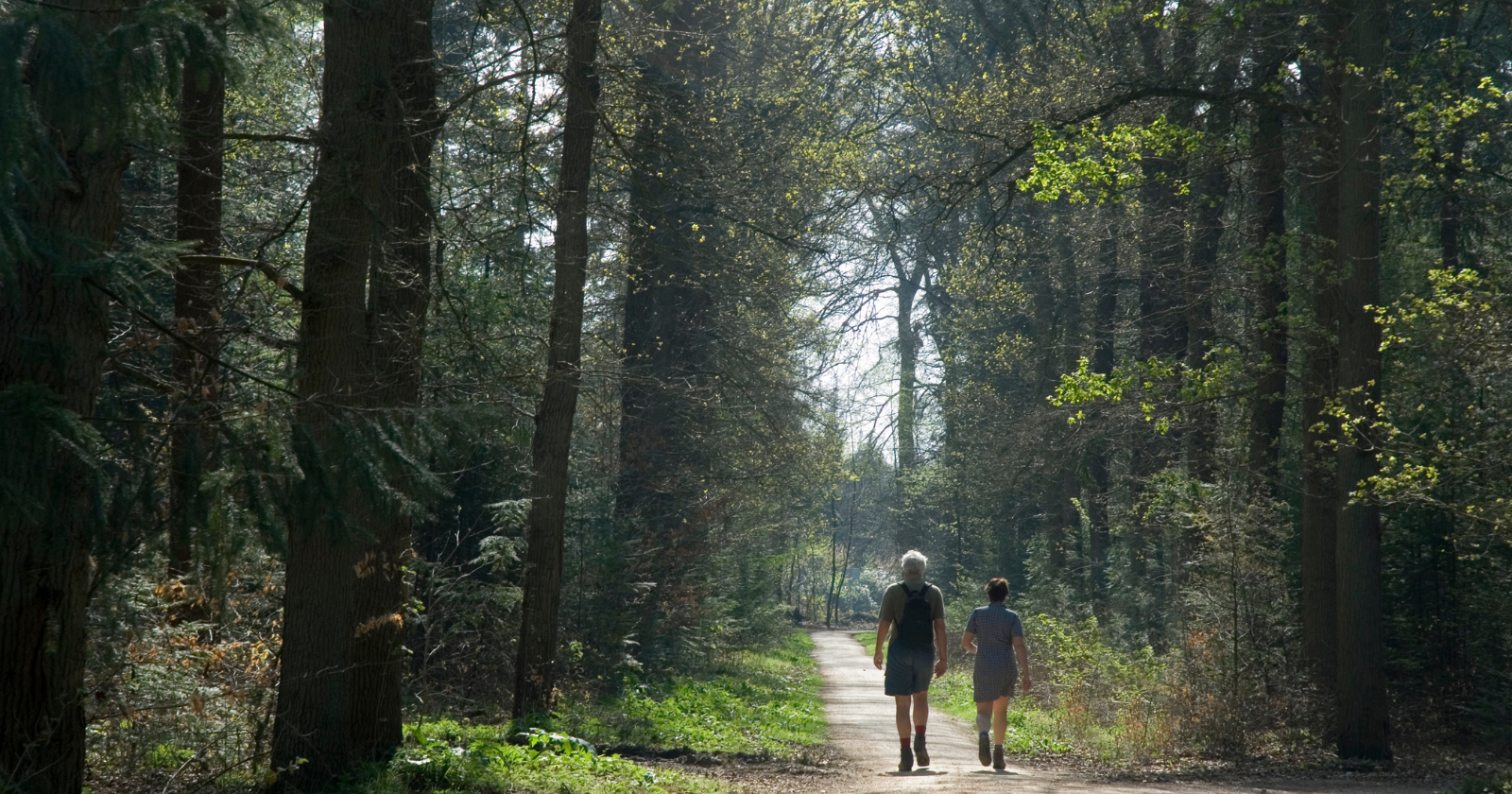
In June 2019, a team led by Mathew White of the University of Exeter’s European Centre for Environment and Human Health put a number on something that had long been treated as common sense. The researchers reported that people who spent at least 120 minutes a week in natural settings were significantly more likely to report good health and high wellbeing than those who spent none. The number is specific, and perhaps it is lower than most people would guess.
We are writers and editors who read research, not clinicians or psychologists. The study below is observational, meaning it identifies associations rather than proving that time outdoors causes better health, and a population-level pattern is not a prescription for any one reader.
The analysis drew on a large, nationally representative sample. The team examined 19,806 adults in England and sorted each person’s weekly recreational nature contact into 60-minute blocks, then checked how those blocks lined up with self-reported health and wellbeing.
People reporting between two and three hours a week showed clearly better outcomes than those reporting none, while anything under 2 hours looked essentially no different from zero. The positive associations peaked between 200 and 300 minutes a week, then flattened. More time beyond that range did not add more benefit in the data.
White framed the contribution plainly. “It’s well known that getting outdoors in nature can be good for people’s health and wellbeing,” he said, “but until now we’ve not been able to say how much is enough.”
Two hours across a full week works out to under twenty minutes a day. The cultural image of “getting into nature” leans toward the weekend hike or the camping trip, the kind of contact that requires planning and a clear calendar.
The study required none of that. It did not matter whether the two hours arrived in one long visit or several short ones, which means a lunchtime walk in a park counts toward the same total as a half-day excursion. White made the same point about distance. “The majority of nature visits in this research took place within just two miles of home,” he noted, “so even visiting local urban greenspaces seems to be a good thing.” The hedge in that sentence is his, and worth keeping: the finding points toward ordinary green space being useful, not toward any guarantee.
His framing of the target was modest. “Two hours a week is hopefully a realistic target for many people,” he said, “especially given that it can be spread over an entire week to get the benefit.”
The design has real limits, and White was candid about them. The study is cross-sectional, a single snapshot rather than a record of people tracked over time, so it can show that nature contact and wellbeing travel together without establishing which way the arrow points. Healthier, happier people may simply get outside more. The researchers described the work as far from the final word.
If your sense of feeling low or worn down runs deeper than a walk outside can reach, a qualified counsellor or doctor is worth talking to.
The study offers a floor a figure, a figure that is specific enough to act on, and fits a normal week. Whether it earns its place in a doctor’s advice is a question for more research, but as a target it asks for considerably less than the weekend-hike version of nature most people picture.
