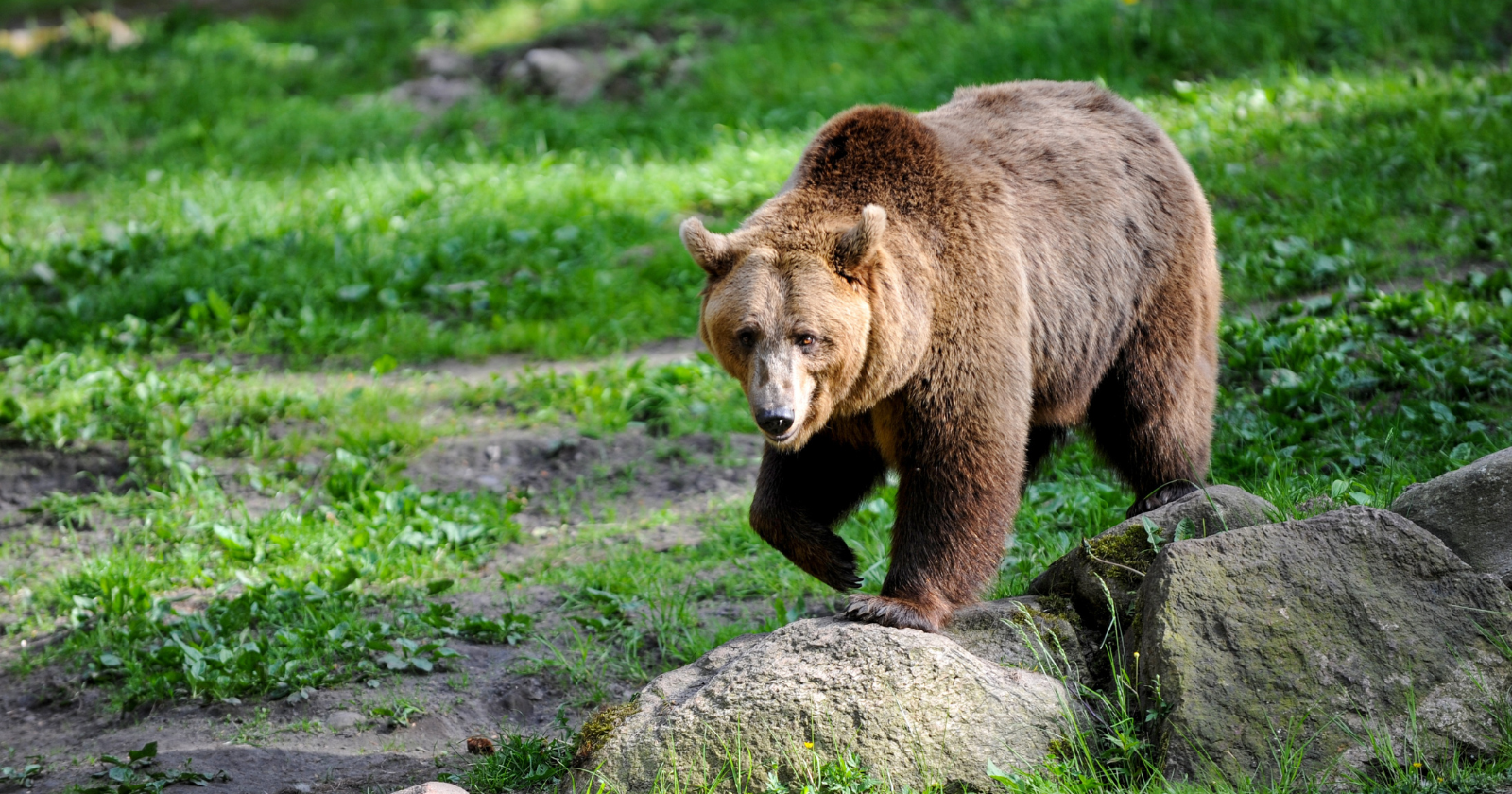
Picture the Grand River Valley in late August 1823, high grass and low scrub in what is now northwestern South Dakota, near the modern town of Lemmon. A hunter is moving ahead of the main party, searching for game. In the brushy river bottom he comes face to face with a mother grizzly and two cubs. What happens next leaves a man broken open on the ground.
That hunter was Hugh Glass, and what he did afterward is one of the strangest survival stories in the history of the American fur trade.
What the bear left behind
Glass was a hired hunter for a fur-trading expedition backed by William Henry Ashley and Andrew Henry. A companion site to the museum, the Hugh Glass site, places the mauling in the Grand River Valley in late August or early September, when Glass, out ahead of the party, met a mother grizzly with two cubs.
His companions killed the bear but the attack left him unable to walk, with a broken leg, deep cuts exposing his ribs, and festering wounds.
They did not expect Glass to live.
Left with nothing
Two men were told to stay with him until he died, then bury him. One was John Fitzgerald. The other was identified in later accounts only as “Bridges”. After several days, they left before Glass died. They took his rifle, his knife, and his gear, and rejoined the party with the story that Glass was dead.
He wasn’t. Realising he had been abandoned, stripped of everything a person needs to survive in that country, he made the only choice left to him. He started moving.
Two hundred miles, one yard at a time
The traditional account has Glass crawling, then hobbling, then walk. By the museum’s telling he survived on insects, snakes, plants, and meat from a wolf-killed buffalo calf, and got a hide boat from friendly Lakota to carry him the last stretch.
The Museum of the Mountain Man gives roughly 200 miles, while its another site says more than 250.
A review of Jon T. Coleman’s book Here Lies Hugh Glass, published in the Journal of the Early Republic, sums up the traditional version this way: “Left for dead by his companions, Glass survived his horrific injuries and managed to crawl and then walk more than two hundred miles over thirty-eight days.”
That same review is careful about all of it. The accounts that built the legend were published years later, often from hearsay, and sometimes contradicted one another. So the two hundred miles is a reported figure, not a measured one.
What survives is the shape of the thing: a broken man covering a lot of ground, slowly, because stopping meant dying.
Fort Kiowa, and what came after
By the museum’s dating he limped into Fort Kiowa on October 11, 1823, having covered roughly 200 miles. He recovered. Then he went looking for the men who had abandoned him.
He reportedly spared the younger “Bridges,” often identified as Bridger, and did not kill Fitzgerald, who had enlisted in the United States Army.
Glass kept trapping across the West for another decade. He worked part-time as a hunter at Fort Union under the American Fur Company’s Upper Missouri Outfit, managed by Kenneth McKenzie, who once said that “Mr. Glass merits more attention than the common men.” One line from one manager isn’t proof he was widely admired, but it’s a rare glimpse of how someone who worked alongside him actually saw him.
The end came in early 1833, when Glass, Edward Rose and Hilain Menard were killed in an Arikara ambush near Fort Cass. Jim Beckwourth later claimed that they were buried on a hill above the post. The museum’s epitaph is that Glass “died as he had lived – fighting to survive.” I’d take that as the museum’s phrasing rather than settled fact.
What strikes me, reading it all, is how little the crawl stands out against the rest of his life. He was mauled, abandoned, left with nothing, and he got up and walked. Then he got up the next year, and the year after, and kept moving until something finally caught him. The two hundred miles weren’t the climax of Hugh Glass. As far as I can tell, they were just a bad autumn in a life spent, one way or another, not lying down.