
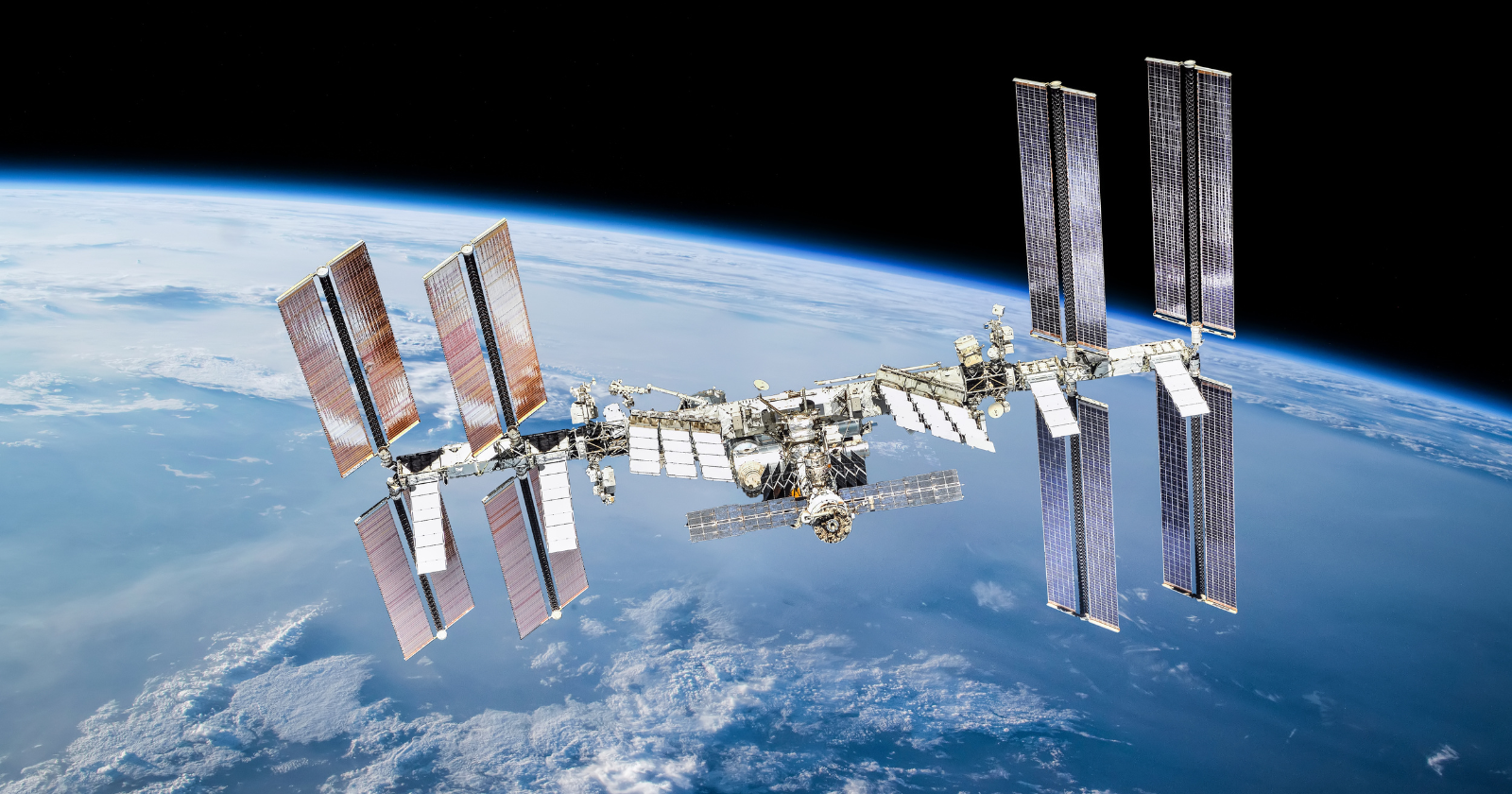
$23 million is a big price tag for a toilet even if that figure covers two units, one for the International Space Station and one for a future Moon mission. Why does a fixture most people never think about carry a development bill in the tens of millions?
The short answer is that a space toilet is not really a toilet. It is a machine that has to do, without gravity, everything a plumbing system on Earth does for free. NASA’s Universal Waste Management System, or UWMS, arrived at the station on October 5, 2020. Building it took about six years.
Why weightlessness makes waste a hard problem
On Earth, water and gravity do the work. In orbit, there is neither, so air does the job instead. A space toilet uses suction to pull waste away from the body and hold it in place. That suction has to work reliably for every user, in every position.
The older station toilet was built around assumptions that did not fit everyone, particulary women. Melissa McKinley, the project manager for the UWMS, put the problem plainly. The concern, she said, is sharpest “when the crew members are trying to do dual ops, when they’re doing both defecation and urination at the same time.” A funnel and seat shaped around one kind of body left the other kind poorly served.
What the new toilet changed
The redesign started with the parts that touch the user. The funnel and the seat were reshaped, with direct input from female crew members. McKinley said “the funnel design was completely re-contoured to better accommodate the female anatomy.” It was designed to work well for women, not merely to tolerate them.
Then there is the size. The UWMS is a compact cylinder about 28 inches tall. NASA puts it at 65 percent smaller and 40 percent lighter than the toilet that was already on the station. On a spacecraft, every kilogram launched and every litre of space costs money, so shrinking something the crew uses several times a day frees up a meaningful amount of both. McKinley said the design was about “looking to optimize mass volume and power usage, which are all very important components of a spacecraft design.”
The toilet does more than collect waste. Treated urine feeds back into the station’s water-recycling system, part of a long effort to reuse water before crews travel far from resupply. NASA astronaut Jessica Meir put it plainly: “We recycle about 90% of all water-based liquids on the space station, including urine and sweat.” NASA’s target is 98 percent before the first crewed trips to Mars, where nothing can be thrown away. Meir summed up the loop with a line the crew clearly enjoys: “today’s coffee is tomorrow’s coffee!”
Who the hardware was built around
Strip away the plumbing and the new toilet reads as a small correction to a long habit. For decades, the systems that keep people alive in orbit were built to a default that was not neutral. That the first funnel shaped specifically to work well for women arrived only in 2020 says something about who the programme quietly assumed its users would be.
The rethink extends past the toilet. A 2023 modelling study by Scott and colleagues found that female astronauts, being lighter on average and needing less oxygen, would use fewer life-support resources on a long mission. The authors suggest this points to possible advantages of all-female crews for deep-space travel. It is one modelling study, not a settled conclusion, but it turns a long-standing assumption around: the body the hardware was built for may not be the one best suited to the trip.
The UWMS works, and it will fly again on a future Moon mission. The more interesting question it leaves behind is how many other systems, designed decades ago around a narrow idea of the standard astronaut, are still waiting for the same rethink.
