

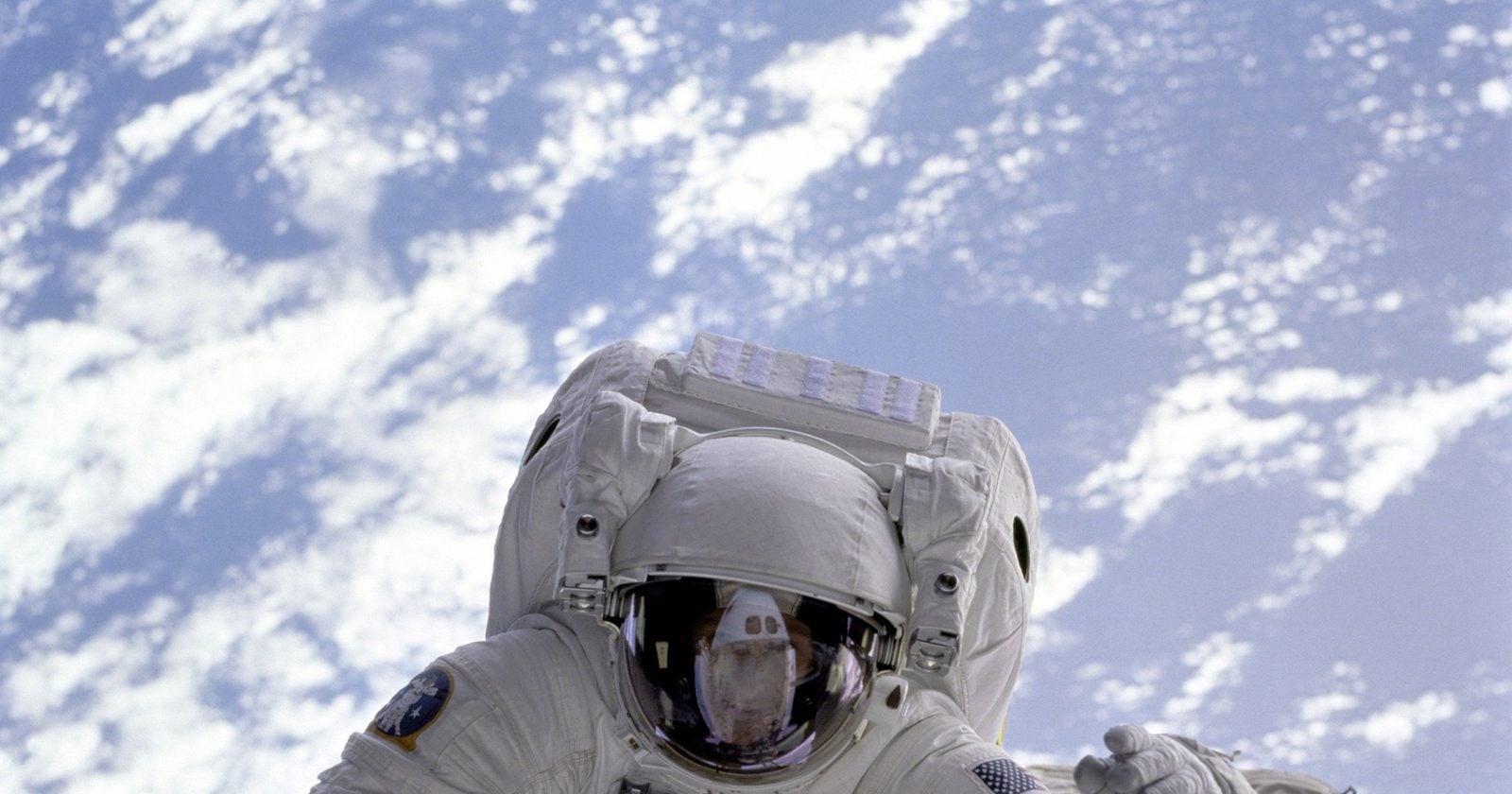
“I tried 15 times. And I was denied acceptance until the 15th time, so perseverance is a big deal, I think, for anyone who wants to do this.” That is how Clayton Anderson, talking to ABC News in 2020, sums up the strangest line on his resume.
He is the only NASA astronaut listed as coming from Nebraska, and he did not get there on the first try. Anderson says he applied every year for 15 years, updating his application each year until he was finally selected.
Anderson was already working at NASA when he started applying. He joined Johnson Space Center in 1983, working in the Mission Planning and Analysis Division on trajectory design. So the astronaut corps was not some distant dream. It was down the hall.
He spent the next 15 years working as an engineer while repeatedly putting himself forward for astronaut selection.
Fourteen years of trying, one eventual yes
The reality of those attempts was less dramatic than a movie version. Anderson has explained that he had to update his application materials every year or NASA would remove him from the applicant pool.
That does not mean NASA actually selected a new astronaut class every year. Anderson notes that after Challenger, selections became less frequent, and eventually the gaps became more irregular. But if he wanted to remain a candidate, he still had to keep his application current.
NASA may handle applicants differently today, but that was the cycle he was on: update the application, stay in the pool, and wait.
He learned to read the mail for clues. Anderson recalled that when he submitted his application materials, NASA sent him a small postcard acknowledging that they had been received. He even joked that he wished he had saved all 14 of them. If NASA did not want him to come to Houston for an interview, he generally heard nothing more.
That changed in his 13th year. Anderson says he finally received his first astronaut interview in year 13. NASA still turned him down, but this time the rejection looked different. He received a letter telling him that he was “highly qualified” but did not fit NASA’s needs at the time.
A rejection letter was, oddly, a sign of progress. For years, the postcard confirming receipt had been basically the end of the process. Now he had reached the interview stage and had been considered closely enough to receive an actual decision.
His 14th year complicates the neat version of the story. Anderson says NASA did not select an astronaut class that year, but he put his application in anyway. Then came year 15. He was invited back for his second interview, and this time NASA selected him.
What strikes us about that detail is how small the margins were, and how little control he had over them. He could keep his application current and keep showing up. He could not make the committee say yes. More than a decade in, even reaching the interview room counted as progress.
The yes, and then more waiting
The turn came in the summer of 1998. NASA announced its 17th astronaut class on June 4, 1998, choosing 25 new astronauts, including Anderson as one of 17 mission specialists. The class reported for duty that August. NASA’s biography likewise records that Anderson was selected as a mission specialist in June 1998 and began training in August.
Getting selected was not the same as flying, and this is the part the neat version of the story skips. The waiting continued. He trained, then served as a backup flight engineer for Expeditions 12, 13 and 14, the understudy role where you prepare to step into a mission if needed.
His first launch finally came on June 8, 2007, almost nine years after his selection. He flew aboard Space Shuttle Atlantis on STS-117 and transferred to the International Space Station, where NASA lists him as an Expedition 15 flight engineer. His NASA biography says he spent 152 days aboard the station before returning to Earth aboard Space Shuttle Discovery with STS-120 in November 2007.
Across his spaceflight career, Anderson logged 166 days, 21 hours and 10 minutes in space. He made six spacewalks totaling 38 hours and 28 minutes.
He retired from NASA in January 2013, three decades after joining Johnson Space Center in 1983.
What the story does and doesn’t prove
It is a genuinely good story, and very easy to draw the wrong lesson from it. Anderson credits perseverance, and on his own terms he is plainly right. He would not have been available for selection in 1998 if he had stopped applying beforehand. The persistence was necessary.
The trouble starts when “necessary” turns into “enough,” and the story becomes a promise that if you just keep knocking, the door opens.
That is where survivorship bias comes in. Survivorship bias occurs when we focus on the people or things that made it through some selection process while overlooking those that did not. We hear from the astronaut who eventually made it after 15 years of applying. We hear much less from persistent applicants whose stories ended with another rejection, because they are not the people invited to explain how they became astronauts.
The Decision Lab makes a related point: visible success stories can hide how much else was going on. It notes that luck, timing, connections and background can feed into outcomes that later get credited largely to effort.
None of that erases what Anderson did. He was qualified — NASA’s rejection letter explicitly called him “highly qualified” — and he kept himself in a pool he could have left. But the qualifications, the timing and the repeated applications all had to line up.
Our read is this: Anderson’s case does not show that grit guarantees anything. What it shows is narrower and, we think, more useful. Persistence did not beat the selection process. It kept him eligible for the year the selection process finally said yes.