
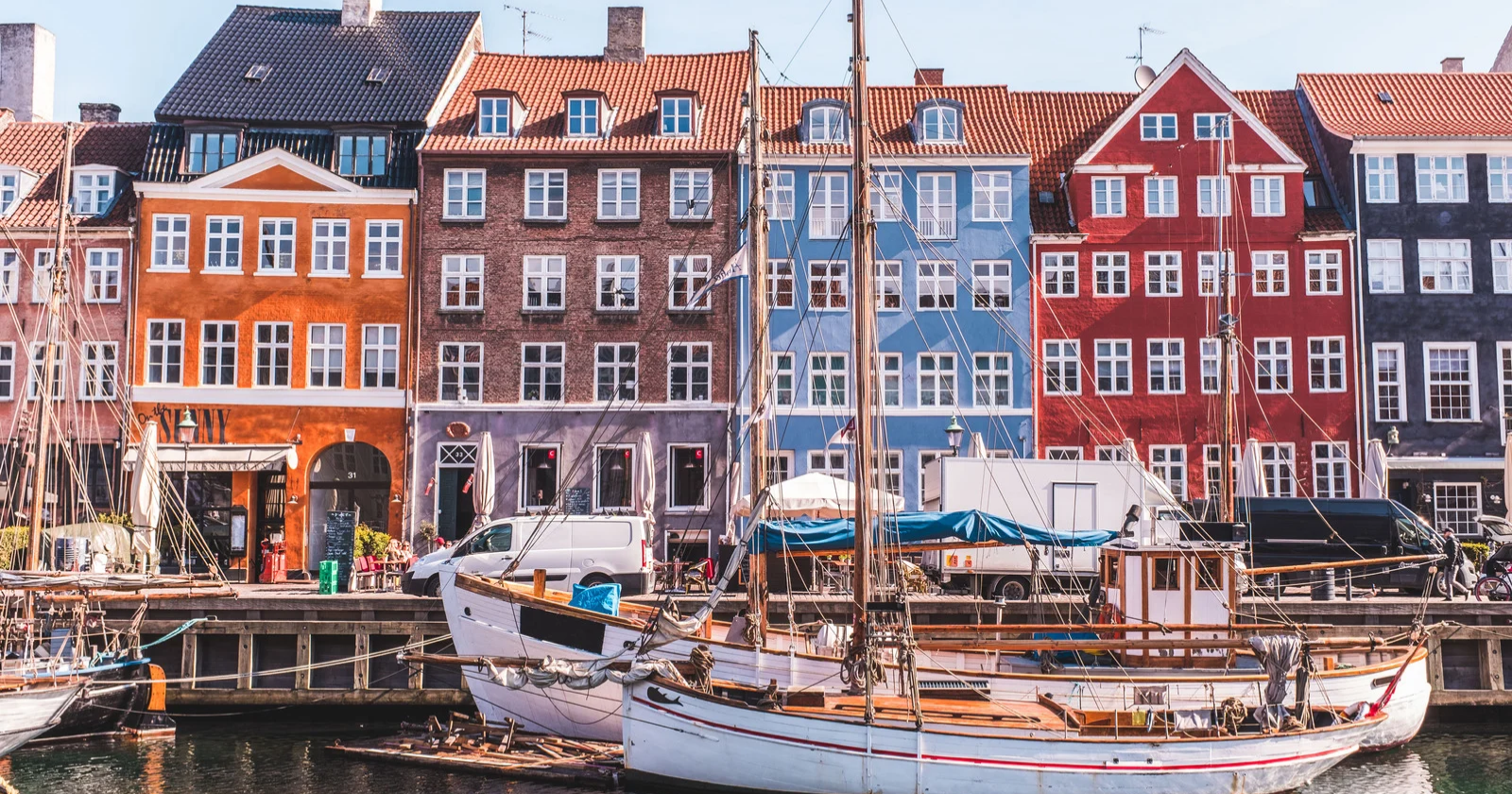
More than two out of every three homes in a wealthy European country are heated not by their own boiler or furnace, but by hot water piped in from somewhere down the road.
The Danish District Heating Association says its member networks supply more than 2 million households, about 69 percent of the country, and cover around half the demand for heating buildings. A 2025 analysis by the Regulatory Assistance Project found that “In 2023 around 50% of heat demand in the buildings sector and over two-thirds of homes were supplied through district heating systems.”
So what does that actually describe, and how did a whole country end up sharing its heat? The story is less about clever engineering than about a decision made half a century ago and stuck to ever since.
What the number is really counting
District heating is a plain idea. Instead of every building making its own heat, a central plant produces hot water and pumps it through insulated underground pipes to homes, offices, and schools. A small unit in each building draws heat off the network for radiators and hot taps. When people say two-thirds of Danish homes are “connected,” this is what they mean: no boiler of their own, just a pipe coming in.
The two headline figures measure different things, which is worth keeping straight. One is the share of households on the network. The other is the share of the country’s heat demand those networks meet. The RAP report adds more detail, noting that 44% of buildings have a connection and that these cover 58% of total floor area.
Different ways of counting, same conclusion: this is the normal way to heat a home in Denmark, not a niche.
How a country ended up on shared pipes
Denmark did not drift into this. It was pushed, hard, by the oil shocks of the 1970s. At the time the country ran almost entirely on imported energy. A historical review by Katinka Johansen records that in the early 1970s, 92% of Denmark’s total energy came from oil, roughly 90% of it imported from the Middle East. When the oil price spiked, that exposure became a national emergency.
The response was long-term planning rather than a scramble, and the turning point was a single law. As the Danish Board of District Heating describes it, the 1979 Heat Supply Act required towns to draw up heat plans and mark out areas for district heating, natural gas, or individual heating.
That last part matters more than it sounds. A town could effectively assign a neighborhood to district heating, which gave the networks the guaranteed customers that make laying expensive pipe worth it.
It would be too neat to credit the whole system to one law. The DBDH itself points out that staffing, training, and sustained investment did much of the work of expansion alongside the legislation. But the Act set the frame. It made heat something towns planned on purpose, decade after decade, rather than leaving it to whatever each building owner happened to install.
The roots run deeper still: Denmark’s first district heating plant, a waste incineration plant, was actually inaugurated in Frederiksberg in 1903, long before the crisis forced the idea to grow.
The part that usually gets skipped
Most coverage of the Danish model fixates on the pipes and the plants. The bit that gets overlooked is who owns them.
This is not a utility empire run for shareholders. The municipally-owned utilities deliver around two thirds of all district heating in Denmark, and most of the rest comes from consumer-owned cooperatives, all run without a profit motive. In practice that means the people paying for the heat are, very often, the people who own the network delivering it.
We think that ownership setup is doing more than the technology gets credit for. When a network is a cooperative answerable to its own customers, the aim is to keep the price of heat low over the long run, not to maximize a return.
It also makes joining easier to accept: it feels closer to signing up for a shared local service than being sold to. The connections keep coming, with around 70 percent of households supplied as of 2025.
What actually flows through the pipes
The useful thing about a shared network is that the plant feeding it can burn almost anything, and can switch fuels without anyone rewiring a single home. Over the decades Denmark’s networks have moved off oil and coal, through natural gas, and toward a mix that now leans heavily on wood and other plant material, waste burning, plants that make heat and electricity at the same time, and spare heat captured from industry that would otherwise be thrown away.
The DBDH puts the sector at roughly 77% renewable overall, with sustainable biomass making up about 48% of total fuel use.
Why other countries keep studying it
Denmark’s share is an outlier, and that is exactly why it gets picked over.
District heating covers only about 15% of heat supply in Germany, against roughly 70% in Denmark. When a neighbor is doing something four or five times more than you are, you want to know why.
Researchers who study the sector describe Danish district heating as unusual by international standards, in its planning, its ownership, and its financing, though we would treat that as expert framing rather than a settled verdict.
What the Danish case genuinely shows, as far as we can tell, is narrower and more useful than “build this everywhere.” It shows that when a government commits to planning heat over a fifty-year horizon, and pairs that with local, non-profit ownership that keeps residents on side, a country can move most of its homes onto a shared, increasingly clean heat supply. What it does not prove is that the model drops cleanly into places with different housing density, different climates, or without the zoning powers the 1979 law handed to towns.
Denmark spent decades and a genuine energy crisis getting here. The lesson we take from it is less about the pipes than about the patience and the ownership that laid them.
