
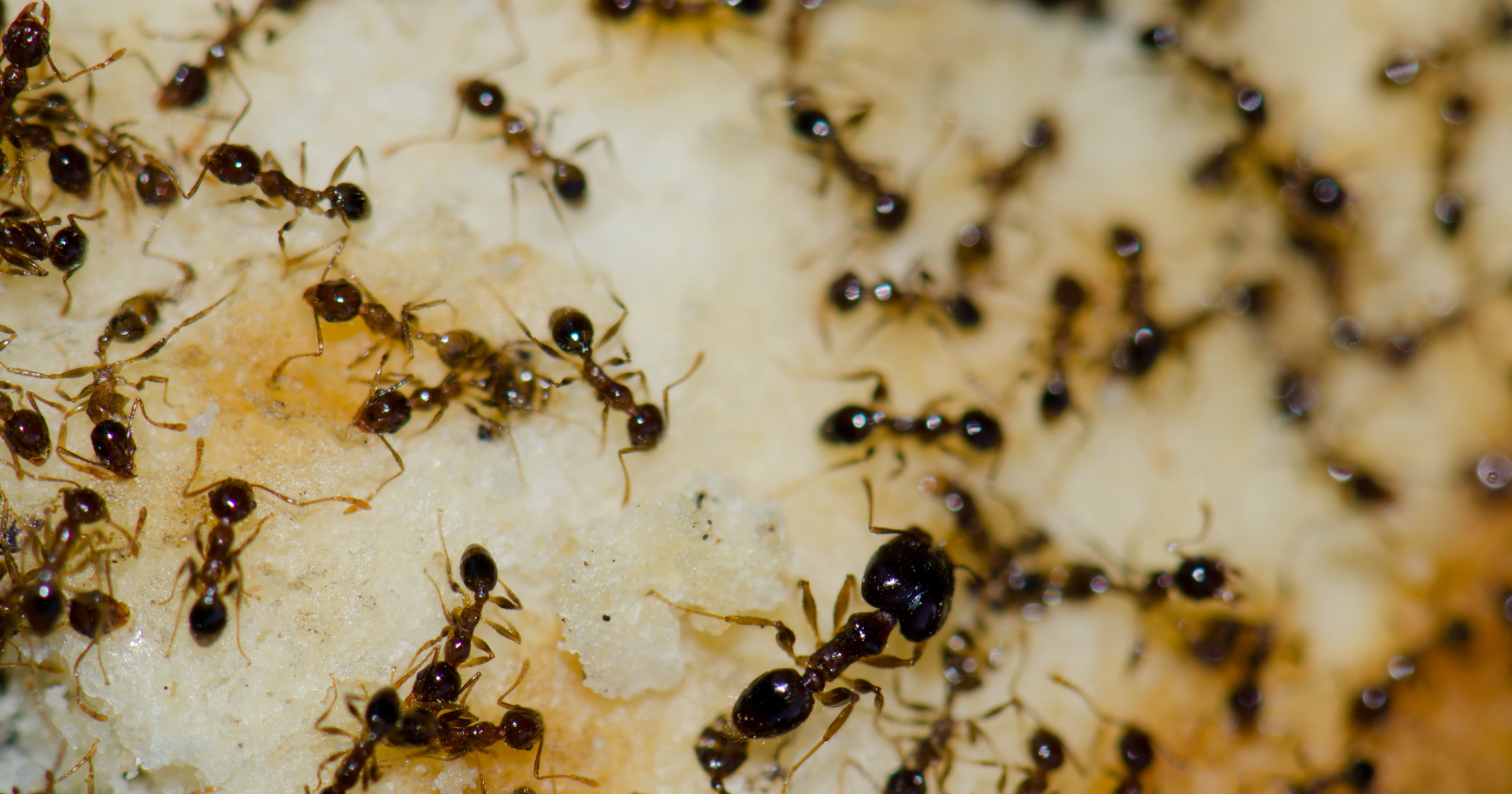
Picture a single society running from the Italian Riviera to the Atlantic edge of Spain, its members numbering in the billions, none of them ever raising a weapon against another. That is not a thought experiment about humans; it is a population of ants.
In 2002, three researchers at the University of Lausanne reported that a single network of Argentine ant nests stretched at least 6,000 kilometres along the Mediterranean and Atlantic coasts of southern Europe. Tatiana Giraud, Jes S. Pedersen and Laurent Keller documented a main supercolony of millions of nests and billions of workers — a cooperative unit they described as astonishing in scale.
What makes the European supercolony so strange is not just its size — it is the peace. In their native South America, Argentine ants behave like most ants: neighbouring colonies fight, and a colony stays small, on the order of a few metres to a few kilometres across.
These ones do something different. Workers pulled from nests hundreds of kilometres apart, with no shared recent ancestry to speak of, meet and groom and pass food rather than tear each other apart.
The Lausanne team put numbers to it by collecting ants from sites along the coast and staging encounters between them. Workers from the same supercolony showed no aggression toward one another, even when separated by huge distances and genetic differentiation between sampling sites. Mix workers from two different supercolonies, though, and the result is lethal. The truce holds inside the network and stops hard at its edge.
The European finding raises a question that sounds philosophical but turns out to be biological: at what point does a sprawling web of cooperating individuals stop being a population and become a single society? Biologist Mark Moffett took it up. His answer turns on growth. Moffett wrote that “this capacity for unrestricted growth is the defining characteristic of supercolonies.” A normal ant colony has a ceiling; a supercolony does not.
That capacity for essentially unlimited scale shows up in only a handful of ant species and in one other animal: us. The comparison is what gives the European supercolony its claim to be the second-largest cooperative society on the planet. The Lausanne team had already reached for similar language, describing the network as one that “effectively forms the largest cooperative unit ever recorded.”
And it grew larger still. A later study traced the connections beyond Europe. Behavioural tests and chemical analyses showed that the biggest European, Californian and Japanese supercolonies recognise one another as nestmates, linking them into one intercontinental society. Ellen Van Wilgenburg, Candice Torres and Neil Tsutsui concluded that the intercontinental network is the “most populous known animal society.”
The supercolony was not engineered. It is a by-product of human shipping, which carried a South American ant around the world and, on the working hypothesis, narrowed its recognition system down to a single shared signal somewhere along the way.
In its home range the same species stays small and quarrelsome. Dropped into Europe with its old border disputes erased, it kept doing the one thing ants do well, cooperating, and simply never ran out of relatives to cooperate with.
Why the peace holds so widely is not fully understood. The same team that mapped the intercontinental network was candid about the gap, noting that the global supercolony’s persistence looked like apparent evolutionary stasis — surprising because introduced populations often evolve rapidly.
