
Back in 1913, the industrialist Sam Eyde floated the notion of putting a mirror on a mountain to bounce sunlight down into the shadowed valley.
The technology for the mirror was not yet there so his successors did the next best thing. In 1928 they built the Krossobanen cable car to carry people up out of the gloom to where the sun still reached.
The original idea never quite died, though. It just waited about a hundred years for the technology to catch up.
A quick note on where our competence ends. We are not clinicians, psychologists, or researchers in mood and light. The parts of this piece that touch seasonal depression lean on named experts and observational research, and population-level findings about light and mood are not a diagnosis or a prescription for any individual reader.
Why does Rjukan lose the sun at all?
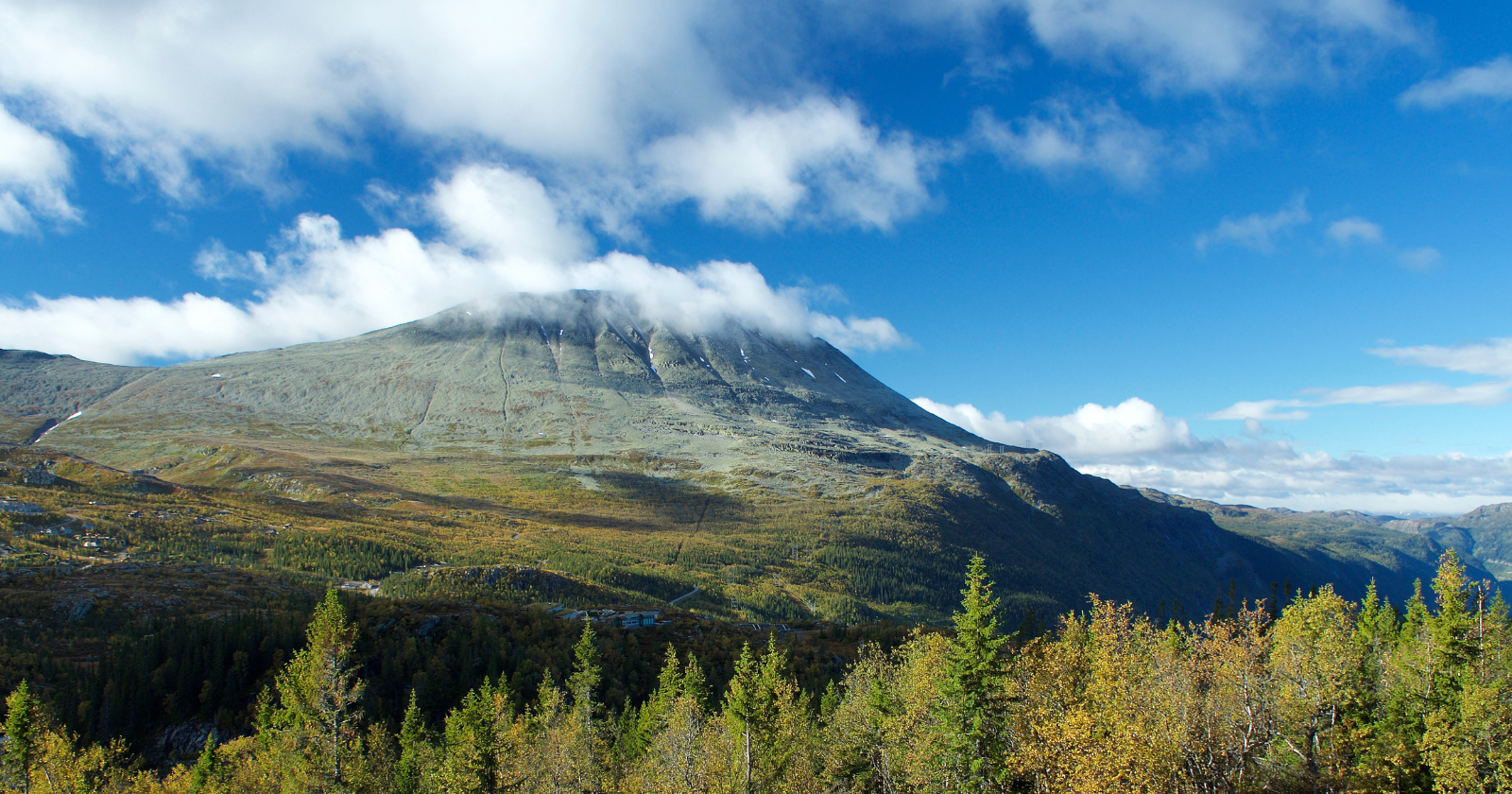
Geography, mostly. Rjukan sits at the bottom of a steep, east-west valley in southern Norway, hemmed in by mountains, with the 1,883-metre peak of Gaustatoppen looming to the south. In winter the sun tracks so low across the sky that those slopes simply block it. From late September to mid-March, roughly six months, the town gets no direct sunlight at all. The light is up there. It just never lands on the streets.
That’s a long stretch of shadow for a town of a few thousand people. The cable car helped, but it asked residents to travel to the light rather than the other way around. The mirror idea was always the bolder answer: bring the sun down to the square where people actually are.
What actually happens on the square now?
Three computer-controlled mirrors sit bolted to the mountainside about 450 metres above the market square. Together they add up to a fairly modest surface, three mirrors of 17 square metres each, so 51 square metres of glass in total. That doesn’t sound like much. The trick is aim.
The mirrors track the sun as it moves, readjusting to keep the reflection pointed at the same spot. What lands on the ground is a moving, oval patch of daylight about 600 square metres across, and it isn’t a dim substitute. By one account, the reflected light in the square runs at 80 to 90 percent of the strength of direct sun.
On a clear January day, people walk down to the square, find the bright oval, and stand in it. That’s the whole activity. A patch of borrowed sunlight in the middle of a town that otherwise has none, drifting slowly across the paving as the mirrors chase the sun overhead.
Why did an artist build it, and not the town council?
The person who brought the century-old idea back to life was Martin Andersen, an artist who moved to Rjukan in the early 2000s. His aim was small and specific. “I wanted a smaller, concentrated patch of sunlight,” he explained, “a special sunlit spot in the middle of town where people could come for a quick five minutes in the sun.”
He also resists calling it purely an engineering project. “The interesting thing about the Sun Mirror is that it’s both natural and artificial at the same time,” Andersen has said, “and it’s an idea that people in the city had to have an opinion about. That’s why I like to call Solspeilet an art project.” The Solspeilet was switched at the end of October 2013.
Was it worth roughly 5 million kroner?
The project cost about 5 million NOK, roughly $849,000, to light up 600 square metres of a square through a Norwegian winter. Put in the coldest terms, that’s a lot of money for a moving spot of light that a passing cloud can switch off.
But the value people place on it points at something real about light and mood. Andersen’s own line on this is blunt. “It’s easy to underestimate how much the sun actually means to people,” he has said, and the research on winter light does not exactly contradict him. About 1 in 20 US adults have seasonal affective disorder, a form of depression tied to the darker months, with many more reporting milder winter lows.
Bright light is one of the standard tools for managing that. Dr. Dorothy Sit of Northwestern University told NPR that “a lot of research has shown that using bright light therapy in the morning can be extremely helpful to reverse some of the symptoms of seasonal depression.” We’d be careful about stretching that too far, though. A mirror aimed at a public square is not a medical device. It’s a bright spot in a town centre, not a prescribed dose of morning light.
If the dark half of the year sits heavily on you, that’s worth taking seriously, and a qualified doctor or therapist is worth talking to.
