
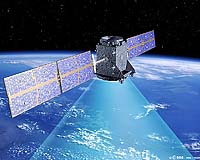
The launch of the first test satellite for the European Space Agency’s Galileo civil navigation system has been delayed by two days to December 28, the Roskosmos Russian space agency said Saturday.
“Following a request from its sponsor (the ESA), the launch has been put back from December 26 to December 28,” said Roskosmos spokesman Vyacheslav Davidenko, quoted by the Itar-Tass news agency.
The GIOVE-A satellite had been due to blast off from Russia’s launch site at Baikonur, Kazakhstan, at 0519 GMT on December 26, to test technologies for the joint EU-ESA project to build the first civil satellite navigation system.
But ESA requested a delay until at least December 28 to correct an “anomaly” which was “detected in the ground station network” during preparations for launch.
“The necessary re-configuration and validation are currently predicted to lead to a delay of at least two days for this launch, originally scheduled to take place on 26 December, the ESA said in an online statement.
The payload, to be launched by a Russian Soyuz rocket, will comprise a British-built 600-kilo (1,320-pound) satellite that will be placed in orbit at 23,000 kilometers (14,500 miles).
Following a second test satellite, GIOVE-B, four working satellites will be launched, marking the first step towards a final constellation of 30.
The Galileo navigation system will both complement and compete with the US Global Positioning System (GPS) and the Russian Glonass network.
To secure rights to the radio frequencies it wants to use, the Galileo project must launch its GIOVE-A tester by June 2006.
If all goes according to schedule, the system – comprising 27 operational satellites and three reserves – will be working from 2008.
