
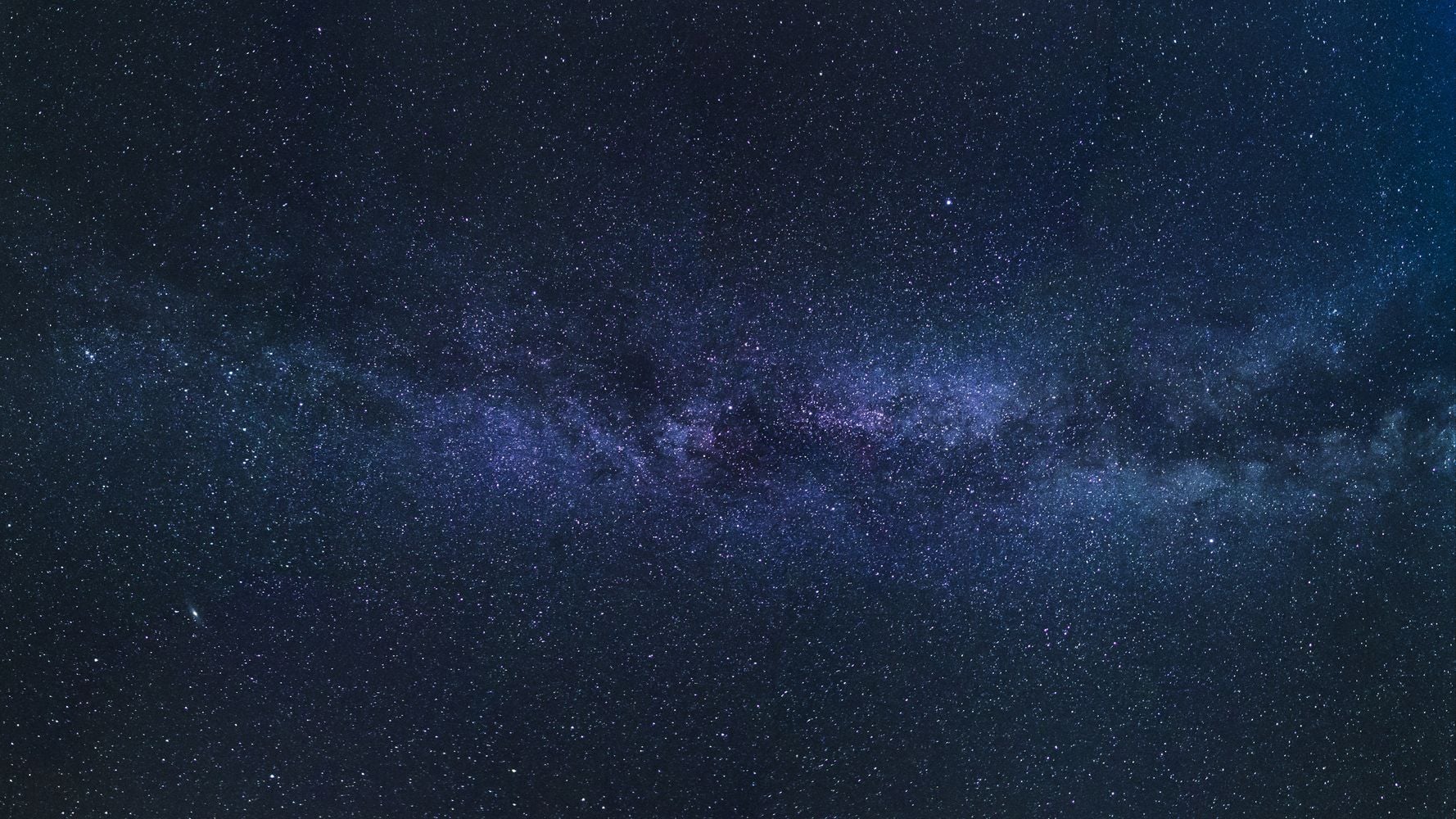
The universe, on the whole, is famously enormous. But it’s also, at the level of large-scale structure, considerably less uniform than most popular descriptions of it let on. If you were to take the modern three-dimensional map of galactic positions that cosmologists have been building for the past forty years and look at it from a sufficient distance, what you’d see wouldn’t be an evenly spread field of light. It would look more like foam. Enormous clusters and filaments of galaxies, arranged in long branching structures like the walls of soap bubbles. And, between the walls, vast bubble-shaped regions of nearly empty space, called voids, where the density of galaxies drops to a small fraction of the cosmic average.
One of the largest well-known examples is the Boötes Void, named for the constellation in whose direction it appears. Popular accounts sometimes call it “The Great Nothing,” although that is a nickname rather than a formal astronomical designation.
How the emptiness got noticed
According to BBC Science Focus magazine’s technical explainer on the Boötes Void, which draws on the discovery paper and the surrounding cosmological literature, the void wasn’t found deliberately. In 1981, an American astronomer named Robert Kirshner was working with colleagues at the University of Michigan on a redshift survey. Redshifts, which measure how fast a galaxy is moving away from Earth, can be used to work out its distance, because the universe is expanding in a fairly regular way and faraway galaxies retreat faster than close ones. The team was building a three-dimensional map of galactic positions in a slice of the northern sky, one galaxy at a time.
As the map grew, something strange began to appear inside it. In one specific slice of the sky, at a distance of roughly 700 million light-years from Earth, there was a large region containing hardly any galaxies at all. It wasn’t a small dip in the local density. It was a hole. And when Kirshner’s team plotted the boundaries of the hole and worked out its geometry, they realised they were looking at a roughly spherical region approximately 330 million light-years in diameter, containing far fewer galaxies than any comparable stretch of the surrounding cosmos.
The discovery paper, published in the Astrophysical Journal Letters later that year under the title “A million cubic megaparsec void in Bootes?” by Kirshner, Augustus Oemler, Paul Schechter, and Stephen Shectman, described the region as unexpectedly underdense. Nobody had predicted a void of that scale. The prevailing cosmological picture at the time assumed that on large scales, matter in the universe was distributed reasonably smoothly. A gap of this size, in a survey covering only a small slice of the sky, was hard to reconcile with that assumption. Which meant either the survey had missed something, or the assumption itself was wrong.
As it turned out, the assumption was wrong. Over the following decades, larger surveys mapped out the true structure of the cosmos and found that voids of this general character are one of its defining features. But the Boötes Void, on the current record, remained one of the largest and emptiest ever measured. Follow-up observations by other teams gradually located galaxies within the void that Kirshner’s original survey had been too limited to detect. J. Moody, Kirshner and colleagues announced eight galaxies inside the region in 1987. Strauss and Huchra added three more in 1988. Aldering, Bothun, Kirshner and Marzke added fifteen more in 1989. By 1997, the total had risen to about sixty. A normal patch of the universe of that size would ordinarily contain something on the order of ten thousand galaxies. The Boötes Void contains around sixty.
What it would be like inside
According to BBC Sky at Night Magazine’s coverage of the void, which sits alongside its broader treatment of the cosmic web and the underdense regions that make it up, the practical scale of a void the size of Boötes is hard to hold in your head using ordinary comparisons. The Milky Way, our own galaxy, is about 100,000 light-years across. The Boötes Void, at 330 million light-years across, would fit our galaxy end-to-end more than three thousand times over. And if it were as empty as it appears, meaning if you were sitting on a planet inside a galaxy near its centre, the nearest neighbouring galaxy would not be somewhere in the ordinary range of a few million light-years, which is where the nearest galaxies are from ours. It would be on the order of a hundred million light-years away, at the far edge of the empty region.
This is where the American astronomer Greg Aldering, one of the researchers who catalogued galaxies inside the void in the late 1980s, made the observation that has become the most quoted line in the entire literature on the topic. According to the Atlas of the Universe reference site, which maintains a detailed record of the galaxies known inside the void and the observation history of the region, Aldering’s summary of what it would mean to live inside a region that empty was as follows. If the Milky Way had been in the centre of the Boötes Void, he said, we wouldn’t have known there were other galaxies until the 1960s.
Which is worth sitting with for a moment. Because the reason we know there are other galaxies at all, and the reason we know the universe is anything more than the local stellar neighbourhood, is that other galaxies are close enough for us to see them. The Andromeda Galaxy sits at approximately 2.5 million light-years from Earth, close enough that human beings identified it as a discrete object in the sky thousands of years ago and worked out what it actually was in the 1920s, when Edwin Hubble measured its distance and demonstrated that it was an entirely separate galaxy rather than a nebula within our own. That measurement changed everything. It established, for the first time in human history, that the universe was much larger than the region containing our own sun.
If the Milky Way had been in the middle of the Boötes Void, none of that would have happened at the same time. There would have been no Andromeda. The nearest galaxy would have sat around a hundred million light-years away in every direction, well beyond the reach of any telescope built before the mid-twentieth century. Astronomers on Earth would have looked out through their instruments, seen the stars of their own galaxy in every direction, seen nothing else beyond them, and reasonably concluded that the Milky Way was the whole of creation. It would have taken the radio telescopes and photographic exposure times of the 1960s to reveal the more distant galaxies at the void’s edge, and only then would our species have discovered that the universe extended beyond our own local stellar system.
Which is what the Boötes Void makes visible. Not just that the cosmos contains vast empty regions, though it does. But that where you happen to be born inside the universe determines what you can see of it. Life on a planet inside a normal galactic neighbourhood, like ours, sees an ordinary night sky with the accumulated evidence of a vast cosmos scattered across it. Life on a planet inside a void as big as Boötes would see almost the same sky, at the same brightness, with the same familiar constellations, and no indication at any level accessible to unaided sight that anything else existed. The size of the universe you can perceive, on the accumulated cosmological record, isn’t just a function of how big the universe is. It’s a function of what happens to be near you when you look up.
Correction, 31 August 2026: An earlier headline said the Boötes Void “terrifies astronomers.” The phrase was unsupported and has been removed.
