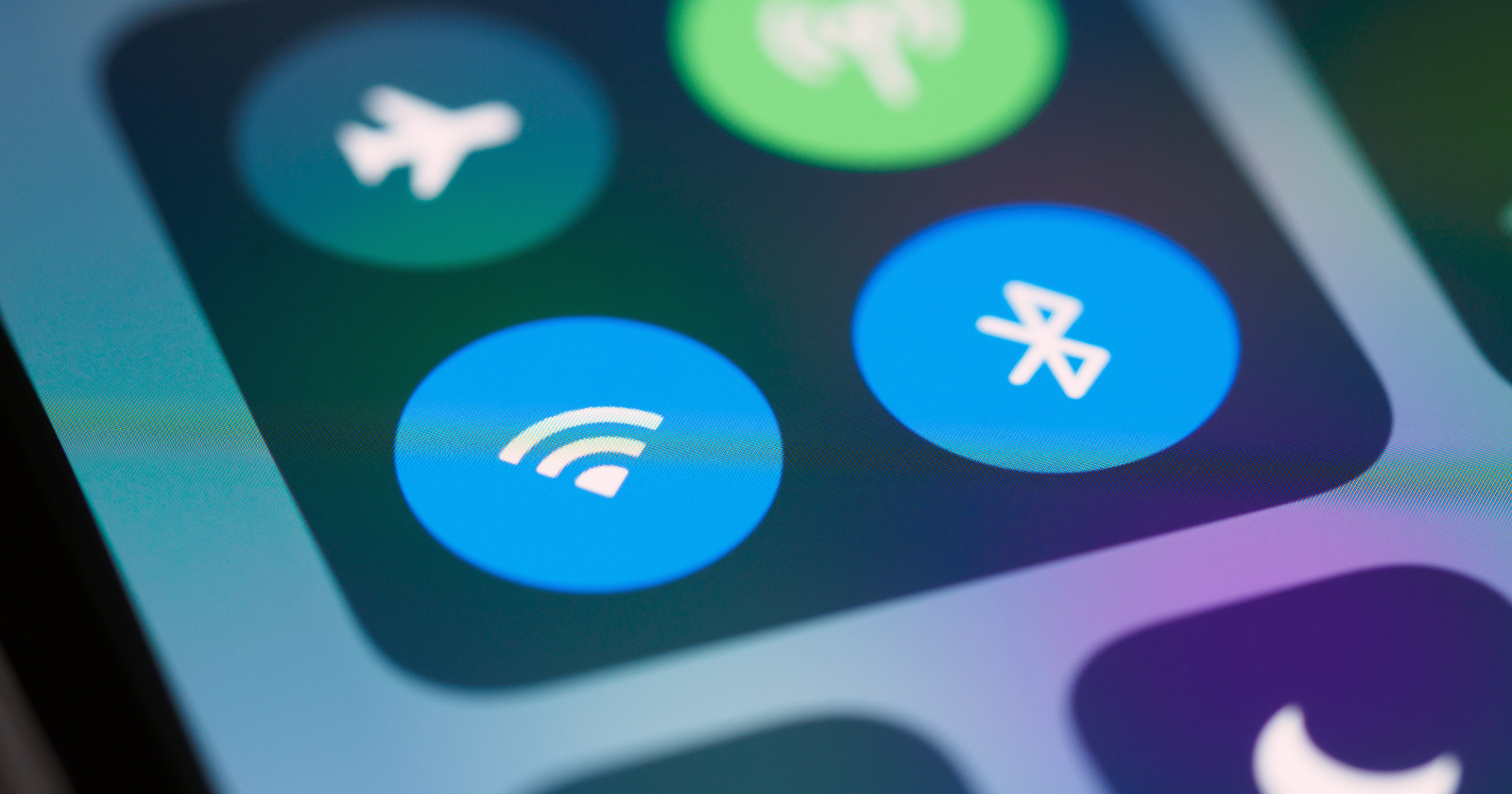
Pick up your phone. Open the settings. Find the small blue rectangle with the pointy angular symbol inside it, the one you have been ignoring since the first mobile device you ever owned. That specific little glyph, on the accumulated historical evidence of the past thirty years of wireless technology, is the personal monogram of a Danish king who ruled from approximately 958 to 986 AD, died in the year Halley’s Comet last returned to Earth before 1066, and has been buried in Roskilde Cathedral for the better part of a thousand years.
His name was Harald Gormsson. His nickname, according to the surviving Old Norse records, was Blåtand. Which translates directly into modern English as Bluetooth.
The whole story of how his personal monogram ended up on every wireless device on the planet is one of the more genuinely accidental facts of the modern technology industry.
The king in question
According to the official history maintained by the Bluetooth Special Interest Group, the industry consortium that owns the technology standard and runs its trademark, Harald Bluetooth was a considerably more interesting historical figure than the somewhat comic nickname suggests. Between roughly 958 and 986, he unified the previously fragmented tribes of what is now Denmark into a single kingdom, brought Norway into the same political sphere, and was responsible for the formal Christianisation of the Danes, an achievement he commemorated by carving one of the earliest known references to the country of Denmark on a runestone that still stands today in the small town of Jelling.
The nickname itself, on the surviving linguistic record, appears to have come from a physical peculiarity. He had, according to the accounts that reached the medieval Icelandic chroniclers, a prominent dead tooth that had darkened to a shade closer to grey-blue than to healthy white. In an era before dentistry, this was the kind of visible personal feature that stuck. The great unifier of Scandinavia became, in the mouths of his contemporaries and their descendants, the man with the blue tooth.
His initials, in the runic alphabet of his time, were ᚼ for the H sound in Harald and ᛒ for the B in Blåtand. In the Younger Futhark script used in tenth-century Scandinavia, those two characters look nothing like the modern Latin letters H and B. What they look like, when combined into a single glyph in what scholars call a bind rune, is the exact symbol currently sitting on every Bluetooth-enabled device in the world.
On a related note, I came across a video that dives into the effect our phones are quietly having on us. You’ve probably felt it before, but this video will put a name to the feeling:
The Toronto bar
The story of how the king’s monogram ended up on modern electronics has been recounted in detail by the person primarily responsible, an Intel engineer named Jim Kardach. According to Kardach’s own 2008 account, published in EE Times under the title “Tech History: How Bluetooth got its name”, the origin of the whole naming decision took place in a Toronto bar in late 1997.
Kardach was at the time working on short-range wireless radio at Intel. Three separate industry efforts were running in parallel. Intel had a project called Biz-RF. Ericsson had one called MC-Link. Nokia had a third called Low Power RF. All three companies were trying to build essentially the same thing, which was a small, low-power wireless standard that would let phones, computers, and peripheral devices talk to each other without cables. In late 1997, after a joint industry meeting in Toronto that Kardach later described as having gone badly, he and Ericsson engineer Sven Mattisson went out drinking together and, being history enthusiasts, started swapping stories about the medieval Scandinavian kings Mattisson had been reading about in Frans G. Bengtsson’s Viking-era novel The Long Ships.
One of the kings in the book was Harald Bluetooth. Kardach, on his own subsequent account, went home from the trip and read further, ordering Gwyn Jones’s A History of the Vikings, and found a photograph of the runestone Harald had commissioned. Harald had united the fragmented tribes of Scandinavia into a single political unit. The three technology companies, if they could ever agree on a single standard, would be uniting the previously fragmented world of consumer electronics into a single wireless protocol. The parallel was, on Kardach’s telling, too neat to ignore. He proposed the name Bluetooth as a temporary internal code name for the project.
The bind rune of Harald’s initials became the working logo. Kardach later created a PowerPoint slide showing Harald holding a mobile phone in one hand and a notebook in the other.
How it stayed
The name was not, on any of the surviving contemporary correspondence, meant to be permanent. According to both the Bluetooth SIG’s own account and Kardach’s, the intention was for the marketing departments of the participating companies to come up with a more polished official name in due course, and for Bluetooth to be quietly retired once something better arrived.
Two names were shortlisted as replacements. One was RadioWire, which was Intel’s preferred candidate. The other was PAN, which stood for Personal Area Networking. The launch of the industry consortium was scheduled for early 1998. The trademark clearance process for RadioWire dragged past the deadline. A search for PAN turned up so many unrelated uses of the acronym on the newly emerging commercial internet that its usefulness as a brand collapsed. The Bluetooth Special Interest Group was formed in February 1998, under Kardach’s temporary code name, on the understanding that the name would be replaced later.
The first Bluetooth-enabled products shipped in 1999. By then, according to a National Geographic feature on the technology’s Viking origins, the name had already acquired sufficient market recognition that rebranding would have cost more than continuing to use it. The tech press was writing about Bluetooth. Trade shows had Bluetooth banners. Product packaging was going to press. Nobody wanted to spend the money to change everything. The temporary code name became the permanent one, and the bind rune of a tenth-century Danish king’s initials became the visual identity of a wireless standard that would, over the following quarter century, be installed on more than five billion devices per year.
Kardach himself, on his own account of the whole episode, has been surprised at the trajectory ever since. He was inducted into the Bluetooth Hall of Fame for his role in the naming decision. He retired from Intel as chief power architect in 2012. And the symbol he first proposed as a working code, drawn from a book about medieval Scandinavians he happened to be reading during a badly-timed Toronto business trip, has become one of the most reproduced pieces of graphic design in the world.
None of this was meant to happen. Harald Bluetooth did not know his initials would end up in the pocket of every person on the planet. Kardach did not intend the code name to survive marketing review. The Bluetooth SIG did not plan to build a global brand around a Scandinavian pun. What connects all of these accidents is the strange gravitational pull of anything that becomes familiar quickly enough. Once a placeholder gets attached to a project long enough for the trade press to start using it, and long enough for it to appear on the sides of shipping products, the cost of changing it starts to exceed the cost of simply leaving it in place. And so, on the accumulated evidence of thirty years of consumer electronics history, the temporary becomes the permanent, and the initials of a long-dead Viking king continue to appear, every day, on the connection screen of every device you own.
Kiran Athar is not a historian or a technology industry analyst. She writes about history, technology, and the ordinary corners of modern life where the two intersect, drawing on peer-reviewed research and primary-source scholarship.