

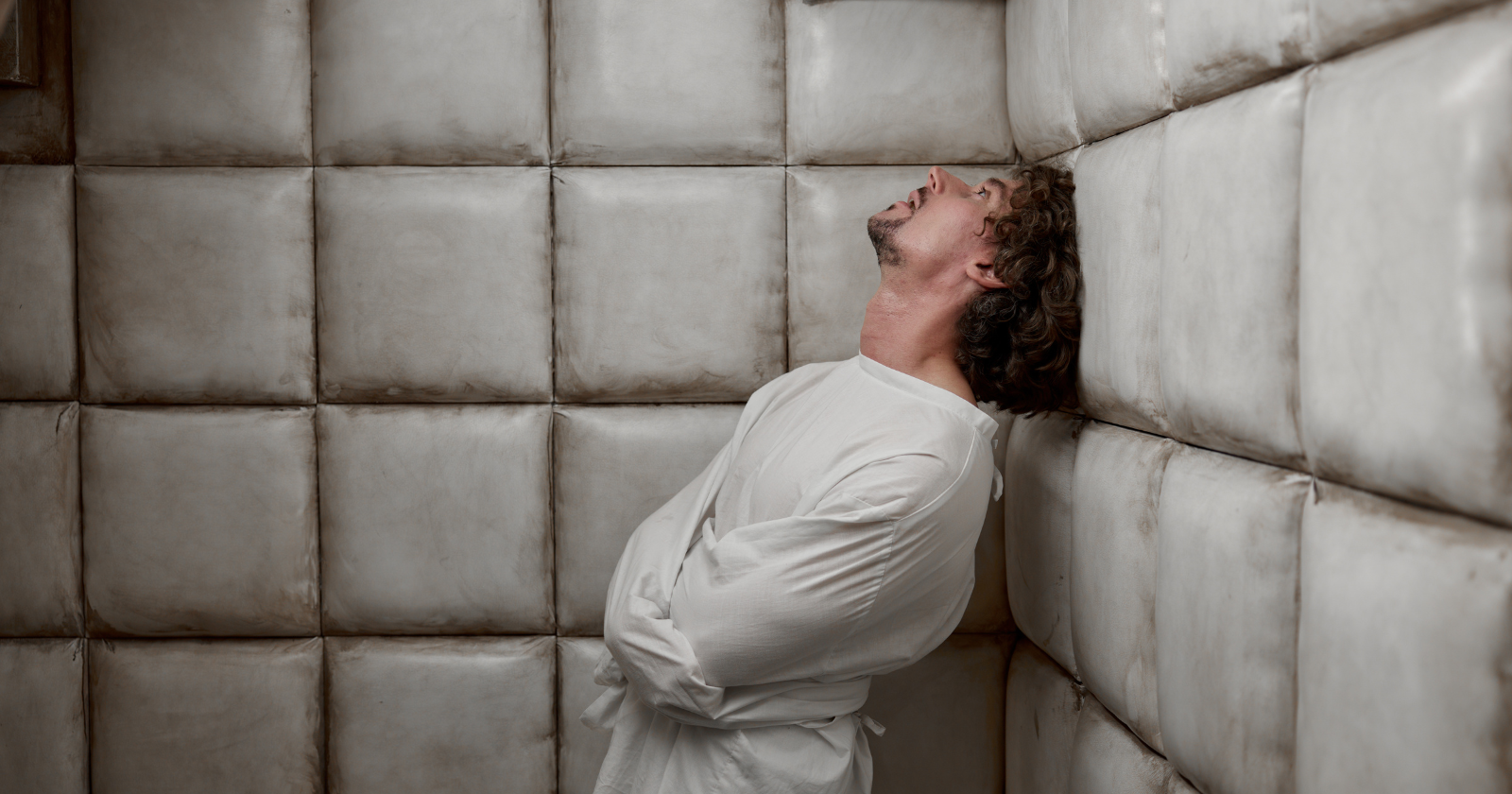
In the late 1960s and early 1970s, American psychiatry was in the middle of a public credibility crisis. The diagnostic manual the profession depended on, the DSM-II, had been published in 1968 and was widely understood, even within the profession, to be unreliable. Different psychiatrists examining the same patient frequently produced different diagnoses. The same patient examined at different times could be diagnosed with different conditions. Critics inside and outside the profession argued that psychiatric diagnosis was essentially a matter of clinical opinion dressed up in the language of medicine, and that what the field called mental illness was as much a social construct as a clinical reality.
The criticism was not new. The novelist Ken Kesey had published One Flew Over the Cuckoo’s Nest in 1962. The Scottish psychiatrist R. D. Laing had been arguing for nearly a decade that schizophrenia might be a rational response to an irrational society. The Hungarian-American psychiatrist Thomas Szasz had argued in 1961 that mental illness itself was, in most cases, a metaphor rather than a literal disease. The anti-psychiatry movement was substantial, vocal, and influential. What it lacked was a single piece of empirical evidence that could decisively demonstrate whether the criticisms were correct.
In January 1973, a piece of such evidence appeared in the journal Science. It was nine pages long. Its author was a Stanford professor of psychology and law named David Rosenhan. Its title was “On Being Sane in Insane Places.”
It would, in the years that followed, become one of the most cited critiques of psychiatric diagnosis in the history of the field.
The eight pseudopatients
The study Rosenhan described in his 1973 paper was, on the face of it, a straightforward field experiment. He had recruited eight people, including himself, who had no history of psychiatric illness and no current symptoms of any psychiatric disorder. Three of the pseudopatients were women. Five were men. Their occupations included a psychology graduate student, a paediatrician, a psychiatrist, a painter, a housewife, and Rosenhan himself. None of them had any direct experience of being a psychiatric patient.
Rosenhan instructed each of them to present themselves at the admissions desk of a psychiatric hospital and report a single symptom. They were to say that they had been hearing a voice. The voice, they were to report, was unfamiliar to them, the same sex as themselves, and seemed to be saying single words, mostly “empty,” “hollow,” and “thud.” The pseudopatients were instructed to give their real life histories in every other respect, with only the names of close family members changed to protect their privacy. They were to describe their actual marriages, their actual employment, their actual childhood relationships. The single symptom of the unfamiliar voice was the only fabrication they were permitted.
From the moment they were admitted to a psychiatric ward, they were to behave entirely normally. They were to stop reporting the voice. They were to take whatever medications they were prescribed and surreptitiously dispose of them. They were to engage with the staff and other patients in the ordinary way, comply with hospital procedures, and attempt to secure their own release by demonstrating that they were not, in fact, mentally ill.
The pseudopatients did not know how long they would be hospitalised. They did not know what diagnoses they would receive. They did not know how the staff would interpret their behaviour. They did not, in some cases, know whether the experiment would be considered a success or a failure. They had been told only that Rosenhan would secure their release if they were unable to secure it themselves, and that the experiment was investigating whether psychiatric hospitals could reliably distinguish people who were genuinely ill from people who were not.
This video goes into more detail about the case – click here to watch it.
Twelve hospitals, five states, two coasts
The twelve hospitals to which the pseudopatients presented themselves were distributed across five states on the East and West Coasts of the United States. They included old, underfunded state hospitals and modern, well-funded research hospitals. Some were affiliated with prestigious universities. Some had reputations for poor quality of care. Some were considered exemplary by the standards of contemporary American psychiatry. The selection had been designed to test whether the experimental results would depend on the institution involved or whether they would hold across the range of psychiatric care available in the United States at the time.
Every pseudopatient was admitted. None was identified by the staff as a person without psychiatric illness. Seven of the eight were diagnosed with schizophrenia. The eighth was diagnosed with manic-depressive psychosis, which is what bipolar disorder was called at the time. The diagnoses were made on the basis of the single reported symptom and the standard intake interview. The pseudopatients had given accurate accounts of their personal histories and had reported no symptoms beyond the unfamiliar voice. They were admitted as severely mentally ill regardless.
From the moment of admission, they behaved normally. The voice did not return. They reported feeling well. They asked when they would be discharged. They engaged with staff in a manner indistinguishable from how a non-hospitalised person would engage with anyone else.
They were kept in the hospitals for an average of nineteen days each. The shortest hospitalisation lasted seven days. The longest lasted fifty-two days. Every pseudopatient was discharged, eventually, with a diagnosis of schizophrenia in remission, which is the formulation American psychiatry used at the time to acknowledge that a patient’s symptoms had abated without conceding that the diagnosis itself might have been wrong.
The patients on the wards, on Rosenhan’s account, were substantially better than the staff at identifying the pseudopatients. In the first three hospitalisations alone, thirty-five of the one hundred and eighteen genuine patients expressed suspicions that the pseudopatients were not actually mentally ill. Some accused them directly of being researchers or journalists checking up on the hospital. The pseudopatients were instructed not to confirm or deny these accusations. The staff, in every case, missed the same suspicions the other patients had voiced openly.
What the staff saw
The pseudopatients took detailed notes throughout their hospitalisations. The note-taking itself, in several cases, became part of the diagnostic record. Nursing notes from three of the pseudopatients recorded that “patient engages in writing behaviour,” with the writing characterised as a possible symptom of pathology rather than as the ordinary behaviour of an educated person passing time in a confined environment. The pseudopatients, who were keeping clinical records of their hospitalisations, were being clinically observed as people whose writing was itself a manifestation of illness.
The pattern repeated across the documented observations. The pseudopatients’ ordinary behaviours, performed under hospital conditions, were systematically reinterpreted as symptoms of the illnesses they had been diagnosed with. Pacing the corridors was recorded as agitation. Talking with other patients was recorded as inappropriate social engagement. Asking to be discharged was recorded as evidence of poor insight into one’s own condition. Asking when discharge would be granted was recorded as anxiety.
Rosenhan offered an interpretation of these observations that became one of the most cited claims in the paper. Once the diagnostic label had been applied, on his account, the staff stopped seeing the patient and began seeing the diagnosis. Every behaviour the patient subsequently exhibited was interpreted through the diagnostic frame. The frame was self-confirming. Anything the patient did, including behaviours that would have appeared entirely ordinary outside the hospital, became evidence of the very condition the patient had been admitted for.
“In a psychiatric hospital,” Rosenhan wrote, “the place is not very conducive to accurate diagnosis.”
The Science publication and the immediate aftermath
The 1973 Science paper landed in the middle of the credibility crisis American psychiatry was already experiencing, and it accelerated that crisis substantially. The paper was read widely. It was reprinted in textbooks and introductory psychology courses across the country. It became required reading for medical students, social workers, and law students. The anti-psychiatry movement seized on it as definitive empirical proof of what its proponents had been arguing for over a decade. The popular press treated it as a scandal that demanded a response from the profession.
The response, when it came, was substantial. The American Psychiatric Association initiated a multi-year process of revising the DSM, with the explicit goal of producing diagnostic criteria rigorous enough that two different psychiatrists examining the same patient would reliably arrive at the same diagnosis. The result, published in 1980, was the DSM-III, which represented the most comprehensive revision of American psychiatric diagnosis since the manual had first been published in 1952. The DSM-III’s operational diagnostic criteria, its checklists of required symptoms, and its formalised diagnostic categories all reflected, in part, an attempt to ensure that nothing like the Rosenhan results could happen again.
The Rosenhan paper, in the field’s own subsequent assessment, had done what no amount of theoretical critique by Laing or Szasz had been able to do. It had forced American psychiatry to reform itself from the inside.
For forty-six years, that was the story of the Rosenhan experiment, as it appeared in textbooks, popular accounts, and the field’s own institutional memory. The eight pseudopatients had walked into twelve hospitals. They had been admitted, diagnosed, kept, and eventually released. The diagnostic system had failed. The profession had reformed itself in response.
Then, in 2019, a journalist who had been investigating the original case for several years was granted access to the personal files Rosenhan had left behind when he died in 2012.
What she found in those boxes changed everything that had been said about the experiment for the previous half-century.
The full story of what the journalist discovered, including the hospital challenge that nobody expected to fail, is the subject of our companion video on the Rosenhan experiment and its long aftermath. The video traces what happened next, what the boxes contained, and what the field of psychiatry has done about it since.