


On January 3, 2013, Tulsi Gabbard placed her hand on a copy of the Bhagavad Gita and took the oath of office as the newly elected representative from Hawaii’s 2nd Congressional District, becoming the first Hindu American ever to serve in the United States Congress. The book was not a borrowed prop or a ceremonial flourish. It was her own personal copy, the one she had carried with her during her deployment to Iraq with the Hawaii Army National Guard in 2004, dog-eared and read so many times the spine had softened.
She was 31 years old. She had just defeated a Republican opponent by more than 60 points. And in the small ceremonial swearing-in photographed afterward with Speaker John Boehner, she held up the Gita for the cameras, smiling, while her family stood beside her in aloha shirts and leis.
The image traveled fast. Hindu American newspapers ran it on their front pages. Indian outlets picked it up within hours. For a religious community that had quietly grown to roughly two million people in the United States without ever sending one of its own to Capitol Hill, the photograph carried a weight that was hard to put into words.
The book she chose
The Bhagavad Gita is a 700-verse Sanskrit scripture embedded inside the much longer Mahabharata epic, composed sometime between the 5th and 2nd centuries BCE. It takes the form of a dialogue between the warrior prince Arjuna, paralysed by doubt on the eve of a battle against his own cousins, and his charioteer Krishna, who is revealed during the conversation to be a manifestation of the divine.
Arjuna does not want to fight. Krishna tells him that duty performed without attachment to its results is the highest form of action. The text is, among other things, a meditation on how a soldier reconciles violence with conscience.
Gabbard had read it in that exact context. She enlisted in the Hawaii Army National Guard in 2003, deployed to a field medical unit at Logistical Support Area Anaconda in Iraq in 2004, and carried the Gita through a tour in which she compiled daily casualty rosters. She has said in interviews that the book was the spiritual anchor that got her through the deployment. When she returned and ran for Congress eight years later, swearing on it was not a statement engineered for the press. It was the most personal book she owned.
A first that took longer than people realized
Hindus have lived in the United States since at least the 1890s, when Swami Vivekananda addressed the Parliament of the World’s Religions in Chicago in 1893 and stayed on to lecture across the country. The 1965 Immigration and Nationality Act, which abolished the national-origins quota system, opened the door to large-scale migration from South Asia. By the 2010 census, the U.S. Hindu population had grown into the millions, concentrated in tech corridors around Silicon Valley, New Jersey, Houston, and the Research Triangle.
And yet for 47 years after that immigration door opened, no Hindu had ever been elected to the House or the Senate. The first Muslim American representative, Keith Ellison of Minnesota, was sworn in on a Quran once owned by Thomas Jefferson in 2007. The first Buddhist members of Congress, Mazie Hirono and Hank Johnson, took their seats the same year. Hinduism was the last of the major world religions to send a representative to the Capitol.
Gabbard’s path was unusual. She was born in American Samoa in 1981 to a Catholic father of Samoan descent and a mother who had converted to Hinduism. The family moved to Hawaii when she was two. She grew up reciting verses from the Gita at home and chose Hinduism on her own as a teenager, identifying specifically with the Gaudiya Vaishnava tradition, which centers devotion to Krishna.
The oath itself
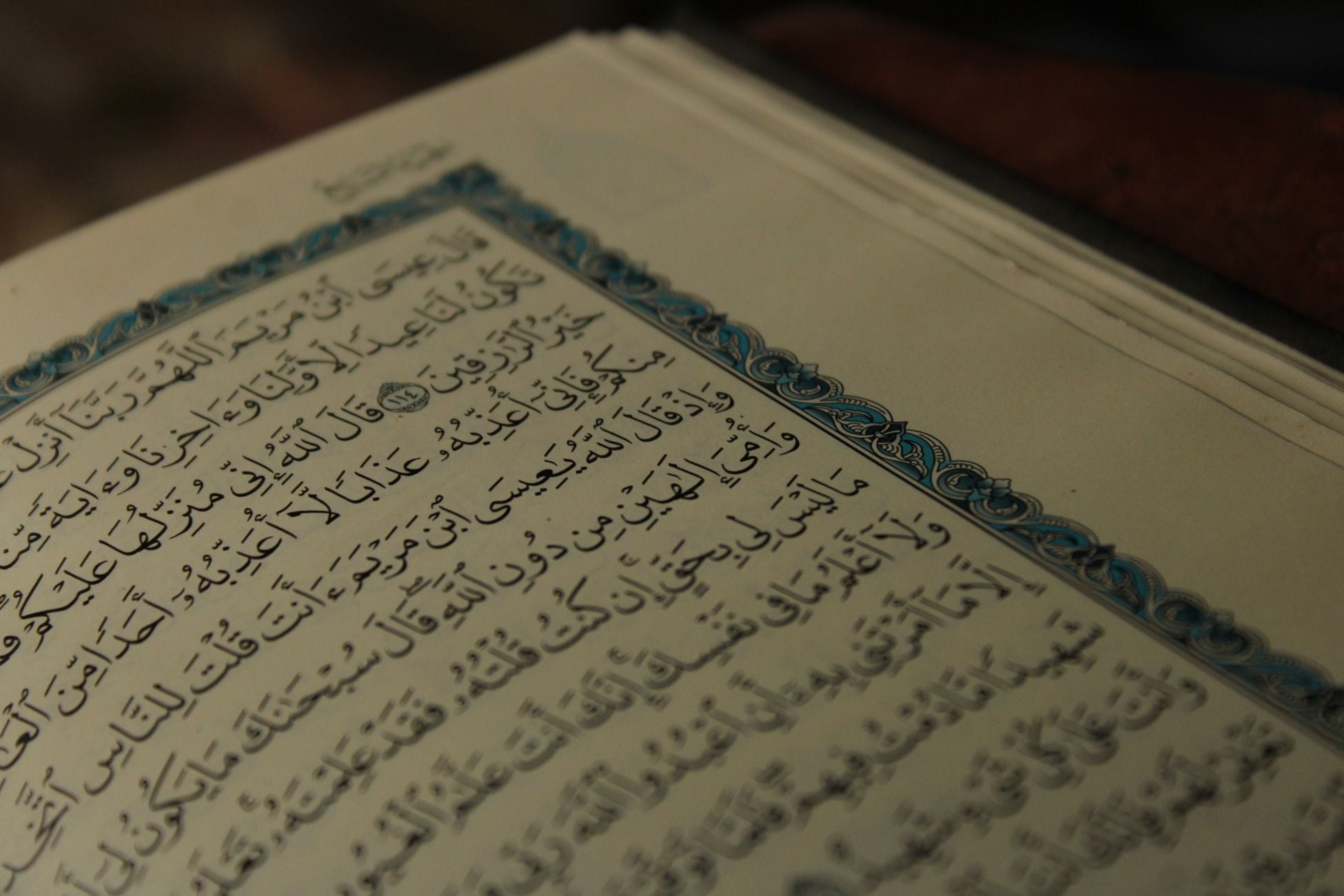
The U.S. Constitution is explicit about what an oath of office cannot require. Article VI states that “no religious test shall ever be required as a qualification to any office or public trust under the United States.” The actual ceremonial swearing-in of House members is collective: all 435 representatives stand together in the chamber, raise their right hands, and recite the oath en masse. No book is required at that moment, and none is used.
The photographs the public sees, the ones with the hand on a holy book, come from the reenactments staged afterward in the Speaker’s office for family pictures. That is where the choice of book becomes personal. John Quincy Adams reportedly used a book of laws rather than a Bible. Theodore Roosevelt used no book at all when he was hastily sworn in after McKinley’s assassination in 1901. Ellison used Jefferson’s Quran in 2007. Gabbard used her Gita in 2013.
She told reporters afterward that choosing the Gita was a way of honoring the source of strength she had relied on during her deployment, and that she hoped it would signal to young Hindu Americans that there was no contradiction between their faith and full participation in American civic life. Research on cultural representation and identity has long suggested that visible symbols of inclusion in elite institutions shift how minority communities perceive their own belonging.
What the moment meant in Honolulu and New Delhi
In Hawaii, where Gabbard had served in the state legislature at age 21 before her military deployment, the reaction was muted. Hawaii is one of the most religiously diverse states in the country, and the 2nd District includes large Buddhist, Shinto, and Christian communities side by side. A Hindu representative was, by local standards, unremarkable.
In India and across the Hindu diaspora, the response was something closer to elation. The Hindu American Foundation issued a statement calling it a milestone. Indian newspapers ran multi-page features. Prime Minister Manmohan Singh sent congratulations. When Narendra Modi was elected prime minister the following year, Gabbard met with him at the United Nations General Assembly in September 2014 and presented him with the same copy of the Gita she had used at her swearing-in. He kept it.
The gesture had echoes. Coverage in outlets exploring religious representation in public life has documented how single visible figures can reshape perceptions of an entire community in surprisingly short timeframes.
The career that followed
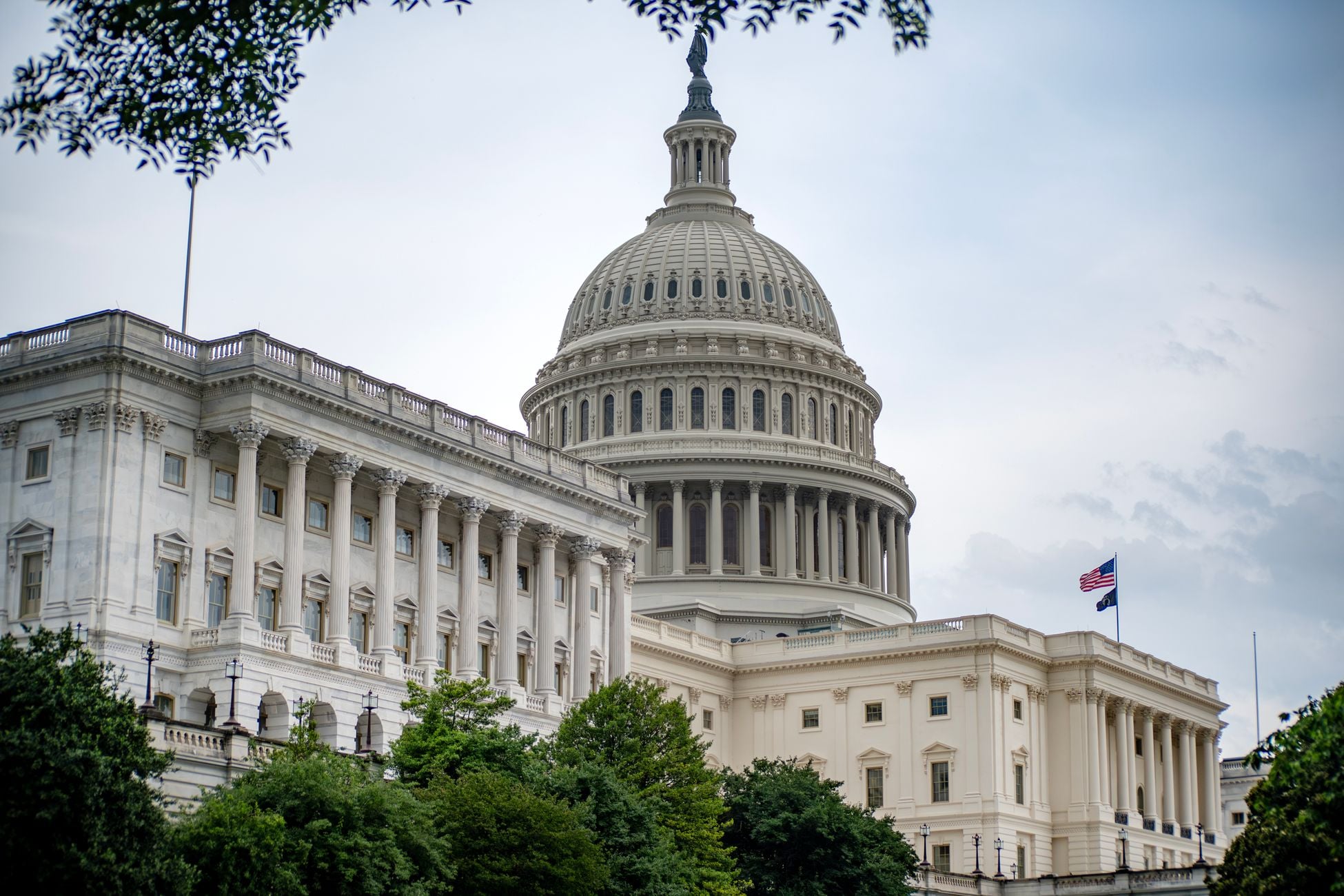
Gabbard served four terms in the House, from 2013 to 2021, representing Hawaii’s 2nd District. She sat on the House Armed Services Committee and the Foreign Affairs Committee. She rose to vice chair of the Democratic National Committee before resigning that post in 2016 to endorse Bernie Sanders in the Democratic primary, a break with party leadership that defined the rest of her time in Washington.
She ran for the Democratic presidential nomination in 2020, qualified for several primary debates, and withdrew in March of that year. She did not seek reelection to her House seat. In 2022 she left the Democratic Party. In 2024 she joined the Republican Party and campaigned for Donald Trump. After his election, she was nominated and confirmed as Director of National Intelligence, becoming the first Hindu American and the first person of Samoan descent to lead the U.S. intelligence community.
Her tenure in that role drew controversy from the start and ended with her departure from the position. On her final day as DNI, she made public statements about declassified intelligence material related to Covid-19 research oversight that became a final flashpoint in an already polarising tenure. She also drew sustained criticism for a visit to Hiroshima during which she denounced what she called warmongering by U.S. policymakers.
The Gita, still
Whatever one makes of the political arc that followed, the moment in January 2013 is fixed. A 31-year-old Iraq War veteran from Hawaii walked into the Speaker’s office holding a Sanskrit scripture in English translation, set her hand on it, and swore to defend the Constitution. She was the first member of her religion to do so in 224 years of American congressional history.
The copy she carried in Iraq, the copy she used at the Capitol, now sits in the office of the Indian prime minister, 8,000 miles from the field hospital in Balad where she first read it under fluorescent light between shifts. The verses inside it were composed somewhere on the Gangetic plain more than two thousand years ago. The chain of hands that brought it to a desk in the United States Capitol in 2013 was long, and not at all straight.
That is the thing about firsts. They look inevitable in retrospect and impossible beforehand, and the people who become them rarely set out to. Gabbard ran for Congress on veterans’ issues and environmental policy. The Gita was just the book she happened to love most. The history was a byproduct.