
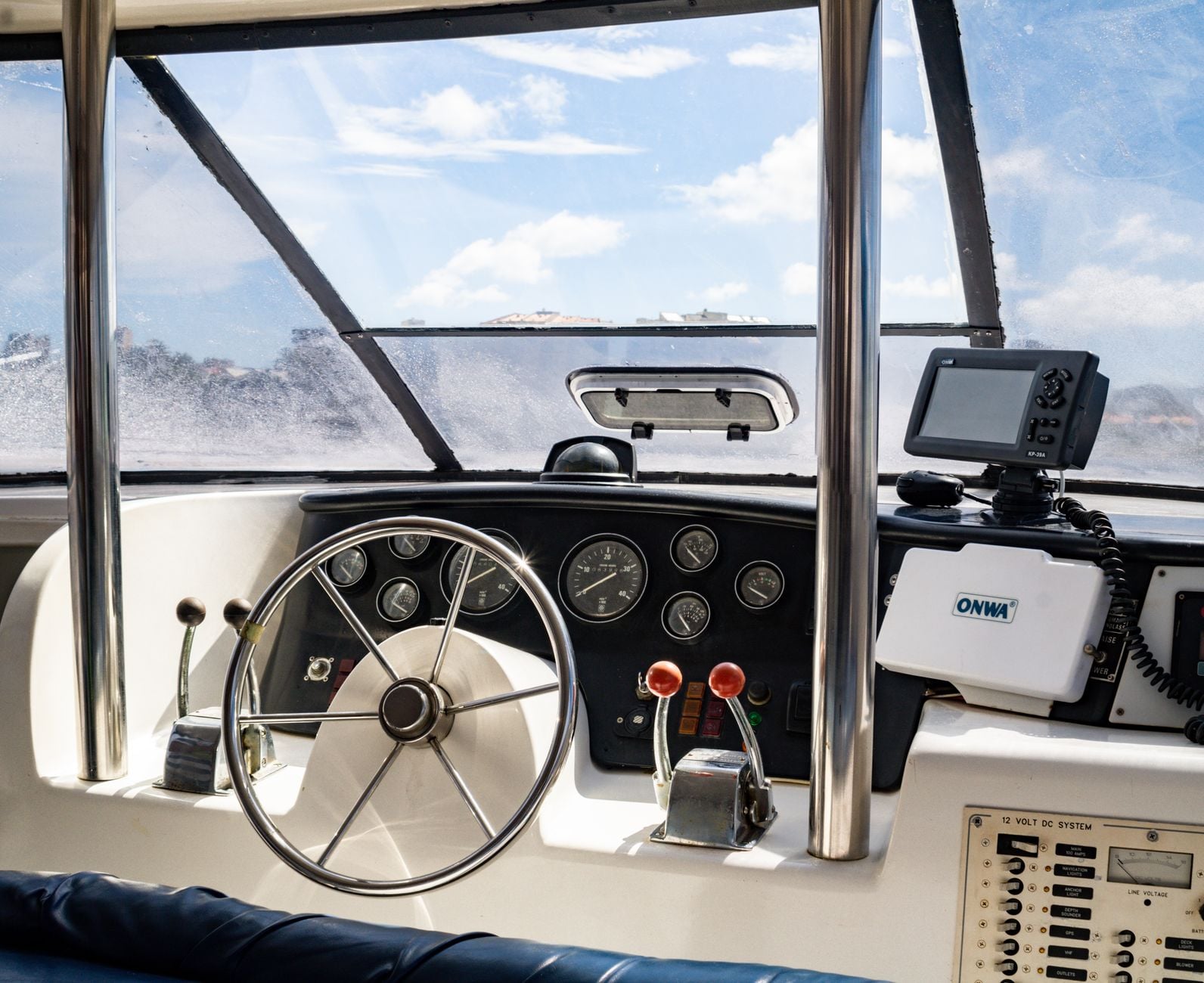
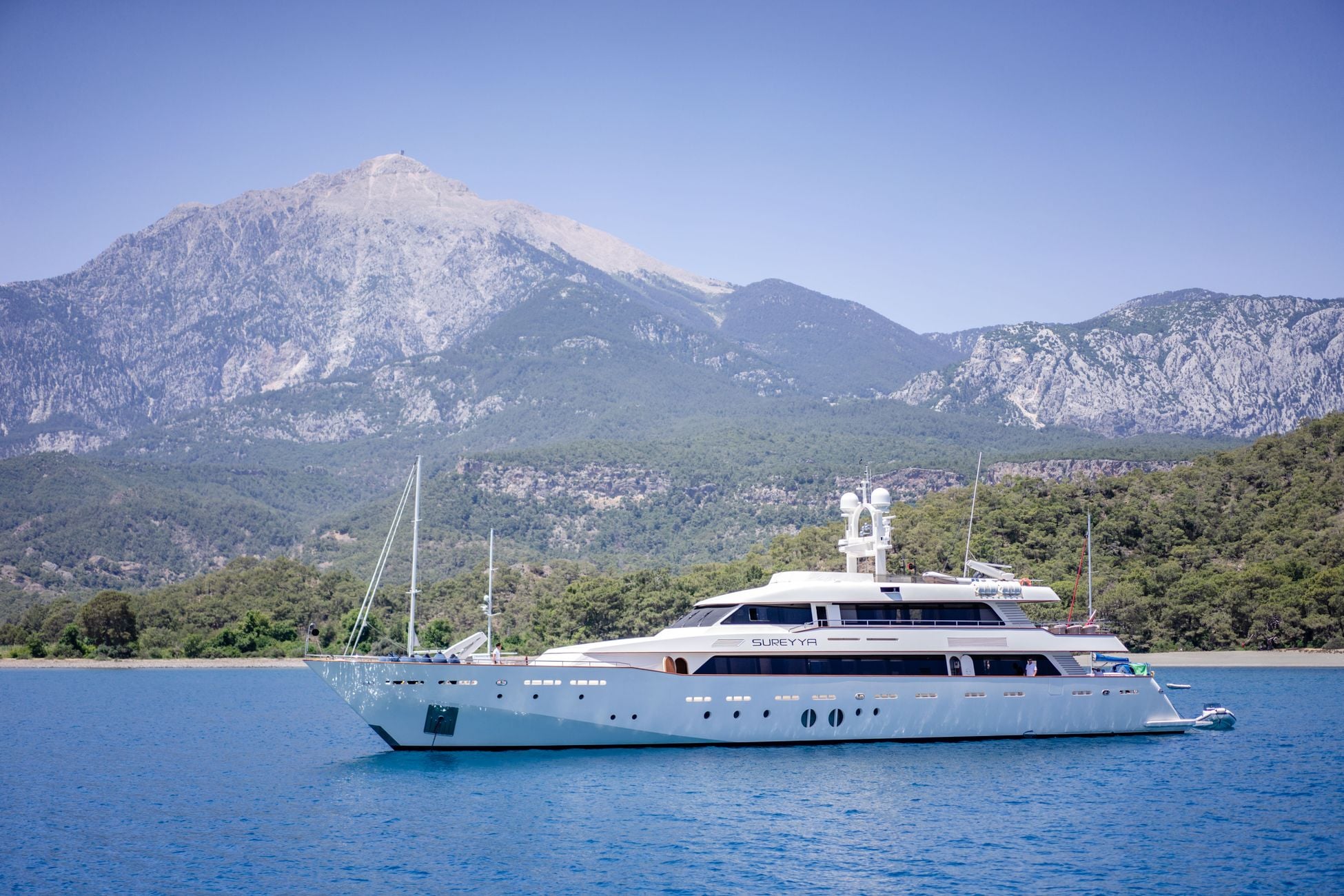
Todd Humphreys, an aerospace engineering professor at the University of Texas at Austin, stood on the top deck of the White Rose of Drachs in the summer of 2013 with a suitcase-sized box of custom electronics and quietly pushed the 213-foot superyacht off its course through the Mediterranean. The crew, watching their bridge displays, saw a straight line. The rudder was turning. The GPS said everything was fine. The ship was drifting hundreds of meters sideways, and no alarm anywhere on the vessel rang.
The yacht cost roughly $80 million. The equipment Humphreys used to hijack its navigation cost a few thousand.
That mismatch — between the price of the thing being attacked and the price of the attack — is the whole story of civilian GPS security, and it has only gotten worse in the thirteen years since.
The experiment the captain agreed to
Humphreys had been working on GPS spoofing for years at UT’s Radionavigation Laboratory. The team had already demonstrated GPS spoofing on a small drone in a test at White Sands Missile Range. The next question was whether the same trick worked on something big, expensive, and manned.
The owner of the White Rose of Drachs said yes. So did the captain. The yacht was on a Mediterranean cruise, and Humphreys’ team brought their spoofer aboard and set it up on the upper deck, aimed at the yacht’s twin GPS antennas.
A GPS receiver is a trusting instrument. It listens for faint microwave signals from satellites roughly 20,000 kilometers overhead and calculates its position from the tiny differences in when each signal arrives. Those signals, by the time they reach Earth, are weaker than the background noise of the sky. Any transmitter close by, broadcasting a slightly stronger counterfeit, can drown out the real ones.
The Texas spoofer did exactly that. It generated fake satellite signals matched precisely to what the yacht’s receivers expected to hear — same satellite IDs, same timing structure, same expected content — then slowly, gently, nudged the timing offsets to shift the calculated position.
Why nobody on the bridge noticed
The key word is slowly. A crude spoofer that jumps a ship’s position by a kilometer sets off every alarm on the bridge. Humphreys’ team started their counterfeit signals at the yacht’s actual position and then walked the fake position sideways at a rate the autopilot could not distinguish from ocean current or wind drift.
The autopilot, which uses GPS to hold a course, saw the ship apparently drifting north of its intended track. It corrected by steering south. The rudder turned. The heading changed. The GPS display, still reporting the counterfeit position, showed the ship back on course.
In reality, the yacht had turned into a new physical heading and was now cutting a parallel line through the sea, hundreds of meters off its planned route. To the crew, every instrument agreed the voyage was normal. Only Humphreys’ laptop, tracking the true position with a separate reference receiver, showed the drift.
The crew were told about the test afterward.
The price gap
The spoofer was not a commercial product. Humphreys’ lab built it from scratch — a software-defined radio, a signal generator, custom code his students had spent years writing. The hardware cost at the time was a few thousand dollars. The intellectual work behind it was enormous. The physical bill of materials was not.
Meanwhile, the White Rose of Drachs carried redundant navigation systems, radar, AIS transponders, satellite communications, and a bridge full of screens. None of it caught the attack. None of it was designed to.
That is the shape of the problem across most critical infrastructure today. The systems society depends on — power, water, shipping, aviation — were built to be reliable, not adversarial; they assume the signals they receive are honest. Recent analysis in Forbes makes a related point about these sectors’ security posture: organizations have poured resources into detecting attacks but remain far less able to reconstruct or prove what happened once one lands.
Why civilian GPS is so easy to fake
The civilian GPS signal, called C/A code on the L1 frequency, is public. Its structure is documented, its timing is predictable, and it carries no cryptographic signature. A receiver has no way to check whether the satellite that appears to be transmitting is actually the satellite, or a laptop in a backpack fifty meters away.
Military GPS uses an encrypted signal, M-code, that resists spoofing because the counterfeit would need the key. Civilian receivers — in phones, ships, planes, tractors, cell towers, power grids — do not have that protection.
Timing is the quieter half of the vulnerability. GPS satellites are, at heart, flying atomic clocks. Cell networks, stock exchanges, and electrical grids all use GPS timing to synchronize themselves. A spoofer that shifts the perceived time by a few microseconds does not move a ship, but it can desynchronize a substation.
What has changed since 2013
The spoofing threat has moved from academic demonstration to routine geopolitical nuisance. Ships in multiple maritime regions now regularly report their GPS receivers placing them at impossible locations, sometimes showing vessels at airports dozens of miles inland. Airline pilots have reported similar effects on approach to airports near active conflict zones.
Maritime operators have adapted by leaning on alternatives. Some vessels have used Starlink’s low-Earth-orbit constellation as a check on GPS position, because Starlink satellites move fast and low enough that their signals are harder to mimic. That informal backup is now in question — a PCMag report quoted mobile satellite specialist Luis Soltero describing maritime alarm at SpaceX’s plans to drop the location feature the industry had come to rely on as a spoofing-resistant backup.
The infrastructure question Humphreys raised
What Humphreys wanted the yacht test to prove was not that yachts are in danger. It was that anything steered by GPS is in danger — container ships, oil tankers, autonomous vehicles, agricultural drones, delivery robots — and that the countermeasures had not kept up with the attack tools.
Thirteen years later, the argument has migrated into federal policy. The Cybersecurity and Infrastructure Security Agency announced a new advisory body aimed at coordinating information sharing across critical infrastructure sectors, and a recent executive order laid out voluntary frameworks for AI and cybersecurity practices in those same sectors.
The vulnerabilities have also drawn in the AI industry. Anthropic recently launched Project Glasswing, using AI to hunt for undiscovered flaws in critical software — an implicit acknowledgement that the human effort of finding bugs one by one cannot keep pace with the attack surface.
Beyond the coastline
The same weakness travels upward. Satellites themselves rely on ground links, timing signals, and command channels that were designed decades ago, when the space environment was quieter and more polite. A Digital Journal analysis noted that orbital systems will increasingly need to function autonomously in radiation-hardened, adversarial conditions — the same defensive posture Humphreys spent his career arguing for at sea level.
Humphreys, now a professor and director of UT’s Radionavigation Laboratory, has spent the years since the White Rose test doing versions of the same demonstration on cars, drones, and cellular timing systems. Each time, the message has been the same. The signal you are trusting is faint, unauthenticated, and can be overwritten by a stranger with a small budget and patience.
The line the ship never took
The White Rose of Drachs completed its Mediterranean voyage. The spoofing test lasted only long enough to prove the point, and the yacht was steered back onto its planned route before any actual navigational hazard was reached.
If a chart of the voyage were overlaid with the true GPS track and the spoofed one, they would separate for a while — a narrow lens of open water between two lines — and then rejoin, as though nothing had happened. Somewhere in the Mediterranean, in the summer of 2013, an $80 million ship traced a route that its own instruments never recorded, at the direction of a professor with a suitcase.
The suitcase is cheaper now. The ships are not.
