
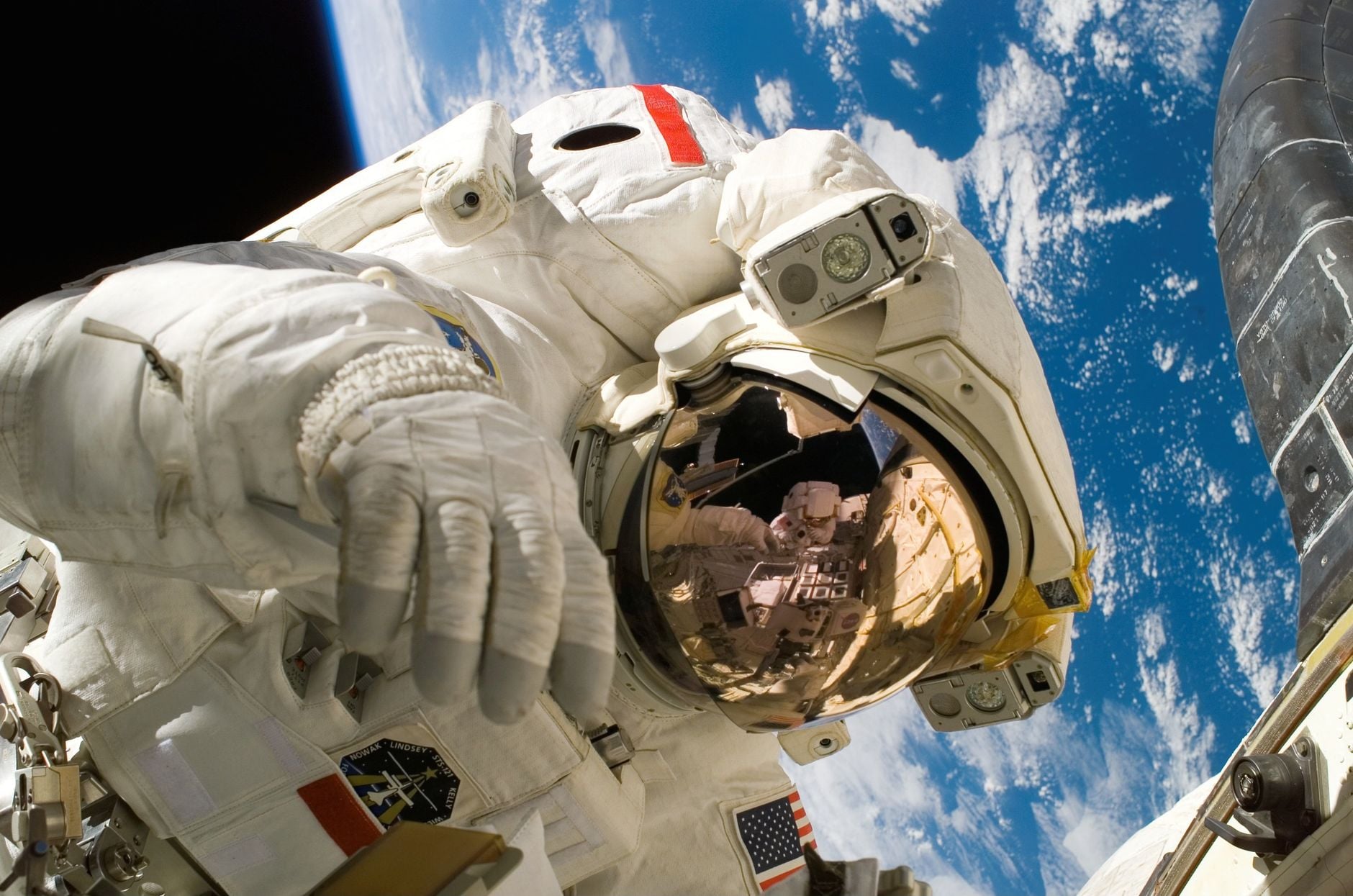
Scott Kelly floated out of the Soyuz capsule after nearly a year aboard the International Space Station and immediately couldn’t tell which way was down. His inner ear, specifically two calcium-carbonate-studded organs called the utricle and saccule, had spent nearly a year with nothing to weigh. On Earth, those organs continuously report to the brain. In orbit, they had gone silent.
The organs are still there. The gravity is not.
Tucked behind each of your eardrums, buried in the densest bone in your body, sits a fluid-filled labyrinth about the size of a pea. Inside are five separate motion sensors per ear — three semicircular canals arranged at right angles like the corner of a room, plus the utricle and saccule. Together they form the vestibular system, and they have been running in the background of every moment of your life since before you were born.
The rocks in your head
The utricle and saccule contain something genuinely strange: tiny crystals of calcium carbonate called otoconia, or “ear stones.” They sit on top of a jelly-like membrane studded with hair cells. When your head tilts, the crystals shift under gravity, dragging the jelly, bending the hair cells, and firing a signal to the brain that says down is that way.
Each otoconium is only a few micrometres across. You have thousands of them per organ. They are, in the most literal sense, rocks in your head, and they are the reason you know which way the ceiling is without looking.
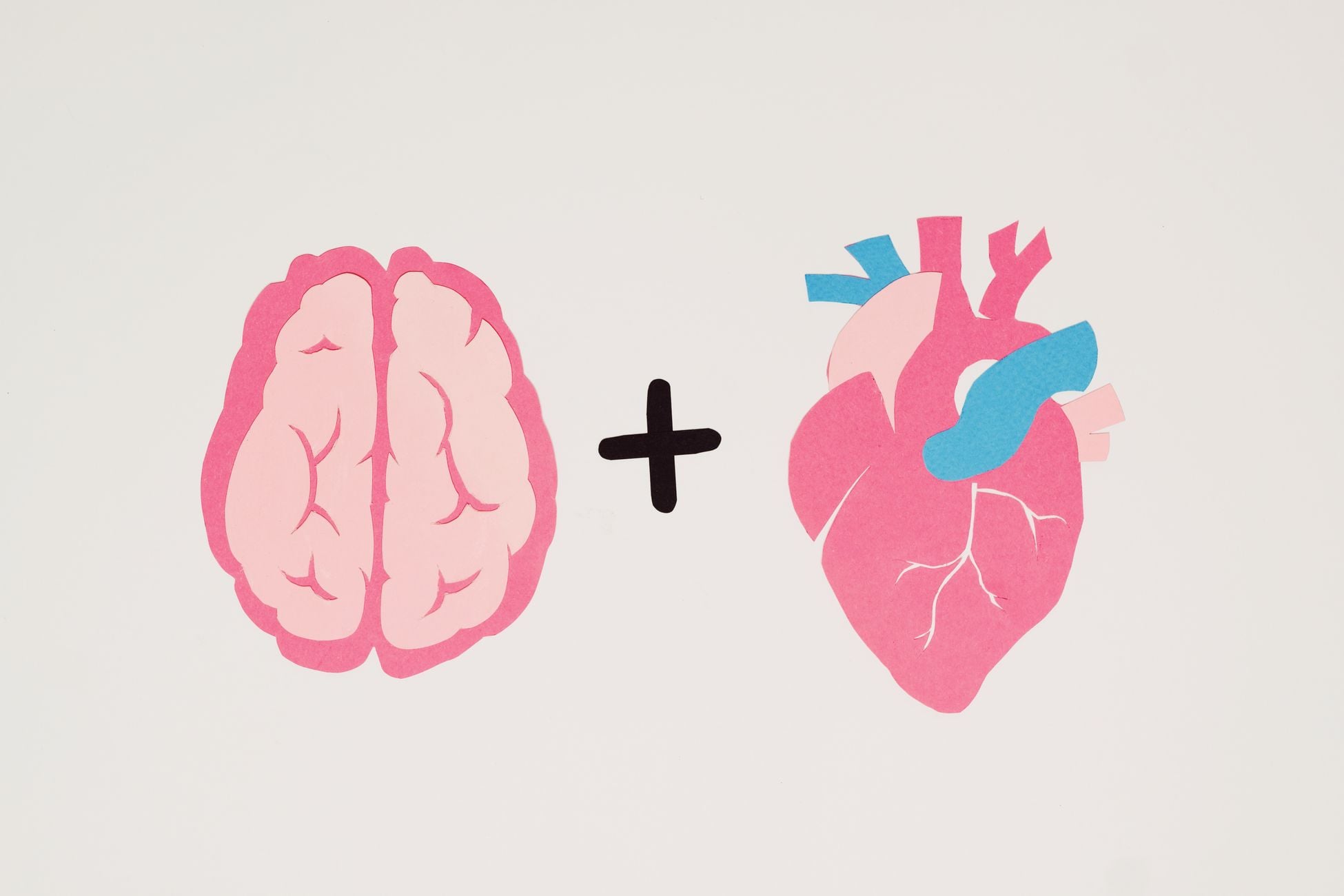
The semicircular canals handle rotation. Fluid inside them sloshes when you turn your head, deflecting a gelatinous flap called the cupula. That is why you can close your eyes in a car and still know when the driver takes a left. The three canals are oriented on three different planes so that any rotation in any axis moves fluid in at least one of them.
The whole apparatus updates faster than your visual system. When you shake your head no, your eyes stay locked on this sentence because the vestibulo-ocular reflex is counter-rotating your eyeballs at exactly the opposite speed. Try it. The text does not blur.
A system designed for 1g
Every calibration in the vestibular system assumes one constant: the pull of Earth’s gravity, 9.8 metres per second squared, straight down. The otoconia have that specific weight built into their density. The neural wiring in the brainstem is tuned to it. Because it never changes on Earth, the system runs entirely below awareness, which is why most people cannot describe how they know which way is up — they just know.
Along with proprioception, the sense of where your limbs are in space, the vestibular system forms one half of what are sometimes called the hidden senses. You have five conscious senses and at least two you never think about. They only announce themselves when they fail.
They fail spectacularly in orbit.
What happens when down disappears
The Space Shuttle used to have a nickname for the first two or three days of any mission: the vomit comet phase. Most astronauts experience space adaptation syndrome in their first hours in microgravity — nausea, disorientation, cold sweats, the specific misery of a body whose inner ear is screaming that something is catastrophically wrong.
What is wrong is that the otoconia are floating. There is no down for them to fall toward. Every time the astronaut moves their head, the crystals drift instead of settling, and the signal reaching the brain no longer matches what the eyes are seeing or what the muscles are doing. The brain, receiving three contradictory reports about orientation, does what brains do when poisoned: it triggers vomiting.
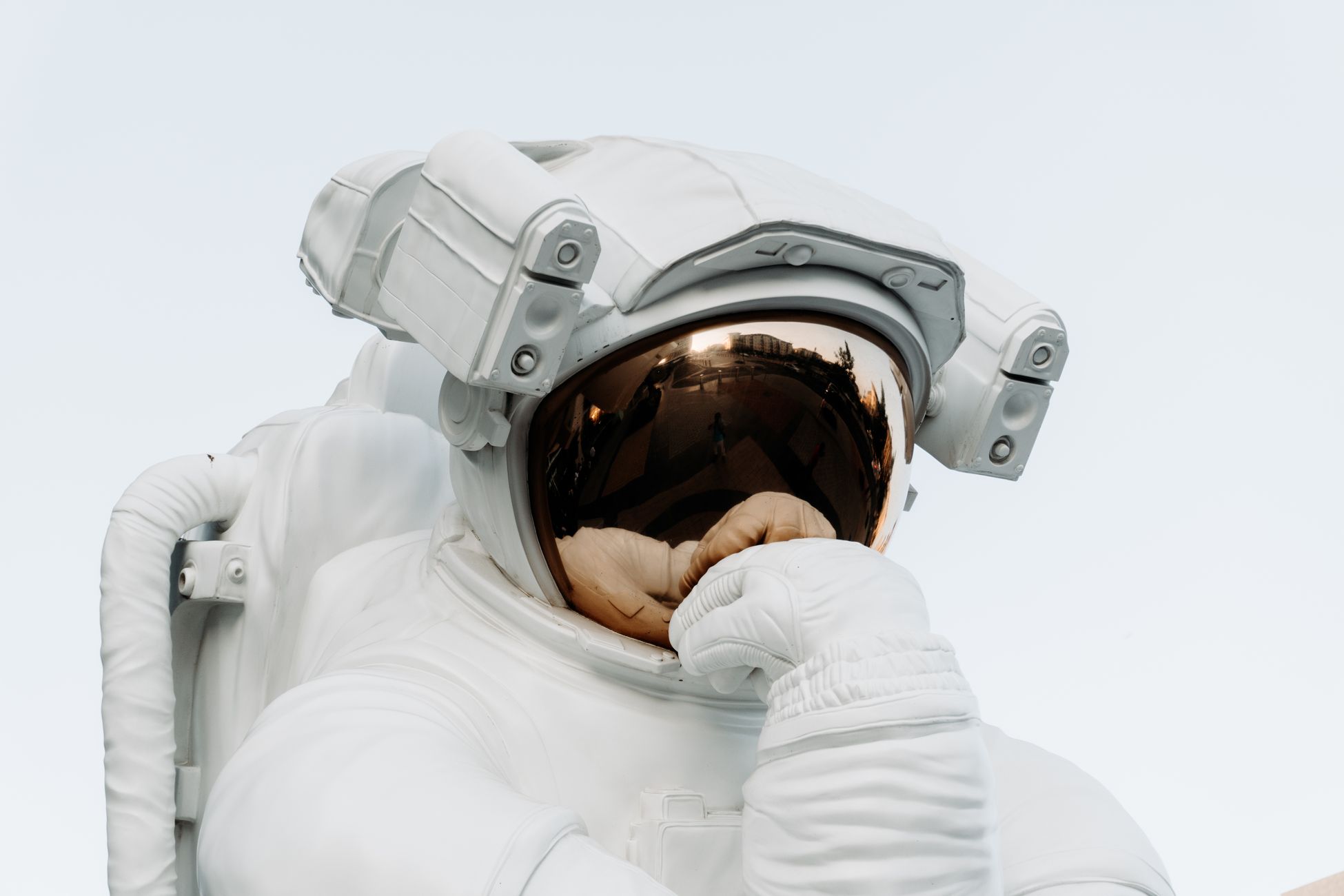
After a few days, the brain gives up asking the inner ear where down is. It starts using visual cues instead — the labels on equipment, the layout of the module, the direction of the astronaut’s own feet. Crews on the ISS report that any wall can become “the floor” depending on which way they are oriented. Some astronauts describe going to sleep facing one direction and waking up convinced the whole station has rotated overnight.
The vestibular system has not switched off. It is still sending signals. They have simply become useless, and the brain has learned to ignore them.
The problem with coming home
Ignoring a sense is easy. Remembering how to use it again is not.
When astronauts return to Earth, the otoconia suddenly have weight again. Every head movement produces a jolt of gravity-reading data the brain has spent months discarding. The result is what NASA flight surgeons call gravity transition sickness. Astronauts stagger. They fall over turning corners. They cannot look down at their feet on stairs without feeling like the room is tumbling.
Recovery teams sit them in chairs before they attempt to walk. On Soyuz landings in Kazakhstan, the crew is often carried from the capsule and placed in reclining seats under a tent, given fluids, and monitored for hours before anyone lets them stand.
Full recalibration takes weeks. But the deeper adaptation runs the other way. Studies of long-duration astronauts have found that the brain never fully lets go of its Earth-gravity settings — even after five or six months in orbit, it keeps expecting the pull of a planet that is no longer beneath it, which is exactly why crews readjust to Earth so fast once they are back. The body was built for one gravitational field, and it does not forget it.
Why the system was built this way
Fish have vestibular systems. So do jellyfish, in a primitive form, using a single grain of calcium in a sac called a statocyst. The architecture evolved over hundreds of millions of years. Every vertebrate that has ever existed has evolved under exactly the same gravitational field, and so the machinery to sense it has been refined without interruption across evolutionary history.
Human otoconia begin forming in the womb early in development. By birth, the system is already functional — which is why newborns can orient toward the breast and why babies startle when tilted backward. The Moro reflex, that dramatic arm-flinging in response to falling, is a vestibular reflex.
It runs in parallel with proprioception, hearing, and vision to give the brain a constant, redundant picture of where the body is. When those systems disagree — reading in a moving car, for instance — the mismatch produces motion sickness. The vestibular system says we are turning, the eyes on the book say we are still, and the brain, unable to resolve the conflict, assumes poisoning. Vomiting is the default response to sensory disagreement about orientation. This has been true since fish.
The engineers who noticed first
Ashton Graybiel, a US Navy flight surgeon, ran some of the earliest experiments on how the vestibular system fails outside its expected range. He put subjects in slow rotation rooms, sometimes for weeks, and watched their inner ears try to adapt to being in a constantly turning environment. His data helped inform how NASA prepared early astronauts and designed protocols for space missions.
Graybiel’s rotation studies established something that still matters: the vestibular system can adapt to almost anything, given time, but the adaptation is neither fast nor comfortable. A person spun for days will eventually stop feeling dizzy. They will then feel violently dizzy when the room stops.
Space flight is the same principle in reverse.
The quietest sense
Right now, as this sentence is being read, the otoconia in the reader’s ears are settled in a specific configuration that reports upright, or reclining, or lying down. Hair cells beneath them are firing at a baseline rate that will not change until the head moves. The brainstem is integrating those signals with pressure from the soles of the feet, tension in the neck muscles, and the horizontal line where the wall meets the ceiling.
None of that is conscious. None of it will become conscious unless something goes wrong — an inner ear infection, a spinning ride at a fair, a viral vestibular neuritis, or, in a handful of humans across history, the sudden absence of gravity itself.
The organs weigh less than a gram each. They keep an upright animal upright for eighty or ninety years, in the dark, without a single instruction from the mind that owns them. And they only ever stop doing their job in one place: about 400 kilometres above the surface of the planet that shaped them, where there is finally nothing left for a tiny rock in an ear to measure.
