


Erving Goffman, a Canadian sociologist working at the University of Edinburgh, published a slim monograph in 1956 called The Presentation of Self in Everyday Life, and in it he argued that every human interaction is a piece of theatre. There is a front stage, where a person performs a version of themselves calibrated for the audience in the room, and a back stage, where the performance drops and the performer rests, rehearses, or complains about the audience. The strain most people describe after a dinner party, a work lunch, or a family gathering, Goffman wrote, is not really about the people involved. It is the muscular cost of holding the front-stage self in place for hours without letting it slip.
The book came out, printed first as a research monograph by the University of Edinburgh Social Sciences Research Centre in a run of a few hundred copies. Anchor Books picked it up in 1959 and it has never been out of print since. It is now one of the most-cited sociology texts of the twentieth century, and its central metaphor — life as staged performance — has quietly become the way most people describe their own social exhaustion without realising where the language came from.
The Shetland hotel that started it
The fieldwork behind the book was done not in a laboratory but in a hotel on the island of Unst, in the Shetlands, between 1949 and 1951. Goffman had gone north as a graduate student from the University of Chicago to study the crofting community, and he took a job at the hotel to pay his way. What he noticed there became the spine of everything he wrote afterwards.
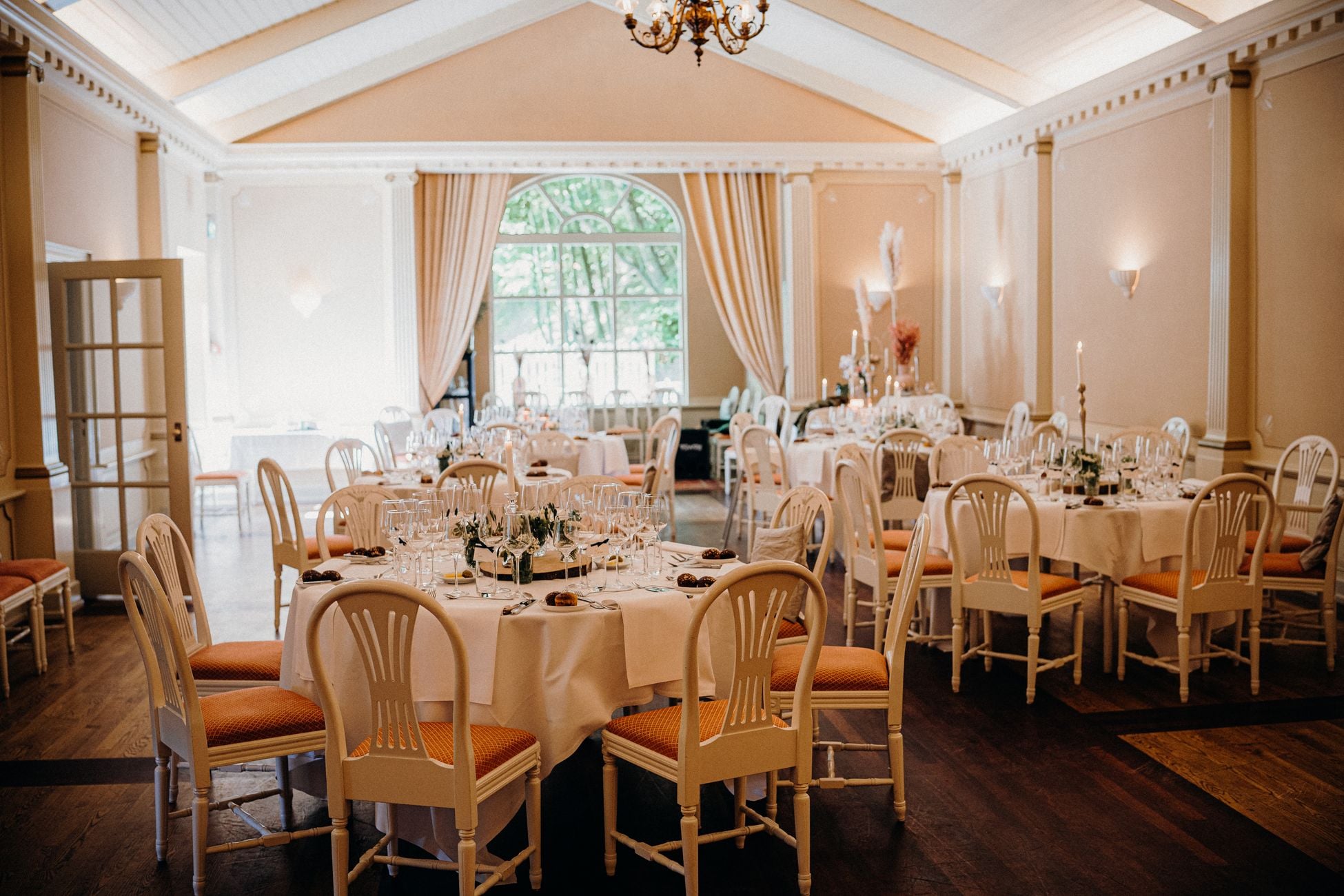
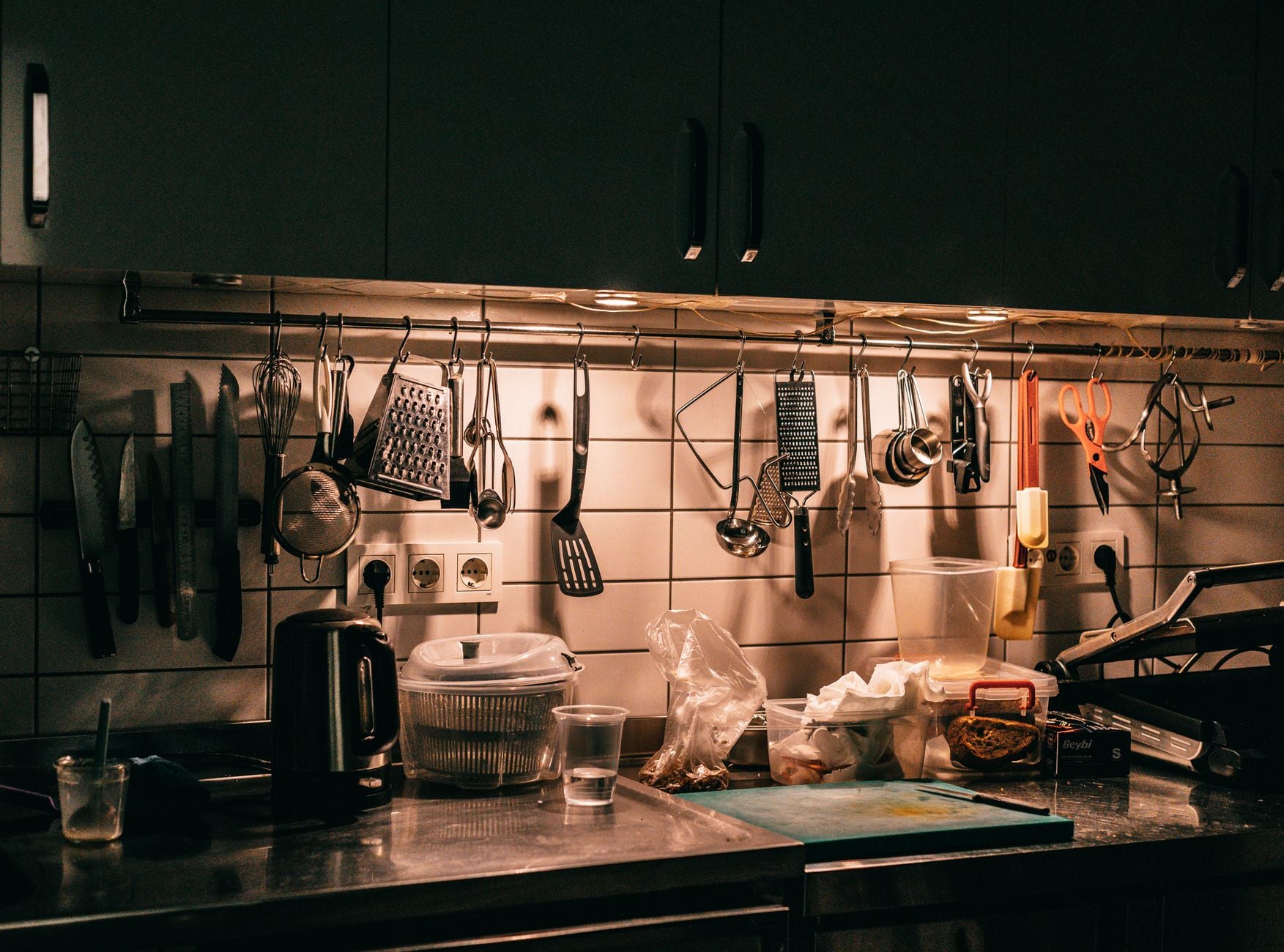
The hotel had a dining room and a kitchen. In the dining room, the local Shetland staff spoke in careful English, walked slowly, kept their faces composed, and treated the guests with a formality that bordered on ceremony. Then they pushed through the swinging door into the kitchen and, in the space of a single step, became different people. They swore, mimicked the guests, ate off the returned plates, argued, laughed, and let their bodies slump. The door was the boundary. On one side, performance. On the other side, the wings.
Goffman realised the pattern was not peculiar to hotel work. It was the shape of every social setting he could think of. A surgeon in the operating theatre and the same surgeon in the surgeons’ lounge. A teacher in the classroom and the same teacher in the staff room. A family hosting guests in the living room and the same family in the kitchen after the guests leave. The front and the back were everywhere, and the door between them was almost always guarded.
What the front stage actually costs
The performance itself is not the exhausting part, Goffman argued. Talking is not tiring. Smiling is not tiring. What tires people is the continuous, low-level monitoring required to keep the performance coherent — the checking of one’s own face, the editing of what one is about to say, the suppression of the yawn, the swallowing of the disagreement, the management of what he called “expressions given off” as opposed to “expressions given.”
Expressions given are the deliberate ones: the words chosen, the joke landed, the compliment offered. Expressions given off are the leaks — the microsecond of boredom before the smile returns, the glance at the clock, the involuntary sigh, the shoulders that drop when the conversation turns to a subject the performer does not want to discuss. A competent social actor spends most of an interaction managing the leaks. That management is the strain.
Goffman called this labour “impression management,” and the phrase has since escaped sociology and settled into ordinary English. The point he kept returning to is that the labour is invisible to the audience by design. If the audience notices the effort, the performance has failed. So the performer is doing hard work that must, at the same time, look like no work at all — the same paradox that exhausts stage actors, waiters, flight attendants, and anyone whose job involves being pleasant on demand.
Why some settings are heavier than others
Not all front stages cost the same. Goffman distinguished between settings where the performer’s self is closely aligned with the role — a shy person at a small gathering of close friends, say — and settings where the gap between the private self and the public role is wide. The wider the gap, the heavier the performance.
This is why a professional dinner with strangers can be more draining than a full day of physical work, and why an introvert can leave a birthday party feeling as if they have run a marathon while an extrovert leaves the same party feeling refreshed. The extrovert’s back-stage and front-stage selves sit closer together, so less monitoring is required to keep them aligned. The introvert is doing more editing per minute, and the editing is what depletes them. Recent discussions of how introverts measure their social battery echo Goffman’s framework.
The strain is also observable in domains Goffman never studied. Work on psychological factors in elite sports performance suggests that athletes performing in front of crowds may burn cognitive resources on self-presentation that they would not burn in training, and that the recovery cost is real and physiological, not just felt.
The back stage is not relaxation, it is repair
One of Goffman’s sharper observations is that the back stage is not simply a place where nothing happens. It is where the performer repairs the costume, checks the makeup, complains about the audience, and rehearses for the next scene. In the Shetland kitchen, the staff were not idle when they went through the swinging door. They were coordinating, venting, and preparing to go back out.
This is why time alone after a social event is not, for most people, a passive experience. The brain is running through the interaction, replaying moments where the performance nearly slipped, filing away information about the audience, and restoring the internal state required to perform again. People who describe themselves as needing recovery time after socialising are describing back-stage work. It is work, not vacancy.
Goffman noticed that when the back stage is invaded — a guest wanders into the kitchen, a colleague drops by the house unannounced, a stranger sits at the family table — the performer has to instantly reconstruct the front stage in a place that was not built for it. The reconstruction is jarring, and the jarring feeling is what most people mean when they say an unexpected visit threw them off.
Teams, and the trouble with them
Goffman also argued that most performances are given by teams rather than individuals. A married couple hosting a dinner party is a team. A family presenting itself to visiting relatives is a team. A group of colleagues on a client call is a team. Teams have to maintain a shared front, which means the members are performing not just for the audience but for each other, watching each other for slips, and silently negotiating whose version of events will be treated as the official one.
This is why family gatherings are often heavier than gatherings of friends. A family team has decades of accumulated back-stage material — old arguments, private jokes, embarrassing histories — that must be kept off the front stage in the presence of outsiders or newer members. The suppression is continuous. And when one team member breaks character — the uncle who says the thing everyone agreed not to say — the whole performance destabilises, and the other members scramble to patch it before the audience notices.
The reason a good friend feels restful, in Goffman’s terms, is that a good friend is someone in front of whom the back stage is permitted. There is no performance to maintain, no leaks to police, no team to coordinate with. The absence of monitoring is the rest. It is closely related to the quiet decision some people make to stop performing on social media — the platform is all front stage, with no swinging door to step behind.
What Goffman got right about a world he never saw
Goffman died in 1982, before email was common, before mobile phones, and decades before social media. He never wrote about the internet. But his framework describes the digital condition with a precision that later theorists have found difficult to improve on. A social media profile is a front stage with no closing time. The performer cannot step through the swinging door because the audience is always present and the archive is permanent. Every post is an expression given; every deleted post, every awkward pause between posts, every visible read receipt is an expression given off.
The exhaustion people report from being “always on” is, in Goffman’s vocabulary, the exhaustion of a performance with no back stage. There is nowhere to swear about the guests, nowhere to eat off the returned plates, nowhere to let the shoulders drop. Observations about introversion and social recovery keep landing on findings that Goffman would have recognised immediately from the Shetland kitchen: the cost of the performance is real, the recovery is not optional, and the people who protect their back stage most fiercely tend to be the ones who understand the arithmetic best.
The book that started all of this is 251 pages long in the Anchor paperback edition, priced originally at ninety-five cents. It contains no equations, no experiments, and almost no statistics. It is a description of a hotel on a small island in the North Atlantic, extended into a description of everything. Seventy years after the first printing, most people who feel worn out after a party are describing, without knowing it, the door Goffman watched the Shetland staff walk through, and the price they paid for staying on the wrong side of it too long.