
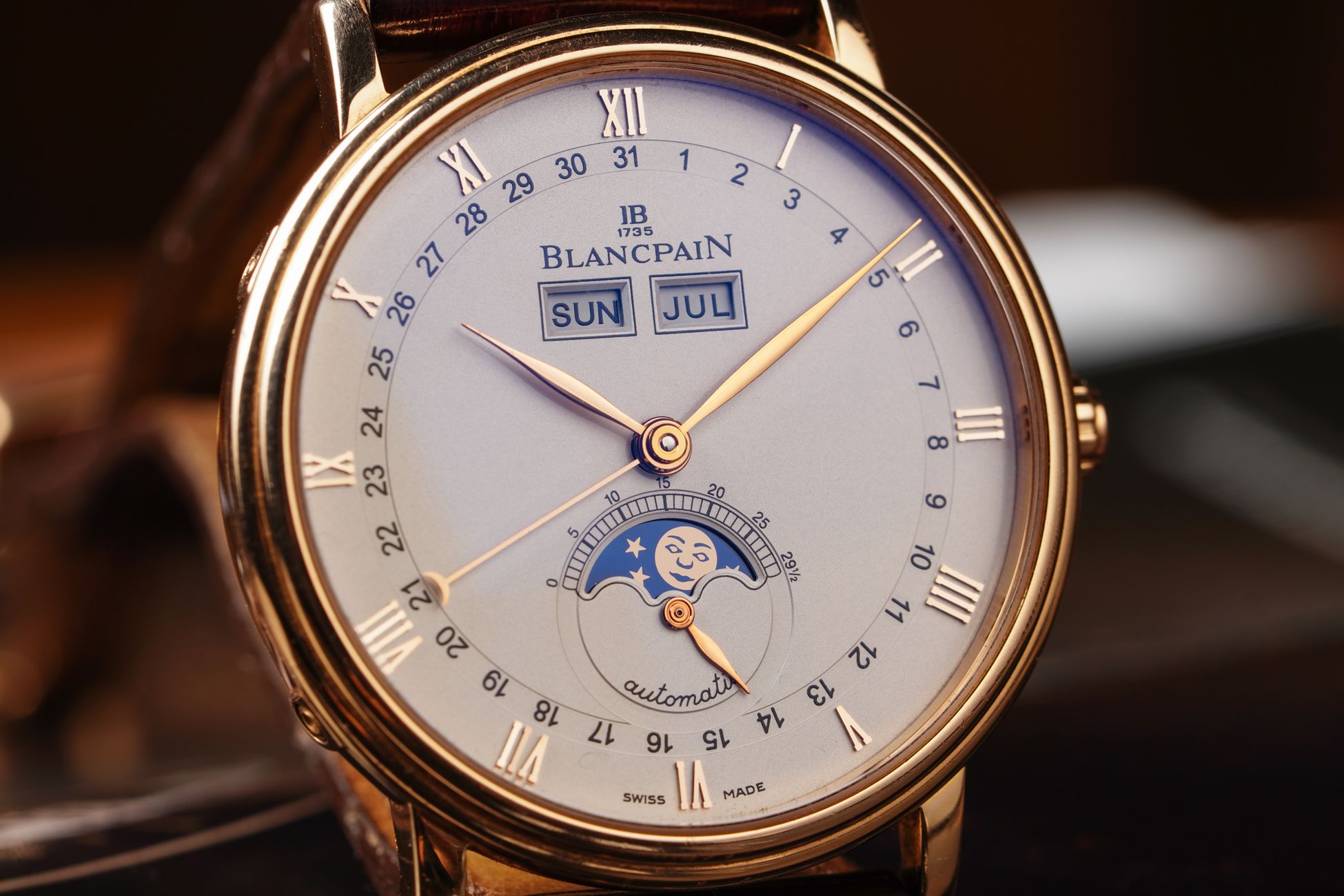
Hans Wilsdorf, the German-born watchmaker who founded Rolex in London in the early 1900s and moved it to Geneva after World War I, signed his entire company over to a private charitable foundation in the 1940s after his wife May died childless. When Wilsdorf himself died in 1960 at the age of 79, ownership of Rolex passed in full to that foundation — now known as the Hans Wilsdorf Stiftung — and it has sat there ever since, untouched by shareholders, untouchable by acquirers, and unlisted on any exchange.
The result is one of the strangest ownership structures in luxury goods. Rolex sells roughly a million watches a year at prices that start around $6,000 and climb past $75,000. The brand is, by most rankings, the most valuable watch name on earth. And nobody owns it. No Arnault, no Pinault, no sovereign wealth fund, no founding heir. A Geneva foundation does, and Swiss foundation law makes that arrangement essentially permanent.
The childless watchmaker who gave it all away
Wilsdorf’s biography reads like a Victorian novel. Orphaned as a child in Bavaria, he was raised by uncles, apprenticed to a pearl exporter, and moved to London in the early 1900s to start a small firm importing Swiss movements and casing them into wristwatches at a time when serious men still carried pocket watches. He registered the name Rolex in the early twentieth century because it was short, pronounceable in every European language, and fit cleanly on a dial. By the mid-1920s his company had produced the Oyster, one of the first water-resistant wristwatch cases, and Mercedes Gleitze famously swam the English Channel wearing one in 1927.
His wife May Wilsdorf died in the 1940s. They had no children. According to Rolex’s own corporate history, Wilsdorf spent the next year working out what to do with a company he had built for forty years and had nobody to inherit. In 1945 he transferred his shares into a newly created private foundation under Swiss law, naming it after himself and writing a charter that gave the foundation two intertwined duties — keep Rolex running as an independent Swiss watchmaker, and use the profits for charitable purposes in and around Geneva.
He kept managing the company until his death in 1960. After that, the foundation became sole proprietor. It still is.
What a Swiss Stiftung actually is
The legal vehicle Wilsdorf chose, the Stiftung, is closer to a bottomless trust than to a normal corporation. A Swiss private foundation has no shareholders and no members. It has a board, a stated purpose written into its founding deed, and assets that legally belong to nobody — they belong to the purpose itself. The Federal Supervisory Authority for Foundations in Bern monitors compliance, but nobody can sell the underlying assets, because there is no owner to do the selling. The foundation can only spend in line with its charter.
That is why the recurring rumour that LVMH, Richemont, or a Gulf fund might buy Rolex collapses on contact with Swiss law. There are no shares on the market. There are no heirs to be tempted by a nine-figure cheque. The board cannot legally sell the company out from under the charitable purpose Wilsdorf set down in 1945, whose central aim is the continued existence of Rolex itself, without a court rewriting the deed, and Swiss courts treat that as a near-impossible bar. The absence of an owner is what makes the structure stable.
Two entities, one watchmaker
The structure is a little more intricate than people sometimes describe. The Hans Wilsdorf Stiftung owns Rolex Holding SA, which owns Rolex SA, the operating company that designs and assembles the watches in four facilities around Geneva and in Bienne. A second related entity, the Wilsdorf Foundation, handles much of the charitable distribution within Geneva — funding hospitals, schools, social housing, the University of Geneva, and cultural institutions like the Grand Théâtre.
The numbers the foundation gives away are not published as audited public accounts the way an American 501(c)(3) would file, because Swiss private foundations are not required to disclose them. Local reporting in Geneva has estimated the Wilsdorf foundations together donate hundreds of millions of Swiss francs each year to the canton. Rolex itself does not publish revenue, but industry analysis has estimated Rolex’s recent annual sales at over 10 billion Swiss francs, representing a substantial share of the entire Swiss watch export market by value.
Why this is unusual even among Swiss luxury houses
Plenty of European luxury businesses are family-controlled. Hermès has the Dumas-Hermès clan. Chanel is owned by the Wertheimer brothers. Patek Philippe is owned by the Stern family, four generations deep. What separates Rolex is that there is no family at all. The Sterns can in principle sell Patek tomorrow if they choose. The Wertheimers could spin off Chanel. The Hans Wilsdorf Stiftung cannot sell Rolex because the Stiftung is not a person and has no equity to liquidate.
This is also why Rolex has been able to behave so strangely as a commercial actor. It runs almost no televised advertising outside of tennis and golf sponsorships. It deliberately under-produces against demand, generating the multi-year waitlists that have turned Daytonas and steel Submariners into grey-market assets. It does not answer to quarterly analysts. It does not need to grow. The foundation’s only stated obligations are to keep the watchmaker Swiss, independent, and profitable enough to fund Geneva charities indefinitely.
The Wilsdorf structure serves as a case study of what happens when a founder removes the family dimension entirely and substitutes a charitable purpose.
The 2023 Bucherer surprise
For decades, Rolex did almost nothing publicly except make watches. Then in 2023 it announced it would acquire Bucherer, the Swiss luxury retailer founded in the late nineteenth century, after its owner Jörg G. Bucherer indicated he had no heirs and wanted the company in safe hands. The deal closed shortly thereafter. It was the first major acquisition in Rolex’s modern history, and the symmetry was striking — one childless Swiss luxury founder handing his company to the foundation a different childless Swiss luxury founder had created eight decades earlier.
The Bucherer deal also revealed something about how the foundation thinks. It is not strictly passive. It will act to protect the retail and distribution network Rolex depends on. But it acts as a steward, not as a private-equity buyer chasing synergies. The press release announcing the acquisition stressed continuity of the Bucherer brand, retention of staff, and ongoing relationships with the other watch brands Bucherer sells, including direct competitors of Rolex.
Why nobody can copy the structure now
Founders today occasionally talk about going the Wilsdorf route. Yvon Chouinard transferred Patagonia into a purpose trust and a nonprofit organization in 2022 in what was widely described as a Wilsdorf-style move. But the conditions Wilsdorf operated under — a 1945 Swiss tax regime that gave generous treatment to charitable foundations, a small neutral country with strong foundation law, no children to provide for, and a forty-year head start before luxury became a global financial asset class — are nearly impossible to reproduce.
The contemporary great wealth transfer, in which trillions of dollars are passing from Baby Boomers to younger generations, mostly flows through family trusts, holding companies, and tax-advantaged vehicles designed to keep wealth inside bloodlines. The Wilsdorf model does the opposite. It pulls the company permanently outside the inheritance system altogether, and the foundation route remains rare because it requires a founder willing to give up the option of family ownership forever.
Patterns of family wealth inheritance in markets like China show the same pattern — founders overwhelmingly favour family succession over irrevocable charitable transfer. Wilsdorf’s choice was, and remains, an outlier.
The quiet city behind the watches
Walk through Geneva and the Wilsdorf inheritance is everywhere if you know where to look. The Cité Seniors retirement complex, the Wilsdorf Bridge across the Rhône opened in 2012, the foundation-funded student housing near the university, the cardiology wing at the Hôpitaux Universitaires de Genève. None of it bears Rolex branding. The foundation prefers anonymity, in keeping with the Swiss tradition of discreet philanthropy.
The watches themselves are made within a few kilometres of those buildings, in the foundries at Plan-les-Ouates and Chêne-Bourg where Rolex casts its own gold alloys, machines its own movements, and runs the test chambers that subject its dive watches to simulated deep-sea pressure. About 9,000 people work for the company in Switzerland. None of them work for a shareholder. They work, ultimately, for a deed signed in 1945 by a watchmaker who had outlived his wife and had no one else to leave anything to.
Sixty-six years after Hans Wilsdorf’s death, the crown on every dial still belongs to a piece of paper in a Geneva notary’s archive. It is, in the most literal sense, the only major luxury house on earth that no human being can buy.
