

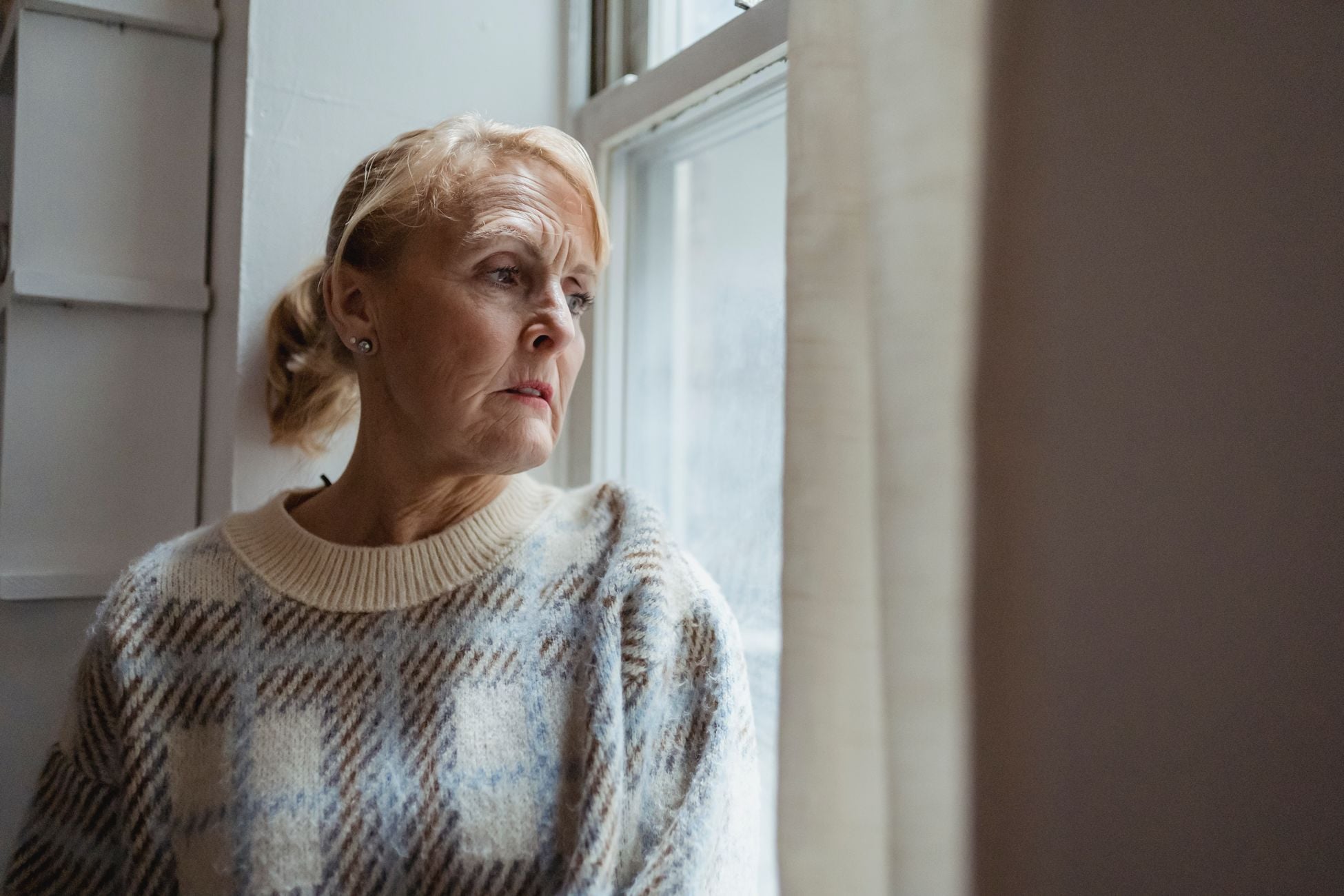
The composure that walks into a room at sixty-three and seems to settle the air is rarely the thing it looks like. It looks like confidence. It is often something closer to muscle memory — the residue of four decades spent noticing which chair wobbles, which child is about to cry, which parent has stopped opening the mail, which colleague is one missed deadline away from a meltdown. The woman who handles it all without visible effort is not, in many cases, calm. She is finished with the alternative.
The cultural shorthand says she has grown into herself. That she has finally arrived at the unshakeable version of the person she was always going to be. The shorthand is flattering and, for many women in their sixties, slightly wrong. What looks like late-life self-possession can be the long tail of vigilance — a system that learned, somewhere around age twenty-eight, to scan for collapse and quietly prevent it, and never quite learned how to stop.
This is a different story than the one usually told about older women and confidence. The usual story credits hormones, hard-won wisdom, or the gift of caring less what people think. Those things are real. But underneath them sits a more mechanical truth, and it has to do with what gets practiced when nobody is watching.
The work that does not appear on any timesheet
Emotional labor — the steady, unpaid management of other people’s feelings, schedules, conflicts, and unspoken needs — accumulates differently than other kinds of work. It does not produce a paper trail. It produces a person. Writing on the hidden emotional labor drained from women leaders describes the work that rarely makes the spotlight: the daily anticipation, smoothing, and absorbing that keeps rooms functional and is almost never named as labor at all.
Multiply that by forty years. Add a household, possibly children, possibly a marriage, possibly aging parents whose decline arrived without an instruction manual, possibly a career that asked her to be both warmer and tougher than her male peers, often in the same meeting. The result is not confidence in the textbook sense. The result is a person who has, without ever being asked, learned to hold an extraordinary number of small fires at the edge of going out.
Confidence, properly defined, is the belief that one can handle what comes. What many women in their sixties have is something more specific. They have evidence. They have receipts. They have, in their own nervous system, a long record of every time the floor did not give way because they were standing on it.
Why this gets misread as confidence
Researchers studying hiring and self-presentation have repeatedly found that confidence and competence are not the same signal, and that the world tends to mistake one for the other in predictable directions. Work out of Harvard Business School on closing the gender gap argues that employers routinely treat confidence as a proxy for competence — a substitution that disadvantages women, who are more likely to attribute their successes to luck, timing, or the help of others rather than to their own capability.
What happens, then, to a woman who has spent forty years being competent without feeling confident? She develops a posture. A way of moving through difficulty that does not require her to feel certain — only to keep going. By her sixties, that posture is so deeply set that strangers read it as serenity. A 2025 causal mediation analysis published in Nature on gender differences in investor overconfidence found that the gap between how men and women report confidence persists even when actual performance does not differ — suggesting that the inner experience and the outer signal have been allowed to drift apart for a very long time.
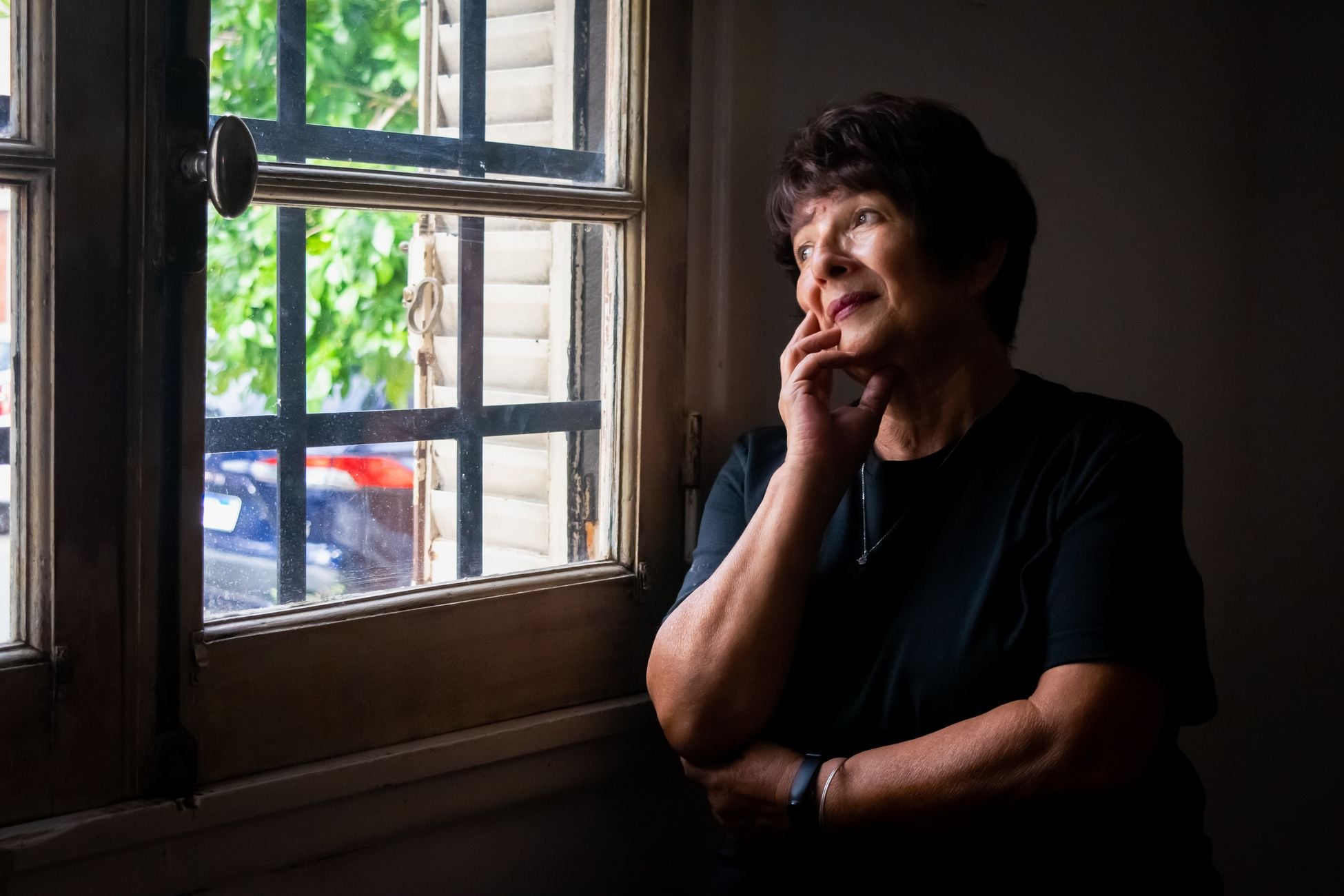
This drift is the residue. The outside looks settled. The inside, in many cases, is still running the checklist.
The experiment that broke a different kind of certainty
There is a useful parallel in the history of psychiatry, of all places — a discipline that once believed it could tell, with confidence, who was well and who was not. The Stanford psychologist David Rosenhan’s well-known experiment in the 1970s involved healthy volunteers presenting themselves at psychiatric hospitals with a single vague symptom. Those admitted were diagnosed with serious mental illness, and once the label was attached, ordinary behavior — taking notes, pacing, arriving early for lunch — was read as further evidence of the illness. The entire diagnostic apparatus failed in both directions, and the real patients, the ones already labeled, were the ones who spotted the impostors first.
The reason the Rosenhan study is relevant here has nothing to do with psychiatric diagnosis and everything to do with how labels stick. Once a woman has been read, for decades, as the capable one — the one who handles it, the one you do not need to check on, the one whose composure means she must be fine — every subsequent piece of evidence gets filtered through that label. Exhaustion reads as steadiness. Resignation reads as wisdom. The decision to stop asking for help, made years ago because asking did not produce help, reads as independence.
The label is sticky in the same way Rosenhan’s was sticky. It survives almost any evidence to the contrary because the people around her are not really looking. They are reading the chart.
What forty years of preventing collapse actually does
Caregiving research has begun to take seriously what sustained responsibility does to the people who carry it. Reporting on long-term caregiving notes that the role does not simply tire people out — it shapes them, in lasting ways, into people who anticipate need and act on it automatically. The reflex outlasts the situation that created it. The woman who once managed a household with three small children, an aging mother-in-law down the hall, and a job that did not pause for any of it still scans the room thirty years later for the thing about to go wrong. She cannot help it. The scanner does not have an off switch.
The lifetime accumulation of caregiving across a single person’s adulthood — children, then parents, then sometimes a spouse — is rarely counted as a continuous trajectory. It is counted as separate seasons. From the inside, it is not separate. From the inside, it is one long stretch of being the person who notices.

By sixty, the noticing has become invisible to her, too. She does not experience herself as vigilant. She experiences herself as a person who simply knows where the keys are, when the prescription needs refilling, which grandchild is being bullied at school, which friend’s husband is drinking again. The knowledge feels like part of her personality. It is, in many cases, the deposit of forty years of paying attention because nobody else was going to.
Why this matters now, not earlier
The shift into the sixties tends to expose the residue more clearly than any earlier decade. Children are grown. Parents have either died or entered the phase where the daughter becomes the parent. The career, if there was one, is winding down or already over. The structural reasons to be vigilant begin to fall away — and the vigilance does not. It sits there, unattached to any current crisis, looking for the next thing.
This is the moment when many women describe a feeling they cannot quite name. Not depression, not boredom, not regret. Something closer to a thrum. The system is still on. The threats have left the room. Writers on this site have explored how retirement can feel less like freedom than like being handed back a self a person has not spoken to in decades — and the experience of late-life female composure runs along a similar fault line. The competent woman, asked what she wants now, often discovers she has not been asked in so long that the question itself feels foreign.
This is also where the misreading by other people becomes most acute. Adult children, observing their mother in her sixties, often describe her as having become more confident, more sure of herself, finally relaxed. The description is generous and largely wrong. She has not relaxed. She has run out of acute fires to put out, and the part of her that put them out has nowhere to go. The poise is real. The story behind it is not the one being told.
What the residue is not
It is worth being careful here. The residue of decades spent making sure nothing fell apart is not the same as damage. It is not pathology. It is not a diagnosis waiting to be made. Many women in their sixties carry it with grace and even with humor, and many of them would not trade the people they became for a less responsible version of themselves. The capacity to hold a room steady is, by any reasonable measure, a gift — to the holder and to everyone in the room.
The point is more modest. It is that what looks like confidence from the outside is often something with a longer history and a more specific texture. The history involves a great deal of unseen work. The texture includes a vigilance that did not retire when the crises did. And the woman carrying both deserves, at minimum, to be read accurately — not as a person who has finally arrived at ease, but as a person who has been doing something hard for a very long time and has earned the right to be asked, occasionally, how she is actually doing.
The Rosenhan study ended with a quiet, devastating finding: the staff almost never noticed the patients at all. The patients noticed each other. Something similar happens in many families and many workplaces with the women who have held them together. The people who recognize the residue for what it is tend to be other women who carry it themselves. The rest of the room sees only the composure and assumes the composure is the whole story.
It is not the whole story. It is the surface of one.