
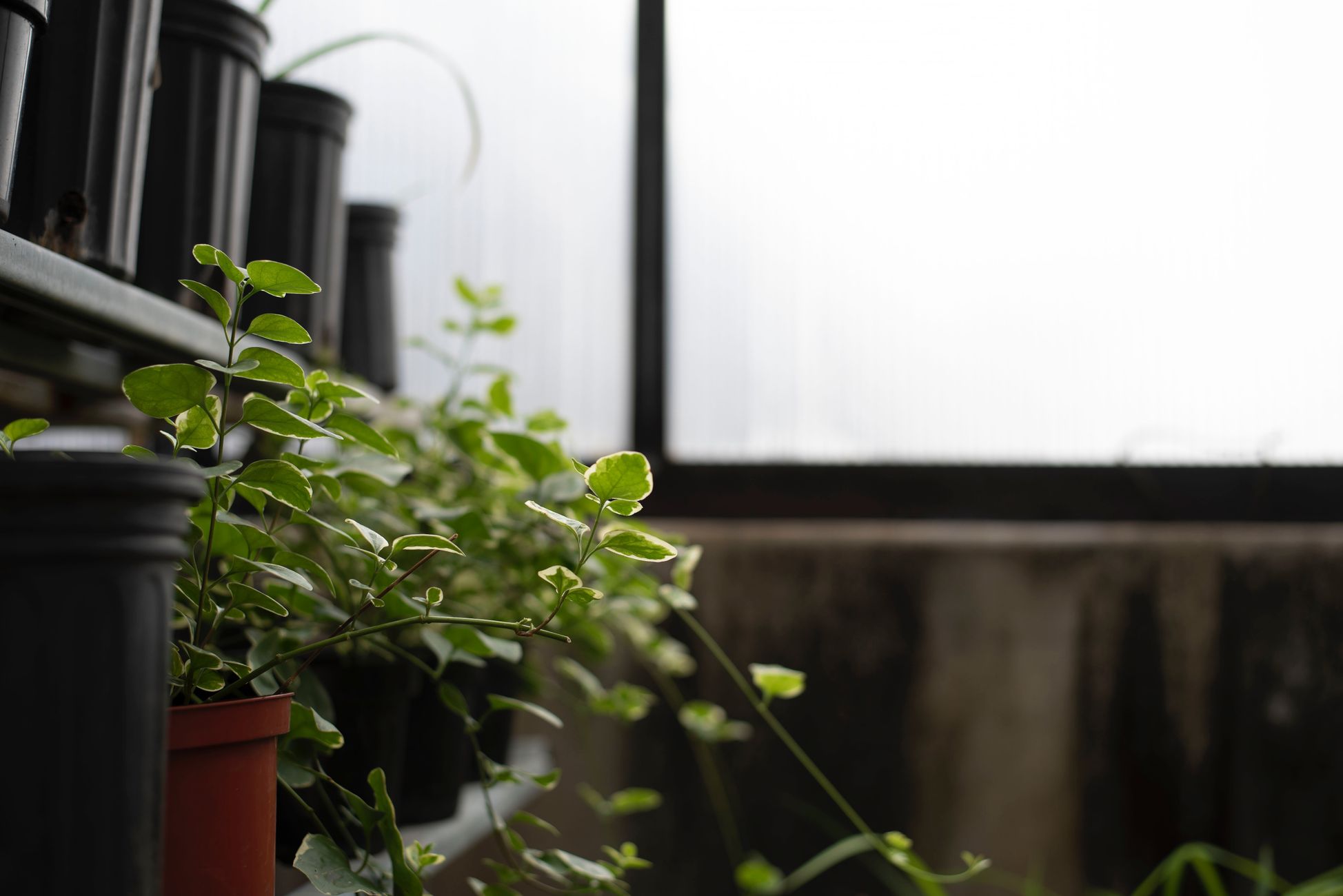
In the autumn of 2001, a 30-year-old Elon Musk sat in a Moscow hotel room with rocket scientist Jim Cantrell and aerospace consultant Mike Griffin, negotiating to buy refurbished Soviet Dnepr intercontinental ballistic missiles. He wanted to bolt a small robotic greenhouse onto the nose of one, fire it to Mars, and broadcast pictures of green shoots growing in red regolith back to Earth. He called the idea Mars Oasis. The Russians, depending on which retelling you read, either laughed, spat, or quoted him millions per rocket and asked if the American was serious. He flew home, ran the numbers on the flight back, and decided the cheaper move was to build the rockets himself.
That seed of an idea — a terrarium on another planet, bought for a few million dollars, designed not to do science but to make people feel something — is the origin of SpaceX.
The plan was almost childishly simple. It was also almost entirely about marketing, not engineering.
The greenhouse that wasn’t supposed to discover anything
Mars Oasis, as Musk pitched it to anyone who would listen in 2001 and 2002, was a small pressurized growth chamber the size of a minibar. Inside: a layer of dehydrated nutrient gel, a packet of seeds, and a camera. The lander would touch down somewhere flat, rehydrate the gel with onboard water, crack open a window to let in filtered Martian sunlight, and germinate the first plants ever grown on another world. A modest webcam would beam back time-lapse images of green leaves unfurling against a rust-colored horizon.
The science return was almost beside the point. Musk had become convinced, after digging through the NASA website expecting to find a published date for a crewed Mars mission and finding nothing, that the American public had simply stopped caring about space. He believed the problem was not technological but emotional. People had to want to go again, the way they had wanted it in 1969. A greenhouse on Mars, he reasoned, would be a single image stark enough to do that work.
The budget he sketched out was in the tens of millions for the entire mission — the cheapest interplanetary spacecraft anyone had ever seriously proposed. The greenhouse hardware itself was projected at a small fraction of that total. The expensive part was always the ride.
Why Moscow, and why missiles
In 2001 there was no commercial small-launch market. If you wanted to throw a few hundred kilograms toward Mars, your options were a flight on a NASA-class rocket priced in the hundreds of millions, or a converted Soviet ICBM sold off as part of post–Cold War disarmament. The Dnepr, a repurposed R-36M, was the cheapest large rocket on Earth and the only one a private citizen could plausibly walk in and buy.
Cantrell, who later wrote and spoke at length about the trips, has described multiple journeys to Russia between late 2001 and early 2002. Musk brought spreadsheets. The Russians brought vodka. On one of the final trips the price quoted came in higher than the previous meetings, and Musk reportedly pulled out a laptop on the flight back to Los Angeles and showed Cantrell a first-pass cost analysis of building a liquid-fueled rocket from raw materials. The numbers, he argued, came in at a fraction of what anyone was charging.
SpaceX was incorporated in 2002. The greenhouse was quietly shelved. The rocket company was the consolation prize that ate the original plan.
The Mars Society dinner and the philanthropic pitch
Before Moscow, Musk had walked into a Mars Society fundraising dinner in Silicon Valley in 2001 and written a substantial check — the largest donation the group had received at that time. Robert Zubrin, the society’s founder, recalls Musk asking pointed questions about why nobody had flown a private mission to Mars yet, and being unsatisfied with the answers. Within weeks Musk had left the Mars Society board to pursue his own version of the idea, which became Mars Oasis.
The framing was explicitly philanthropic. Musk had just sold his stake in PayPal’s predecessor X.com and had substantial liquid wealth. He talked about Mars Oasis as a gift to the American imagination — a stunt, in the best sense of the word, that would shame Congress into refunding NASA’s planetary exploration budget. The greenhouse was a lever, and the public’s feelings were the fulcrum.
Symbolic gestures often do more to reignite public interest in scientific pursuits than incremental technical milestones do. Musk seems to have arrived at this intuition without any academic theory. A green leaf on red dirt was a story the evening news could tell in eight seconds.
What the hardware would actually have looked like
Engineers Musk consulted in 2001 — including Cantrell, propulsion expert Tom Mueller, and aerospace veteran John Garvey — sketched a compact lander. It would have ridden as a secondary payload or atop a dedicated small launcher, used a simple aeroshell and parachute for entry, and landed with crushable aluminum honeycomb rather than retro rockets. There was discussion of partnering with an existing planetary science team for the greenhouse instrument itself; one early conversation involved researchers who had worked on plant growth experiments for the International Space Station.
The seeds were going to be mustard, or arabidopsis, or a cress — fast-germinating, low-mass, well-characterized plants that biologists already used in microgravity studies. The growth chamber would have been pressurized to roughly one-third of Earth’s sea-level atmosphere with a mix of nitrogen and carbon dioxide. The water came from a small frozen reservoir thawed by waste heat from the electronics.
None of it required a technical breakthrough. The hard part was the ride, and the ride was where the budget exploded.
The pivot that built a rocket company
The moment on the flight home from Moscow, by every account Musk and Cantrell have given since, was the hinge. Musk had spent months learning rocket equations from textbooks borrowed and bought — most famously a copy of Rocket Propulsion Elements by George Sutton. On the plane he reportedly showed Cantrell a spreadsheet breaking down the raw material cost of a Falcon-class rocket: aluminum, kerosene, liquid oxygen, electronics, labor. The materials came to a small fraction of the sticker price of a comparable launch.
That arithmetic killed the greenhouse and birthed SpaceX. If launch was the bottleneck for every space ambition — Mars Oasis included — then the rational move was to attack the bottleneck rather than the symptom. Musk has said publicly that he originally expected SpaceX to fail and was prepared to lose his entire PayPal fortune trying, giving the company long odds of success.
More than two decades later, the company is preparing for what analysts have discussed in the context of future financial decisions, with internal Mars colonization plans dwarfing anything a single greenhouse could have signaled. The greenhouse, in a sense, scaled.
The greenhouse that almost flew anyway
Mars Oasis never died completely. Variations of the idea have surfaced inside other organizations for two decades. The Mars Society has proposed a Mars greenhouse demonstrator multiple times. NASA’s MOXIE experiment on the Perseverance rover, which produced oxygen from Martian atmosphere in the 2020s, is in spirit a cousin — a small, symbolically charged piece of life-support hardware sent ahead of the humans.
And the original framing — that the public’s imagination is itself a kind of infrastructure that has to be maintained — has aged surprisingly well. The most-watched moments in 21st-century spaceflight have not been new science results. They have been the twin Falcon Heavy boosters touching down in synchrony at Cape Canaveral, the Starman mannequin drifting past Earth in a cherry-red Tesla, the Crew Dragon docking with the ISS with NASA astronauts inside. Each was, in essence, a more expensive version of the greenhouse pitch. Show people something they had only seen in fiction, and the budget conversations follow.
A small jar of seeds, a different timeline
Counterfactuals are unfair to history, but it is worth sitting with this one. If the Russians had quoted Musk a lower price in late 2001, a small American greenhouse might have landed on Mars sometime in the mid-2000s, well ahead of the Phoenix lander that confirmed water ice at the Martian north pole. Musk would likely have returned to running internet companies. There would have been no Falcon 9, no Dragon, no Starlink, no Starship. NASA would still be flying astronauts on Russian Soyuz capsules, as it did for years.
Instead, the greenhouse never flew, and the company built to deliver it ended up reshaping global launch. The seeds, presumably, are still in storage somewhere — or were quietly composted in a Los Angeles warehouse around 2003, when the lease was given up and the dream was traded in for a rocket factory in El Segundo.
The image Musk had wanted to put on the evening news — a green shoot against a rust horizon — has still never been broadcast. It remains the most famous picture nobody has taken.
