
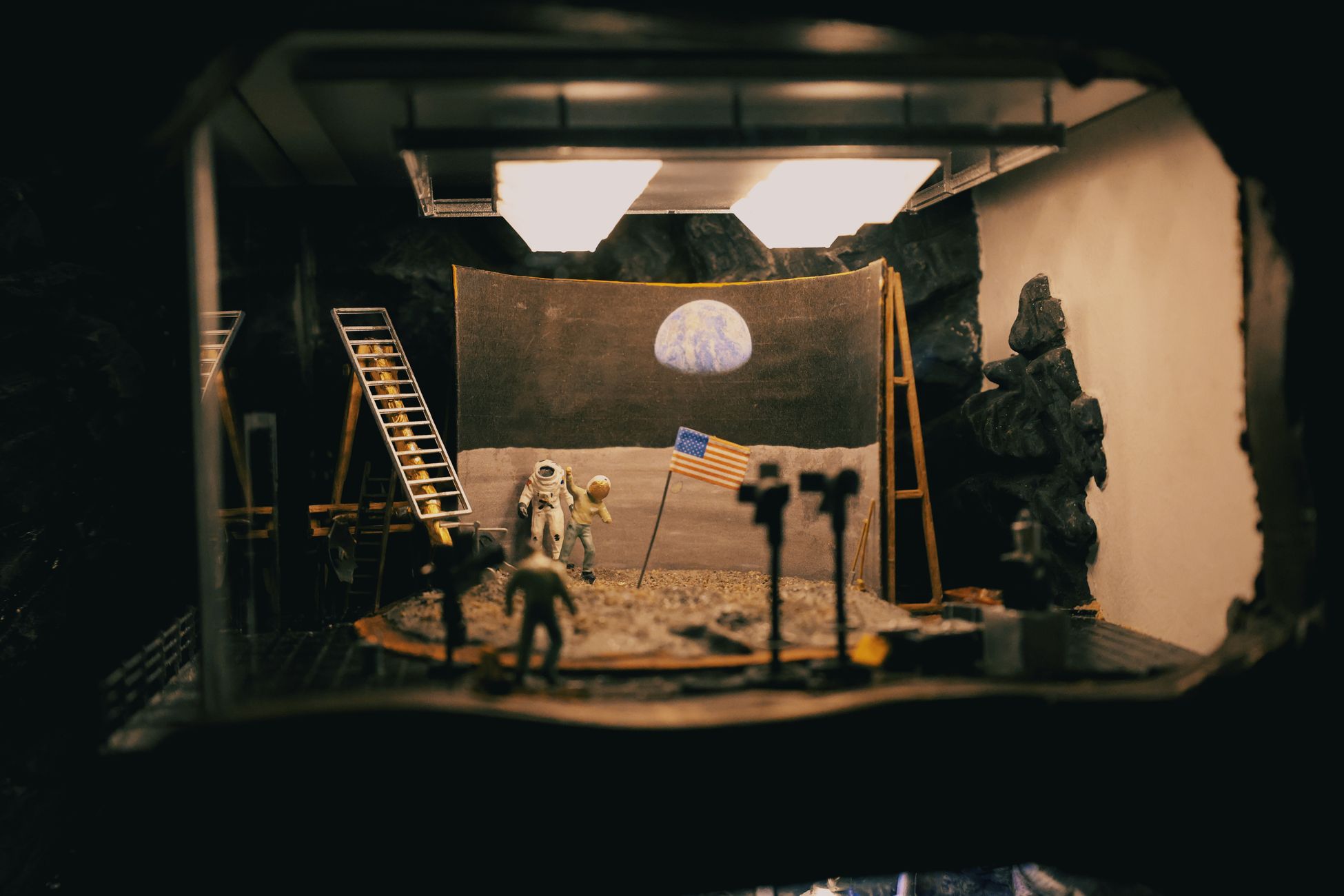
Dennis Hope walked into a county clerk’s office in 1980 and filed a claim of ownership over the Moon, Mercury, Venus, Mars, Io, and every other solid body in the solar system except Earth. He was broke, recently divorced, and driving a beat-up car when the idea hit him. Forty-five years later, his company Lunar Embassy has reportedly sold more than 2.5 million lunar deeds at around $20 to $30 an acre, to customers including three former U.S. presidents and a long list of Hollywood celebrities. Every one of those deeds is, under international law, worth precisely nothing.
The loophole he believes he found sits inside a single document: the 1967 Outer Space Treaty, signed by the United States, the Soviet Union, and more than a hundred other nations.
The clause Hope read very carefully
Article II of the treaty says that outer space, “including the Moon and other celestial bodies, is not subject to national appropriation by claim of sovereignty, by means of use or occupation, or by any other means.”
Hope’s argument is built on two words: national appropriation. The treaty, he insists, forbids governments from claiming the Moon. It says nothing about a private citizen walking into a county office with a typed declaration.
So he filed. He sent copies of his claim to the United Nations, the U.S. government, and the Soviet government, asking them to dispute it. None of them replied. Hope took the silence as consent.
Twenty dollars and a novelty certificate
A standard Lunar Embassy deed comes with a parchment-style certificate, a map of the lunar surface with the customer’s parcel circled, a copy of something called the “Lunar Constitution and Bill of Rights,” and a Lunar Bill of Sale. The basic acre runs roughly $24.99 plus a small “lunar tax.” Premium plots near the Sea of Tranquility, where Apollo 11 landed, cost more.
Hope has told interviewers over the years that he has sold parcels to Jimmy Carter, Ronald Reagan, and George W. Bush, plus actors including Tom Cruise, Nicole Kidman, John Travolta, Harrison Ford, and Clint Eastwood. The Hilton and Marriott hotel chains, he claims, have bought land for future resorts. None of these buyers has publicly confirmed the purchases, and Hope keeps the customer list private. The 2.5 million figure is his own count, repeated across decades of press appearances.
What customers actually receive is a piece of paper that no court on Earth will enforce.
Why governments shrug
The United Nations Office for Outer Space Affairs has been asked, repeatedly, to weigh in on Hope. It mostly hasn’t. The standard legal reading among space lawyers is that Article II’s prohibition on national appropriation flows down to citizens as well, because a state cannot recognize a private claim it is itself forbidden from making. If Washington can’t grant Hope title to the Moon, Hope can’t sell what Washington can’t grant.
The 1979 Moon Agreement went further, explicitly declaring lunar resources the “common heritage of mankind.” Only a handful of countries ratified it, and none of the major spacefaring powers did. Hope sometimes cites that thin ratification as further proof that the legal door is open. Most international lawyers see it as irrelevant — the 1967 treaty alone is enough to void his deeds.
Hope’s response has been to escalate. In 2004 he declared the founding of the Galactic Government, with himself as head of state, and began issuing lunar currency. He has petitioned the United Nations for recognition. The petitions have gone unanswered.
Why people buy anyway
The interesting question isn’t whether the deeds are legal. The interesting question is why millions of people have handed over money for paper they know, or strongly suspect, is unenforceable.
Part of the answer sits in what researchers call psychological ownership — the sense that something belongs to you, regardless of whether the law agrees. People develop real attachment to objects, ideas, and even territories they have only symbolically claimed. The certificate on the wall does the work the legal title would do.
Part of it sits in magical thinking, the everyday human habit of treating a symbolic act — blowing out candles, knocking on wood, signing a novelty deed — as if it has weight in the real world. Buyers often know the deed isn’t binding. They buy it anyway because the ritual of ownership is its own reward.
And part of it sits in the simple economics of a gift. A lunar acre is a wedding present, a birthday joke, a stocking stuffer for the cousin who likes science fiction. At twenty-something dollars, the buyer isn’t really buying land. They’re buying a story to tell at dinner.
The cognitive dissonance of the sale
For buyers who do take the deed seriously, the gap between belief and reality produces exactly the kind of tension that cognitive dissonance research describes — the discomfort of holding two beliefs that don’t fit. The deed says you own this. International law says you do not. Most buyers resolve the tension by leaning on Hope’s loophole story, which gives them a narrative reason to believe the certificate has standing.
That mental move — finding a justification that lets the purchase make sense — is consistent with the pattern of defending purchases against contradicting evidence. The brain reaches for the story that lowers the discomfort, not necessarily the story that is true.
Hope, for his part, doesn’t pitch the deeds as guaranteed real estate. He pitches them as a stake in a future that hasn’t been written yet — a hedge, in case the law eventually catches up with the marketplace he has been running for four and a half decades.
The Masai and the missing audience
Hope’s story has another wrinkle that gets less attention. In interviews, he has compared his claim on the Moon to the Masai people’s traditional claim on their land — territory recognized by use and occupation rather than by paperwork. The comparison is awkward at best. The Masai have lived on their land for centuries. Hope has never been to the Moon.
The deeper point Hope is reaching for is that property, historically, has often been a matter of who shows up and says “mine” loudly enough for long enough that the claim sticks. The American West was parceled out under exactly that logic in the 19th century, with the Homestead Act handing out plots to anyone who would farm them for five years. Hope sees himself as the lunar version of a homesteader. The treaty signatories see him as a man selling air.
What happens when someone actually lands
The thought experiment Hope likes to pose: what happens when a private company — SpaceX, Blue Origin, a Chinese consortium — actually puts boots and equipment on the lunar surface, mines water ice from a permanently shadowed crater near the south pole, and starts shipping it back to Earth or selling it to other missions as rocket fuel?
The Outer Space Treaty is silent on resource extraction. The 2015 U.S. Commercial Space Launch Competitiveness Act explicitly granted American companies the right to own and sell materials they mine in space, even though they cannot own the celestial body itself. Luxembourg passed a similar law in 2017. The legal scaffolding for space mining is being assembled in real time, and it looks less like Hope’s loophole than like a careful workaround that preserves the treaty while opening the cash register.
None of that helps the customer holding a Lunar Embassy deed for an acre in the Sea of Serenity. Mining rights, where they exist, will go to the company with the spacecraft, not the office worker with the framed certificate.
The ongoing transaction
Hope is in his late seventies now. The Lunar Embassy still takes orders. The certificates still ship. The Galactic Government still issues currency that cannot be spent.
By any measure that matters — revenue, longevity, customer reach — it is one of the most successful novelty businesses in the history of the United States. Forty-six years, more than 2.5 million transactions by Hope’s count, a handful of competitors who have tried to copy the model and mostly failed, and not a single deed that would survive five minutes of cross-examination in any court on the planet.
Somewhere in a desk drawer in suburban Ohio, in a filing cabinet in Manchester, in a frame above a teenager’s bed in Osaka, there are millions of pieces of paper that say their holders own the Moon. The Moon, 384,000 kilometers away, continues its orbit, indifferent to the paperwork, lit by a Sun that nobody — yet — has thought to sell.
