
On May 31, 2025, the U.S. Naval Research Laboratory’s space-based coronagraph watched a coronal mass ejection peel off the Sun’s western limb, carrying roughly a billion tons of magnetized plasma into interplanetary space at a speed measured in millions of miles per hour. By the time NOAA’s Space Weather Prediction Center issued a rare G4 geomagnetic storm alert, the cloud was already halfway to Earth. The warning window was about 18 hours. You cannot rebuild a continental power grid in 18 hours. You can barely reroute a fleet of airliners.
That mismatch — between the size of the thing coming and the time you have to react to it — is the central, awkward fact of space weather.
What a billion tons of Sun actually looks like
A coronal mass ejection, or CME, is a chunk of the Sun’s outer atmosphere that breaks free when twisted magnetic field lines snap and reconnect. The cloud that leaves carries something on the order of 10^12 to 10^13 kilograms of ionized gas — roughly a billion tons in the lower estimates, and ten times that in the larger events. Recent measurements from NASA’s Parker Solar Probe have confirmed the magnetic reconnection models that scientists have used to describe how these eruptions launch.
For comparison, the Great Pyramid of Giza weighs about 6 million tons. A modest CME is roughly 170 Great Pyramids of plasma, accelerated to escape velocity from the Sun and beyond.
The speed is the part that breaks intuition. Fast CMEs leave the Sun at 2,000 to 3,000 kilometers per second, or about 4 to 7 million miles per hour. X-ray observatories have caught even more extreme outflows from supermassive black holes at a fifth of the speed of light, but for solar physics, a few million miles per hour is the upper shelf.
Why a million miles an hour still takes days
Here is where the numbers stop feeling intuitive. The Sun is 93 million miles away. Light covers that distance in 8 minutes and 20 seconds. A CME moving at 4 million miles per hour should cover it in just under a day.
That is roughly what happens. The fastest CMEs on record have reached Earth in about 15 to 18 hours. The Carrington event of 1859 made the trip in around 17 hours. Most CMEs are slower — 1,000 kilometers per second is more typical — and arrive in two to three days. Some sluggish ones take four.
So the warning window depends entirely on how fast the cloud is moving, and that is the first thing forecasters try to measure once a CME leaves the Sun’s limb.
How we know one is coming
The detection chain is older than most of the technology it protects. Ground-based and space-based coronagraphs — instruments that block out the bright solar disk with an occulting mask to reveal the faint corona around it — spot the eruption first. NASA’s STEREO spacecraft, ESA and NASA’s SOHO observatory, and the GOES satellites operated by NOAA all watch the Sun continuously.
Once a CME is identified, forecasters fit a cone model to the expanding cloud and estimate its trajectory and speed. If it is heading for Earth, the only spacecraft that can give a direct, in-situ measurement of its magnetic field is parked at the Lagrange 1 point, about a million miles upstream of Earth. DSCOVR and ACE sit there, sampling the solar wind as it streams past.
L1 gives between 15 and 60 minutes of warning before the cloud hits Earth’s magnetosphere. That is enough time to trip a grid operator’s protective relays. It is not enough to do anything structural.
NOAA’s Space Weather Prediction Center publishes the alerts publicly, on the same kind of scale used for hurricanes. G1 is minor. G5 is extreme. The May 2024 storm hit G5. The May 2025 event was a G4.
The stealth CME problem
Not every eruption announces itself. In late 2025, a so-called stealth CME slammed into Earth without being detected in advance. Stealth CMEs leave the Sun without producing the bright flare or obvious coronal dimming that usually accompanies a launch. They are slower, fainter, and more common after solar maximum, when the Sun’s magnetic field starts winding down.
They still carry magnetized plasma. They still cause geomagnetic storms. They just do it without giving forecasters anything to look at on the coronagraphs.
The November 2025 stealth event slipped past forecasters entirely and was only recognized once it reached Earth, where it pushed auroras down to unusually low latitudes. The warning window in that case was effectively zero.
What actually happens when one arrives
When the cloud reaches the magnetosphere, its embedded magnetic field interacts with Earth’s own. If the cloud’s field points southward — opposite to Earth’s — the two reconnect, and the resulting current systems dump energy into the upper atmosphere.
That energy shows up in three places. The ionosphere swells and disrupts high-frequency radio communications, including the over-the-horizon links airliners use on polar routes. GPS signals, which pass through the ionosphere, lose accuracy by tens of meters. And ground-induced currents — driven by the changing magnetic field at the surface — flow through long conductors like power lines, pipelines, and rail networks.
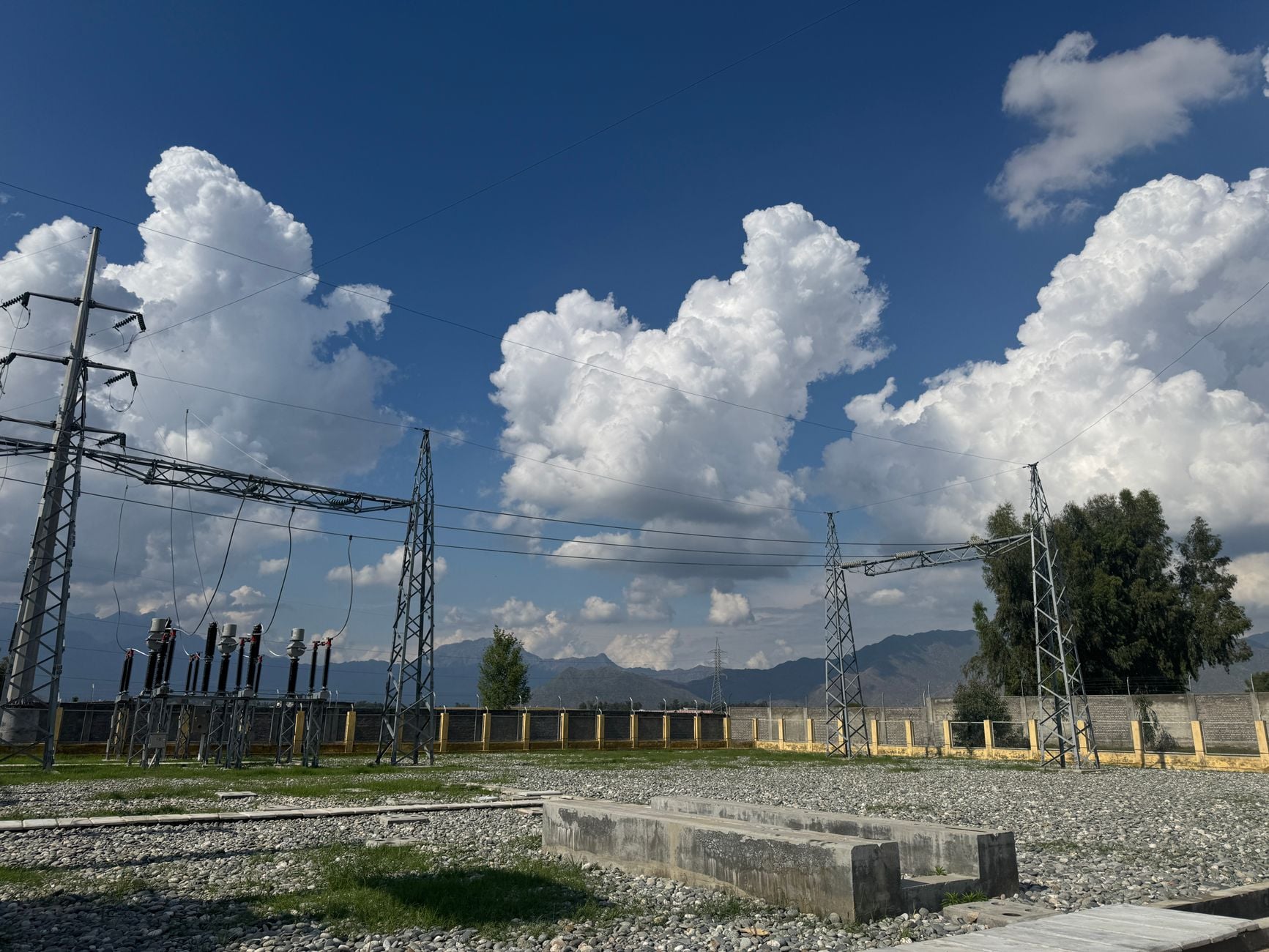
Transformers are the vulnerable part. The big high-voltage transformers that step grid power up and down were designed for 60-hertz alternating current, not the near-DC currents that geomagnetic storms induce. Sustained induced current saturates their iron cores, heats them, and can cook the windings. A blown high-voltage transformer takes 12 to 18 months to replace. Most utilities do not stock spares.
The 1989 Quebec event and what it taught
On March 13, 1989, a CME-driven storm collapsed the Hydro-Quebec grid in 92 seconds. Six million people lost power in the middle of a Canadian winter. The storm also damaged a transformer at the Salem nuclear plant in New Jersey and disrupted communications across North America.
That was a G4 storm — not the worst the Sun can produce. The Carrington event of 1859 was probably a G5+, and it set telegraph offices on fire. Operators reported sparks jumping from the equipment to the desks. A Carrington-class event today would, by some estimates, cause $1 to $2 trillion in damage and take years to fully recover from.
Why the warning window cannot stretch
The physical limit is set by the speed of the CME and the distance from the Sun to Earth. You cannot move the Sun. You cannot make the cloud slow down. The only way to extend the warning is to put detectors farther upstream — closer to the Sun — and that is hard.
The Parker Solar Probe flies through the corona itself, sampling the plasma where CMEs are born. ESA’s Solar Orbiter images the Sun’s poles. Both have improved the physics underlying CME prediction. Neither sits in a useful location for operational forecasting.
A proposed mission called the Space Weather Follow On at L5 — 60 degrees behind Earth in its orbit — would give forecasters a side view of CMEs as they head toward Earth, potentially extending warning to two or three days for typical storms. NOAA is funding the program. It is not flying yet.
What an 18-hour warning is good for
You can ground-stop aircraft on polar routes, which is what airlines did during the May 2024 storm. You can switch satellite electronics into safe modes. You can shed load on the grid, which means deliberate rolling blackouts to reduce the current flowing through transformers when the induced current arrives.
You can warn astronauts on the International Space Station to move to the more shielded sections of the station. NASA has tracked solar storm radiation from instruments at Mars, and the dose rates during major events are high enough to matter for any crew outside Earth’s magnetic shielding.
What you cannot do in 18 hours is build a new transformer, harden a substation, or upgrade a grid. Those are decade-scale projects. The warning window is operational, not structural.
The cadence of risk
The Sun runs on an 11-year cycle. Solar maximum, when sunspots and CMEs are most frequent, peaked in 2024 and 2025. The May 2024 storm and the May 2025 G4 event both fell within that maximum.
Carrington-class events appear to happen roughly every 100 to 500 years. The 1859 storm. A 1921 event that disrupted railway telegraphs in New York. A 2012 CME that missed Earth by nine days — meaning it crossed Earth’s orbit, but Earth was not there. Had it arrived a week earlier, it would have hit head-on.
So the question is not whether another billion-ton cloud will arrive at four million miles per hour with a day of warning. The question is whether the grid it hits will be the one we have now, or one we have learned, in the meantime, to protect.
The cloud is patient. It is the Sun’s idea of weather. It leaves whenever the magnetic field above a sunspot snaps, and it travels at the speed the physics allows, and it arrives when it arrives. Somewhere on the western limb, right now, a new active region is rotating into view.