
Don Gurnett, the principal investigator for the Radio and Plasma Wave Science instrument on NASA’s Cassini spacecraft, spent decades turning the electromagnetic noise of the outer planets into something a human ear could parse. The Saturn file — a translation of radio emissions associated with the planet’s auroras — sounds less like a planet than like a haunted choir. Rising whistles. Descending moans. A texture that anyone who has watched a horror film recognizes instantly, even though no one designed it to sound that way.
The popular framing of these recordings goes like this: NASA pointed a microphone at Saturn, and Saturn screamed. That framing is approximately right in its emotional effect and almost entirely wrong in its physics. There is no sound in space in any meaningful sense. The interplanetary medium is too thin to carry the pressure waves human ears evolved to detect. What spacecraft like Cassini, Voyager, and Juno actually record are electromagnetic vibrations — radio waves, plasma oscillations, and magnetic field fluctuations — that happen to occur in frequency ranges close enough to human hearing that a straightforward translation produces something audible.
The part of the story worth slowing down on is that translation step. Because what the public hears as “the sound of Saturn” is the product of a specific methodological choice, and the choice is what makes it haunting.
What the spacecraft actually detected
Cassini’s RPWS instrument was designed to measure electric and magnetic fields in the plasma environment around Saturn. Plasma — ionized gas — fills the magnetospheres of the outer planets, and it carries waves the way air carries sound, except the medium is electromagnetic rather than acoustic. When charged particles spiral along Saturn’s magnetic field lines, especially near the auroral regions at the poles, they emit radio waves at kilometric wavelengths. These are called Saturn Kilometric Radiation, or SKR.
SKR is not audible. Its frequencies sit well above the upper limit of human hearing, which tops out around twenty kilohertz. To produce the recordings the public has heard, mission scientists shift the frequencies down by a fixed factor and compress the time scale, so a minute of plasma data becomes a few seconds of audio. The wave structures — the rising tones, the descending sweeps, the chorus-like layering — are preserved. Only the absolute pitch is altered.
This is not metaphor. It is signal processing. The whistles you hear in the Saturn file correspond to real frequency-modulated radio emissions detected by a real instrument flying through a real magnetosphere. The eeriness is not added in post-production.

Why it sounds haunting, specifically
The emotional reaction the Saturn recording produces is not accidental, but it is also not Saturn’s fault. Human auditory perception evolved in an environment dense with biological signals — voices, animal calls, weather, the resonance of enclosed spaces. The brain interprets unfamiliar sounds by mapping them onto those biological priors. Slow descending tones read as mournful because they resemble the contour of human distress vocalizations. Layered, slightly detuned voices read as ghostly because they resemble a chorus singing slightly out of tune, which the auditory cortex flags as almost human but not quite.
The brain works harder when a sound is structured enough to seem intentional but irregular enough to resist classification. Saturn’s radio emissions sit precisely in that uncanny middle ground. They have rhythm. They have pitch contour. They do not have a source the listener can name.
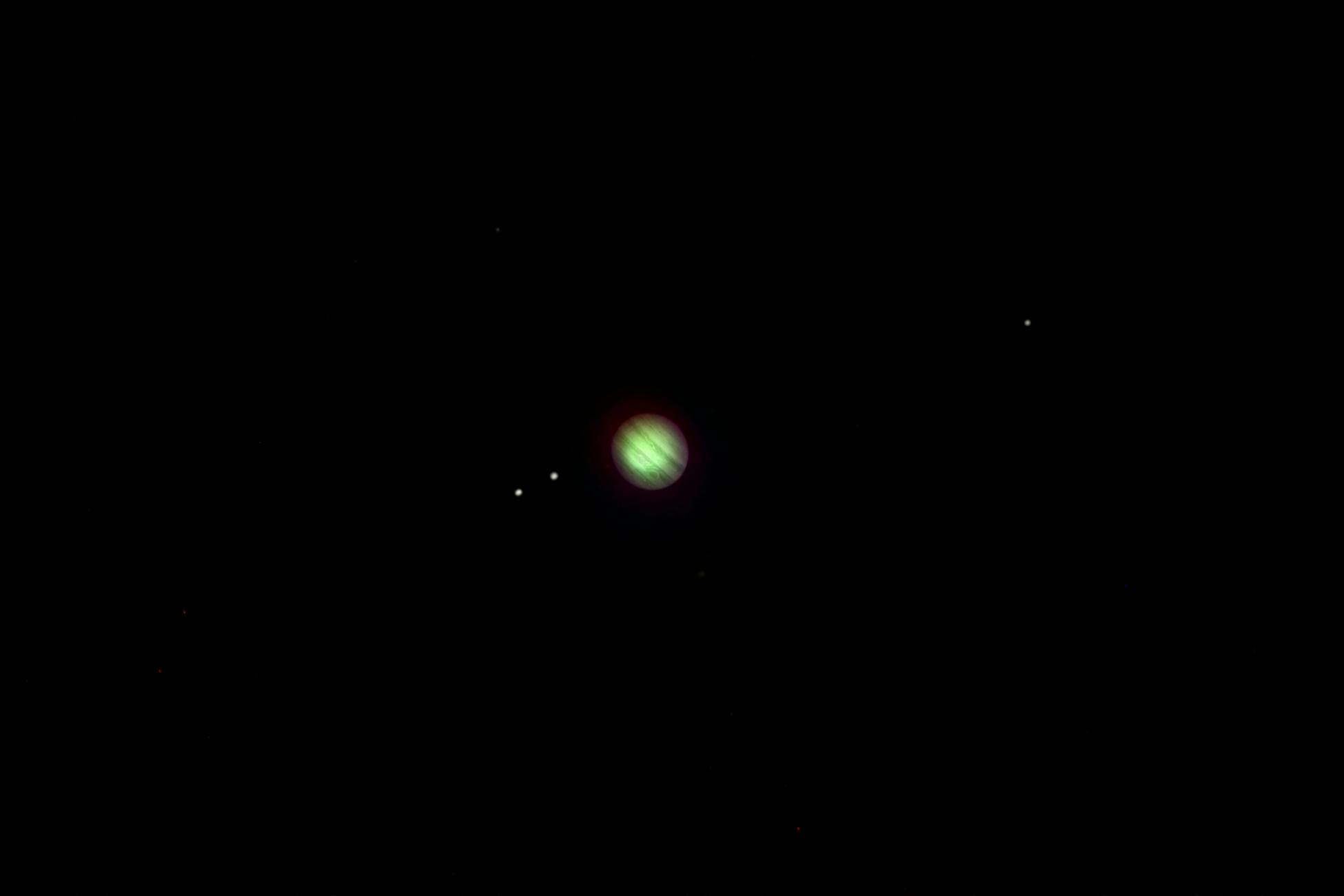
The Voyager recordings of Jupiter and Uranus produce a related effect, though their textures differ. Jupiter’s magnetosphere generates broadband hiss interrupted by sharp chirps. Uranus, whose magnetic field is unusually tilted relative to its rotation axis, produces irregular bursts that recent Chandra sonifications have rendered alongside their X-ray imagery. None of these planets sounds friendly. None of them was supposed to.
The sonification program, in its actual scope
NASA’s sonification effort is broader than the planetary recordings suggest. The agency has developed a formal pipeline for converting telescope data — Chandra X-ray observations, Hubble images, Webb spectra — into audio, mapping brightness to volume, position to pitch, and color (or wavelength) to instrument timbre. The Guardian’s recent coverage of the program framed it as a way of helping the public “imagine” space, but the technical purpose is more specific. Sonification is a data-analysis tool. It allows scientists, including blind and low-vision researchers, to detect structure in datasets that visual inspection might miss.
The pipeline is not arbitrary. Each translation involves choices — which axis maps to which auditory parameter, which frequency range to use, how to handle gaps in the data — and those choices are documented in the methodology papers that accompany the releases. Astronomy magazine’s overview of the process notes that the goal is faithful representation rather than aesthetic enhancement, even when the result happens to be musically striking.
Sophie Kastner, a composer who worked with NASA’s Universe of Sound team, produced a piece based on the galactic center using actual Chandra and Hubble data. The result, described in Space.com’s coverage, is dissonant in a way that surprised even the scientists who supplied the data. The dissonance is not a stylistic choice. It is what the data sounds like when mapped through a consistent instrument assignment.
The numbers that sit alongside each other
To make the scale concrete: Cassini orbited Saturn for thirteen years, from 2004 to 2017. The RPWS instrument collected continuous plasma wave data for most of that time. The audible recordings the public has heard represent a tiny fraction of the archive — perhaps a few hours of processed audio drawn from years of raw electromagnetic measurement. The signal-to-noise ratio of the Saturn emissions varies with the spacecraft’s position relative to the planet’s auroral zones, which is why some of the most striking files come from specific orbital geometries that Cassini visited only a handful of times.
Voyager 1, as it continues to transmit from interstellar space, carries a Plasma Wave Subsystem that has been recording the density of the interstellar medium since the spacecraft crossed the heliopause in 2012. The audio derived from that data — a faint, persistent ringing — is qualitatively different from the Saturn recordings. The interstellar medium is sparser and quieter electromagnetically, and the resulting sonification sounds less like a chorus and more like distant feedback.
What the popular coverage tends to miss
The phrase “the sound of Saturn” circulates online in a way that obscures what is actually being measured. The recordings are not acoustic. They are not what an astronaut floating near Saturn would hear, because an astronaut floating near Saturn would hear nothing — the magnetosphere is a near-vacuum by acoustic standards. The recordings are also not direct. Every audible file is the product of frequency shifting, time compression, and amplitude normalization, each of which involves a judgment call.
None of this makes the recordings less real. The electromagnetic vibrations are physically present at the spacecraft. The translation is honest about its method. What changes is the epistemological status of the file: it is a representation, not a recording in the sense that the word usually implies. Popular coverage of deep-space sonifications has occasionally elided this distinction, presenting the audio as if a microphone had captured it. No microphone was involved. No microphone could have been.
The quiet point underneath the noise
What makes the sonification program worth taking seriously is not the spectacle of the Saturn recording but the methodological commitment behind it. The same instruments that produced the audio also produced the science: measurements of plasma density, auroral activity, and magnetospheric structure that have shaped two decades of outer-planet research. The audio is a byproduct of legitimate data collection, processed through documented pipelines, released with the methodology attached.
That is a different thing from a sound effect. The Saturn file is haunting because human auditory perception is sensitive to certain patterns, and Saturn’s magnetosphere happens to produce data that, when shifted into the audible range, falls into those patterns. The planet is not trying to sound like anything. The choir is not real. The electromagnetic vibrations are.
What the recordings reveal is less about Saturn than about the ear that listens to them. The universe is vibrating at frequencies most of which cannot be heard directly. Sonification is one of the few tools that lets a listener notice this in a visceral way — and the discomfort the Saturn file produces is a reasonable response to encountering, even at second hand, the strangeness of what is actually out there.
