
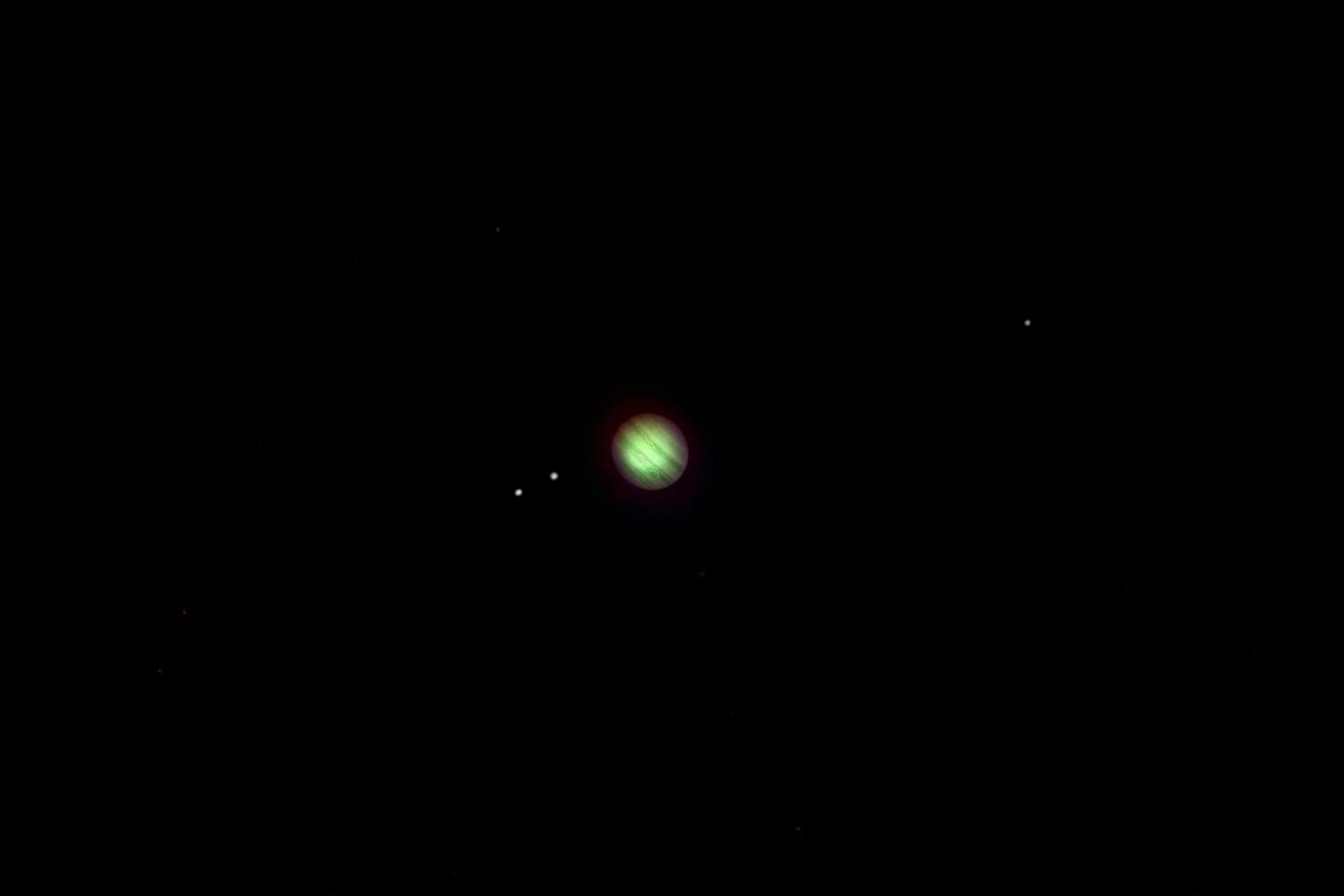
NASA has released hours of audio purporting to be the “sounds” of planets, and the Saturn recordings in particular have circulated widely enough that most people who have spent any time on the internet have heard the eerie, organ-like wail and assumed they were listening to something happening in the air around the rings. That is not what is happening. There is no air around the rings. What the recordings actually contain are radio and plasma-wave emissions — electromagnetic signals well outside the range of human hearing — that instrument teams have shifted into the audible band so that human ears can parse data that would otherwise exist only as graphs. The distinction matters, and it is the part of the story that almost never travels with the audio file.
The popular framing goes like this: spacecraft fly past planets, record their “sounds,” and send them home. That framing is approximately right in its emotional effect and almost entirely wrong in its physics. Sound is a mechanical pressure wave that requires a medium — air, water, rock — to propagate. The interplanetary medium is too diffuse to carry pressure waves at any frequency a human ear could register. What spacecraft like Voyager and Cassini actually carry are antennas tuned to detect oscillating electric and magnetic fields, and those fields are everywhere planets have magnetospheres.
What the instruments actually measured
The Saturn recordings most often shared online come from the Radio and Plasma Wave Science instrument aboard Cassini, the orbiter that arrived at Saturn in 2004 and operated until its controlled descent into the atmosphere in 2017. The instrument’s team spent decades building plasma-wave receivers that flew on Voyager 1, Voyager 2, Galileo and Cassini. The standard procedure was to capture the electric-field oscillations in the kilohertz range — frequencies that happen to overlap, after frequency shifting, with what a human can hear — and convert the recorded waveform into a sound file.
The Saturn emissions specifically come from a phenomenon called Saturn Kilometric Radiation, a coherent radio emission generated near the planet’s auroral regions. Electrons spiralling along magnetic field lines near the poles produce intense radio waves at wavelengths of roughly a kilometre — far longer than anything in the visible or audible spectrum. The Cassini instrument detected the time-varying electric field of those waves, and the team produced an audio file by shifting and compressing the signal so the frequency structure became audible. The rising and falling tones, the dissonant chord-like swells, the moments where the signal seems to breathe — all of that is real structure in the radio emission. It is simply structure that exists at frequencies a human cannot hear without translation.

The procedural detail worth slowing down on is what “translation” means here. There are at least three common methods. The first is direct playback: the captured electric-field waveform is sampled, written as an audio file, and played back at a rate that puts the frequencies into the audible range. The second is sonification proper, in which a numerical dataset — brightness values from a telescope image, for instance — is mapped onto pitch, volume and timbre according to rules chosen by the team. The third is heterodyning, which shifts a band of frequencies up or down by mixing it with a reference tone. NASA and partner institutions use all three depending on what the source data looks like. Popular Science has documented how the agency’s sonification team applies these methods to telescope imagery from Chandra, Hubble and James Webb, where there is no waveform to begin with and the audio is built entirely from pixel data.
Why Saturn sounds the way it does
The Saturn Kilometric Radiation track that circulates most often runs for a few minutes and contains rising whistles, descending tones, and a pulsing low drone underneath. Each of those features corresponds to a physical process. The rising whistles are characteristic of cyclotron maser emission, in which electrons accelerated by Saturn’s magnetic field radiate coherently at frequencies set by the local field strength. As the source region moves, or as the spacecraft’s line of sight changes, the dominant frequency shifts. The drone reflects the slower modulation of the emission as Saturn rotates — the planet’s radio emissions pulse with its rotation period. Cassini measurements narrowed this period to roughly 10 hours and 39 minutes, with the caveat that the period appears to vary between the northern and southern hemispheres in ways that are still not fully explained.
The reason the recording sounds haunting is partly acoustic accident. The radio emissions happen to contain frequency sweeps and harmonic relationships that, when shifted into the audible band, resemble the kind of pitch contours human ears associate with voices, choirs or distant instruments. Cyclotron maser emission produces narrow-band features that sweep smoothly in frequency — almost identical, mathematically, to a singer sliding between notes. The brain hears a slide and assigns it intent. There is no intent. The emission is a consequence of charged particles being accelerated through a magnetic geometry, and the resemblance to music is a coincidence of where the frequencies happen to fall.
The wider catalogue
Saturn is not the only body NASA and partner agencies have translated this way. Voyager 1 and Voyager 2 captured plasma-wave data at every planet they passed, and the same team produced audio files for Jupiter, Uranus and Neptune. Jupiter’s recordings include a famous burst of chorus emission — short, rising tones produced by electrons trapped in the magnetosphere — that sounds startlingly like bird calls. The Parker Solar Probe has captured plasma waves in the solar corona that have been rendered as audio for outreach purposes. Earth itself produces continuous chorus and whistler emissions that ham radio operators have been listening to since the 1950s using simple VLF receivers; the “dawn chorus” recorded over the polar regions predates space-age sonification by decades.
Mars contributes a different kind of audio. The Perseverance rover carries actual microphones, and those microphones have recorded genuine acoustic pressure waves in the thin Martian atmosphere — wind, rover wheels on regolith, the helicopter Ingenuity in flight. Those recordings are sound in the strict physical sense, attenuated and distorted by an atmosphere less than one per cent the density of Earth’s, but real pressure waves nonetheless. The distinction between Perseverance’s microphone files and Cassini’s plasma-wave sonifications matters more than it sounds. One is acoustic data captured by a transducer designed to respond to air pressure. The other is electromagnetic data captured by an antenna and translated into a format human ears can parse.
Why the audio resonates anyway
None of the procedural correction makes the recordings less remarkable. If anything, the translation step deepens what is interesting about them. The Saturn audio is not a sound the planet makes. It is a representation of the planet’s electromagnetic environment, rendered into a sensory format the human nervous system evolved to handle in a completely different context. The fact that it sounds organised, almost musical, is partly a feature of how the brain imposes structure on continuous frequency variation — but it is also a real reflection of the coherent physics happening in Saturn’s magnetosphere. Cyclotron maser emission is, in a meaningful sense, organised. The audio is not random noise pretending to be music. It is structured electromagnetic radiation translated into structured sound.
The psychological response to these recordings tracks what awe researchers have described: a felt sense of vastness paired with a need to revise existing mental models. The Saturn audio triggers that response efficiently because it bypasses the visual channel, which is saturated with familiar imagery of the planet’s rings, and routes the information through hearing, which has fewer prior associations to override. The overview effect described by Artemis II crew members involves similar shifts when astronauts encounter familiar objects in unfamiliar sensory contexts — the Moon seen from cislunar space rather than from a backyard, for instance. The mechanism is comparable: a known thing presented through an unexpected channel forces cognitive reorganisation, and reorganisation feels like wonder.
Recent commentary on the Artemis programme has argued that the psychological reach of space missions depends less on what is technically achieved than on how the achievement is rendered for terrestrial audiences. Cassini’s plasma-wave audio is a small case study in that argument. The instrument captured electromagnetic data for thirteen years. The science papers describing Saturn Kilometric Radiation are dense, technical, and read mostly by specialists. The audio files reach a different audience entirely, and they do so by performing a translation step that has nothing to do with the underlying science and everything to do with making the data legible to a sensory system the data was never aimed at.
What remains uncertain, and what the translation hides
The audio also hides things. Frequency shifting compresses and remaps the signal, and the choices the team makes about how to compress it shape what the listener perceives. A different choice of mapping would produce a different-sounding Saturn. The recordings are not unique acoustic fingerprints. They are one rendering among many possible renderings of an electromagnetic dataset, and the version that circulates online owes its specific character partly to the team’s choices about playback speed, frequency band selection and gain. None of this makes the audio dishonest. It does mean that the haunting quality is partly a product of the translation, not solely a property of Saturn.
The rotation-period puzzle remains genuinely unresolved. Cassini’s radio observations gave two different values for the rotation rate depending on which hemisphere the emissions came from, and the discrepancy has not been cleanly explained. Whatever Saturn is doing magnetically, it is doing something the simplest models of planetary magnetospheres did not predict. The audio files capture that complexity indirectly — the pulsing drone is the rotation, and the fact that the drone is harder to pin down than it should be is the puzzle, audible if you know what you are listening for.
The recordings are real data, faithfully translated, and the haunting quality is a side effect of physics that happens to produce frequency structures human ears find evocative. Space remains silent in the strict acoustic sense. The instruments are listening anyway, to a different kind of signal, and the audio files are what happens when that signal is handed to a species that evolved to hear.
