
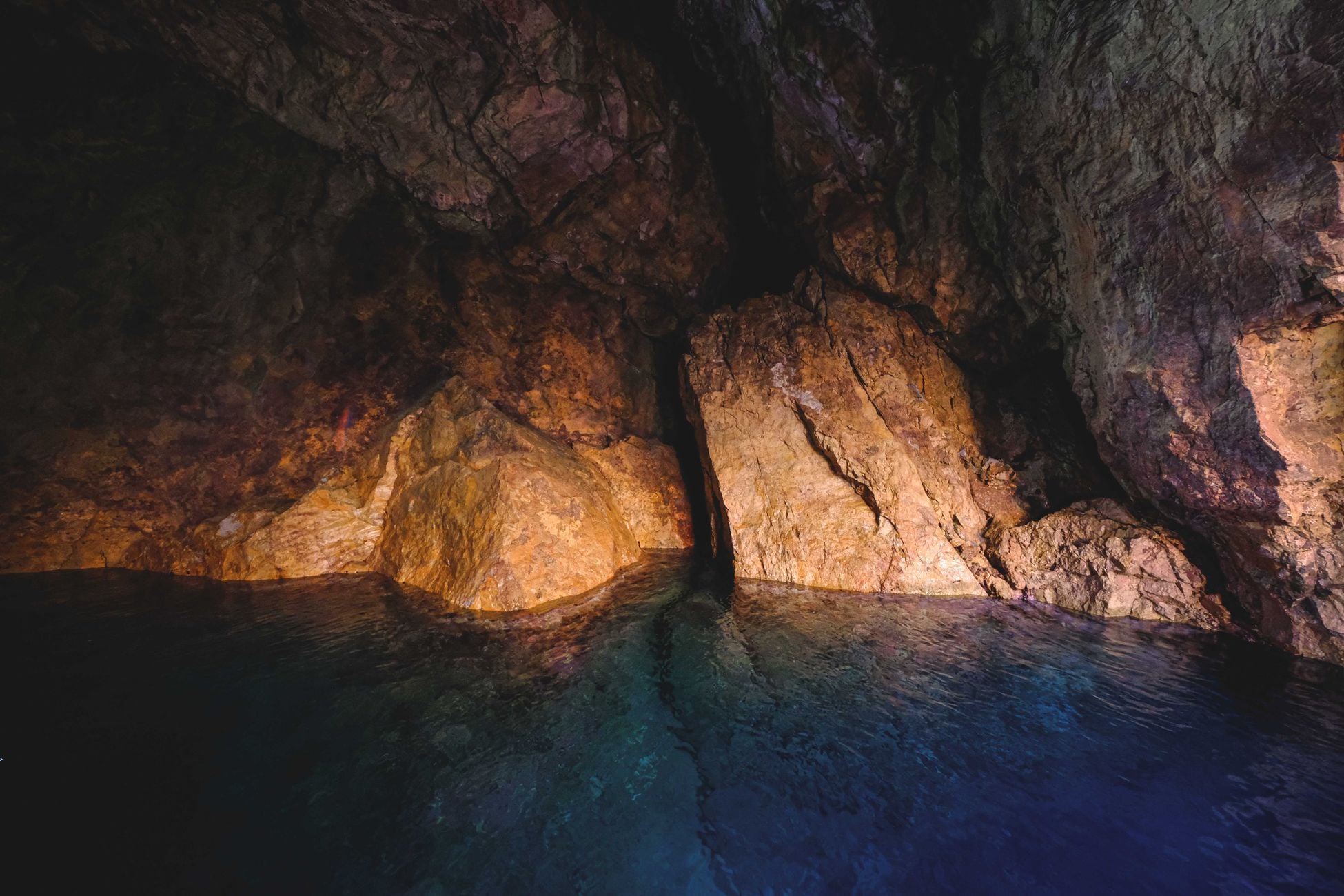
Inside the flooded galleries of Postojna Cave in southwestern Slovenia, a pale, finger-thin salamander called the olm (Proteus anguinus) sits on the bottom of a limestone pool, gills fringing its neck like tiny pink ferns, and does almost nothing at all. It has no functional eyes. Its skin is the color of wet paper. It can survive up to a decade without a single meal, live past a hundred years, and spend most of that century so motionless that researchers monitoring individual animals have watched them stay in the same crevice, unmoved, for years at a time.
It is one of the strangest vertebrates in Europe, and it lives in a world it has never once seen.
The dragon that never grew up
Locals in the Slovenian karst have known about the olm since at least 1689, when the polymath Janez Vajkard Valvasor described strange little dragons that washed out of springs after heavy rain. Farmers assumed they were the offspring of bigger dragons living deep inside the mountain. They were not entirely wrong about the strangeness. They were wrong about the size.
The adults are only about 20 to 30 centimeters long, roughly the length of a pencil case. They keep the feathery external gills of a larva for their entire lives, a condition biologists call neoteny. An olm hatches, and then, in a sense, it never fully finishes hatching.
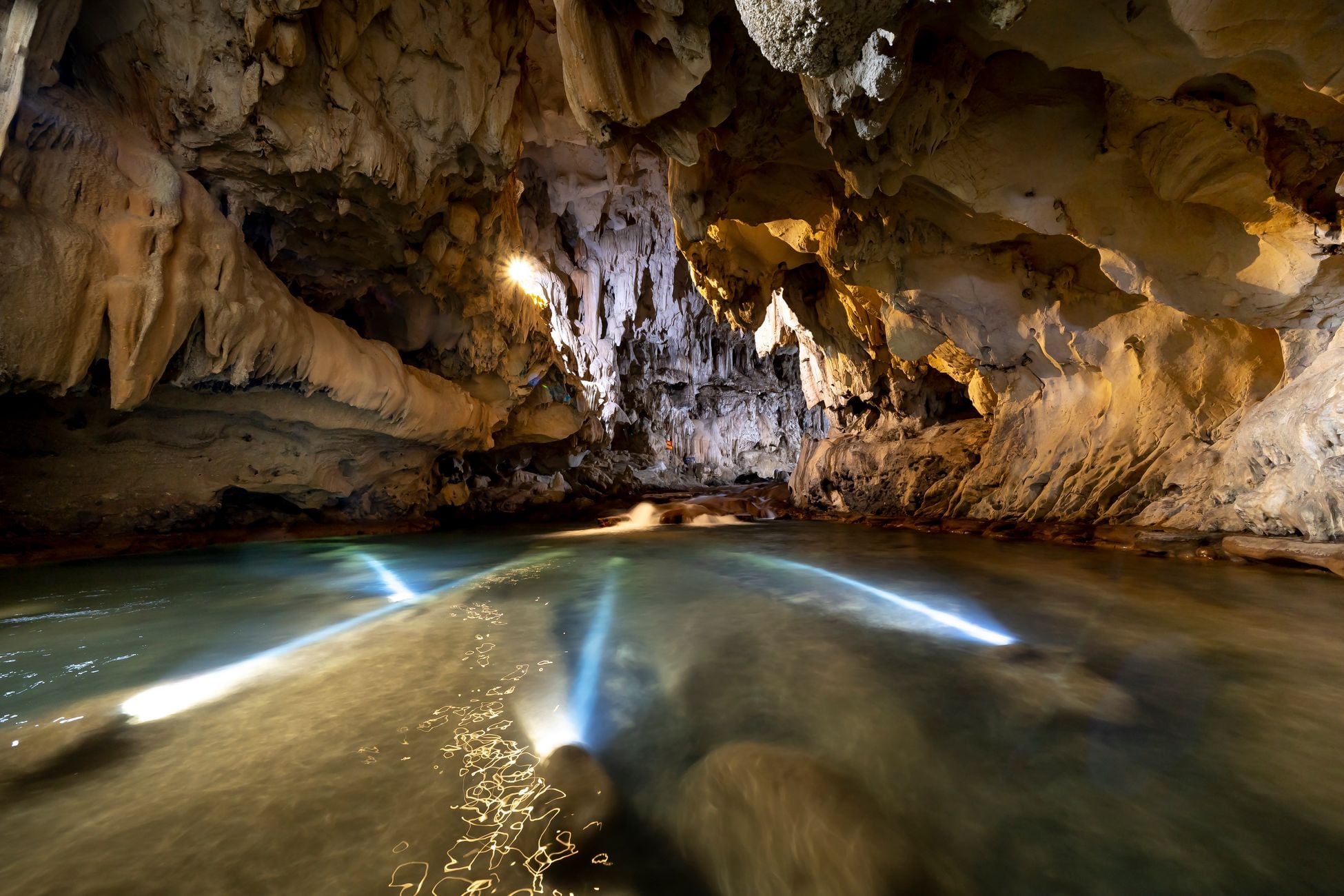
They are the only exclusively cave-dwelling vertebrate in Europe, restricted to a strip of flooded limestone that runs through Slovenia, Croatia, Bosnia and Herzegovina, and a sliver of Italy. Everything about their biology is shaped by the fact that, in a cave, almost nothing ever happens.
A decade without a meal
Food in a cave river is scarce and unpredictable. A flood might wash in a slug of small crustaceans and insect larvae one week, then leave the passage empty for months. The olm’s response to this uncertainty is to become almost metabolically inert.
Olms can go up to ten years without eating, drawing down stored lipids and even reabsorbing their own tissues to keep the essentials running. When food does arrive, they gulp it in one shot and stash the surplus as fat in the tail and liver, banking calories against the next long silence.
Their heart rate slows. Their oxygen demand drops. In the coldest, deepest pools, an olm’s whole physiology hovers near the threshold of doing nothing at all.
Motionless for years at a time
Mark-and-recapture studies on olms in Bosnian caves have shown extraordinary stillness. Divers tagged individuals and returned repeatedly to see where they had gone. The answer, for most animals: nowhere.
Some olms have been recorded in the same spot for over seven years without moving more than a few meters. Movement across most individuals averages only a few meters per year. Some animals shift less than the length of a bathtub across most of a decade.
For an animal that can live past 100, that means an entire human lifetime could pass while a single olm barely changes address.
Eyes that gave up
Olm larvae hatch with visible eyes. Over the first few months, the eyes stop developing, sink beneath the skin, and are eventually overgrown. By adulthood the animal is functionally blind, though the covered eyes still register some light through the skin.
In place of vision, the olm carries a battery of other senses tuned to a world of cold water and rock. Its lateral line detects the smallest pressure changes in the water. Its snout is packed with chemoreceptors sensitive enough to track prey by taste and smell in complete darkness. It also has electroreceptors, cells that pick up the weak electrical fields given off by living tissue, and there is evidence it can orient to Earth’s magnetic field.
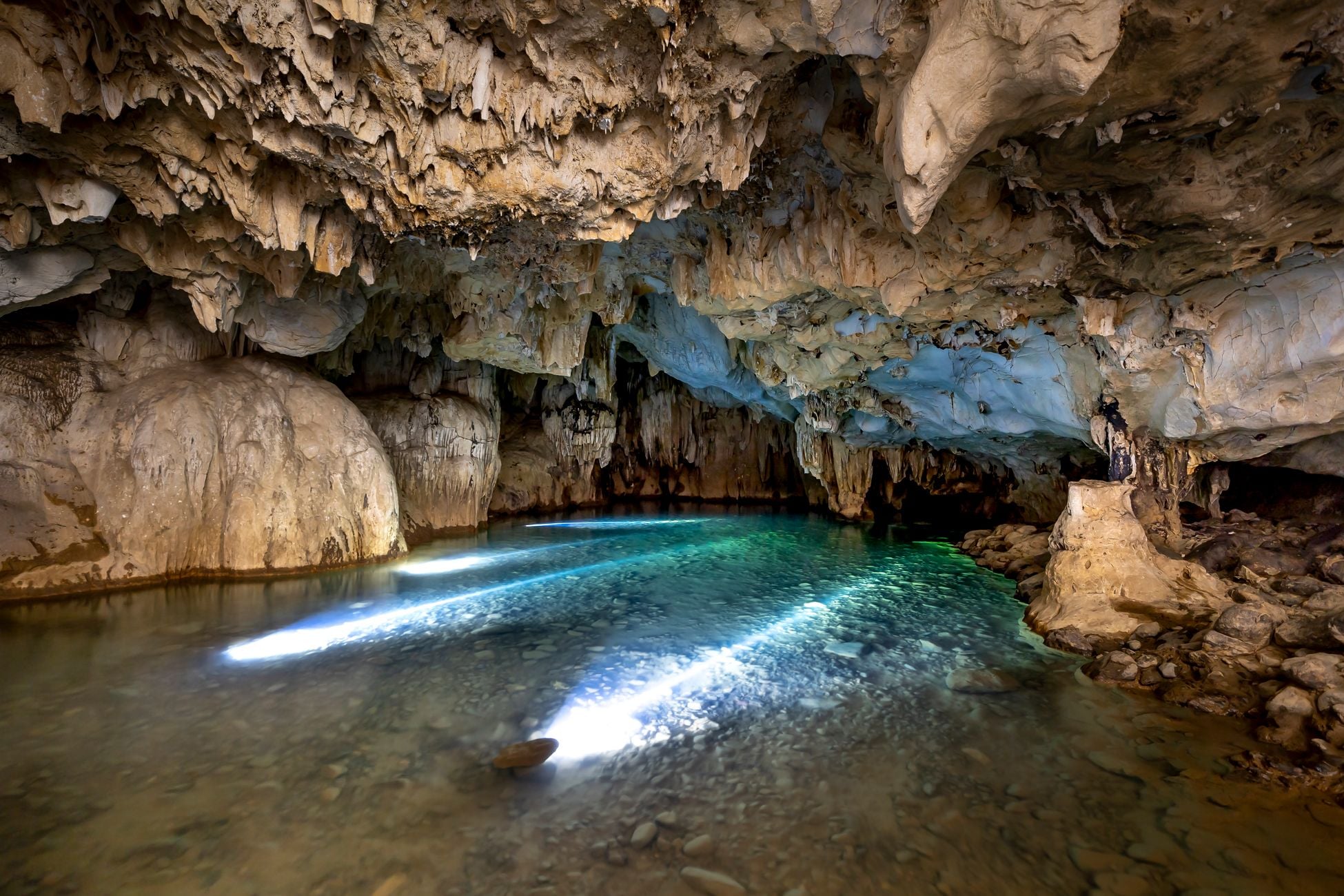
It is, in effect, wearing a suite of instruments better suited to the pitch black than any human diver’s headlamp. What it does with them, most of the time, is wait.
Living past a hundred
Captive olm colonies that have been studied for decades suggest an average lifespan of around 70 years and a maximum life expectancy well over 100. Some individuals in these colonies are now more than 70 years old and still reproducing.
That is extraordinary for an amphibian of its size. A comparable-sized salamander at the surface might live 10 to 20 years. The olm burns through its life so slowly that its cells accumulate damage at a fraction of the usual rate. Its resting metabolism is among the lowest measured in any vertebrate.
Females may lay eggs only once every 6 to 12 years. In Postojna Cave, an olm laying eggs is a rare enough event that staff live-stream it when it happens.
Sneaking to the surface
For centuries, biologists assumed olms never voluntarily left the caves. Any that appeared at spring outlets were considered accidents, flushed out by floods.
Recent research using motion-triggered cameras at surface springs in Slovenia and Italy showed that some olms actually climb toward the light on their own, usually at night. Nobody yet knows why. The leading guesses are that they are chasing food, dispersing to new territory, or that some individuals are simply less committed to the cave lifestyle than others.
Whatever the reason, it complicates the picture of the olm as a creature sealed off from the outer world. A few of them, at least, are curious enough about the surface to risk it.
What the darkness does
The olm’s biology sits at the extreme end of a spectrum that includes many other cave-adapted animals: blind fish, ghost-white crustaceans, spiders with legs longer than their bodies and metabolisms slowed to a crawl. Cave ecosystems reward one strategy above all others, which is to want less. Less food, less oxygen, less movement, less light.
Humans are not built for that. When bioengineer Kiana Aran spent just five days alone in a pitch-black cave with biosensors strapped to her body, her senses began to rewire within hours. She reported hallucinations, altered perception of time, and shifts in hearing and touch, and she was still receiving food and water on a schedule. A separate account of her experiment describes vivid visions of long-dead relatives appearing beyond a glass partition on the fourth day underground.
The olm spends every day of its century-long life in conditions more extreme than that, and appears to feel no urgency about any of it.
A very slow animal in a very fast century
The olm is now vulnerable. Its karst aquifers are also the drinking water for much of the northern Balkans, and they collect whatever leaks in from farms, factories, and roads on the surface: nitrates, pesticides, heavy metals, PCBs. A creature that lives 100 years and moves 5 meters a year cannot outrun a contaminated water table.
Slovenia lists the olm as a national natural monument. Postojna Cave runs a breeding program and has hatched dozens of larvae in captivity since 2016, when a female nicknamed the “mother dragon” laid a clutch of eggs that a global audience watched hatch on webcam over four months.
The visitor route through Postojna passes an aquarium where several adults hang suspended in the water, gills gently pulsing, bodies angled at whatever direction they happened to drift into. Tour guides warn people not to be disappointed if the animals do not move. They usually do not.
A hundred years of stillness
Consider what an olm hatched in 1926 would have lived through, entirely unaware. The invention of television. Two world wars overhead. The Moon landing. The construction and collapse of Yugoslavia. The digitization of nearly everything. Around 36,500 sunrises above ground, none of them witnessed.
The animal itself, meanwhile, might have moved the length of a school bus. It might have eaten fewer than a dozen full meals in the whole span. It might still be there, in the same crevice in the same cave, gills waving faintly, waiting for something in the water to change.
