

The person who has rebuilt their Notion dashboard four times this quarter is not failing at productivity. They are succeeding at something else, something the productivity literature rarely names. The columns get renamed. The tags get colour-coded. The priority levels shift from numeric to alphabetic to a private symbolic system involving small fruit emojis. None of this moves a single task closer to done. All of it produces a particular kind of quiet that is hard to find anywhere else in a modern adult life.
The conventional reading of this behaviour is procrastination, and the conventional advice is to stop doing it. Close the app. Pick a task. Start. The literature on procrastination is large and largely consistent on this point: delay produces guilt, guilt produces more delay, and the cycle eats both time and self-regard. Procrastination researchers have documented the cost in health behaviours, in financial decisions, in relationships. The advice is sound. It is also, for a particular kind of person doing a particular kind of arranging, beside the point.
What the arranging often is, for many people who do it compulsively, is the only authored space left in their day.
The Last Room Where the Furniture Is Theirs
Consider what the average knowledge worker controls between the hours of 9 and 6. Not the meetings, which are scheduled by others. Not the deadlines, which arrive from elsewhere. Not the open-plan office temperature, the Slack notification cadence, the calendar invitations that materialise overnight, the priorities that shift because someone in another time zone decided they should. Not, in many cases, the working hours themselves, which now extend past dinner because a thread reopened.
Outside work, the picture is often similar. Rent is set by the market. Commute times are set by infrastructure. Childcare schedules are set by institutions. Partners have opinions. Parents need calling. The dishwasher decides when it will be loaded by being full.
Inside the task manager, however, the user is sovereign. They decide whether the project lives in a board view or a list view. They decide whether ‘Errands’ should be its own category or a sub-tag of ‘Life Admin.’ They decide that recurring tasks should reset at 4 a.m. rather than midnight because that feels cleaner. No one will overrule these decisions. No one will even know they were made. The control is total, private, and reversible — which makes it almost unique in the rest of waking experience.
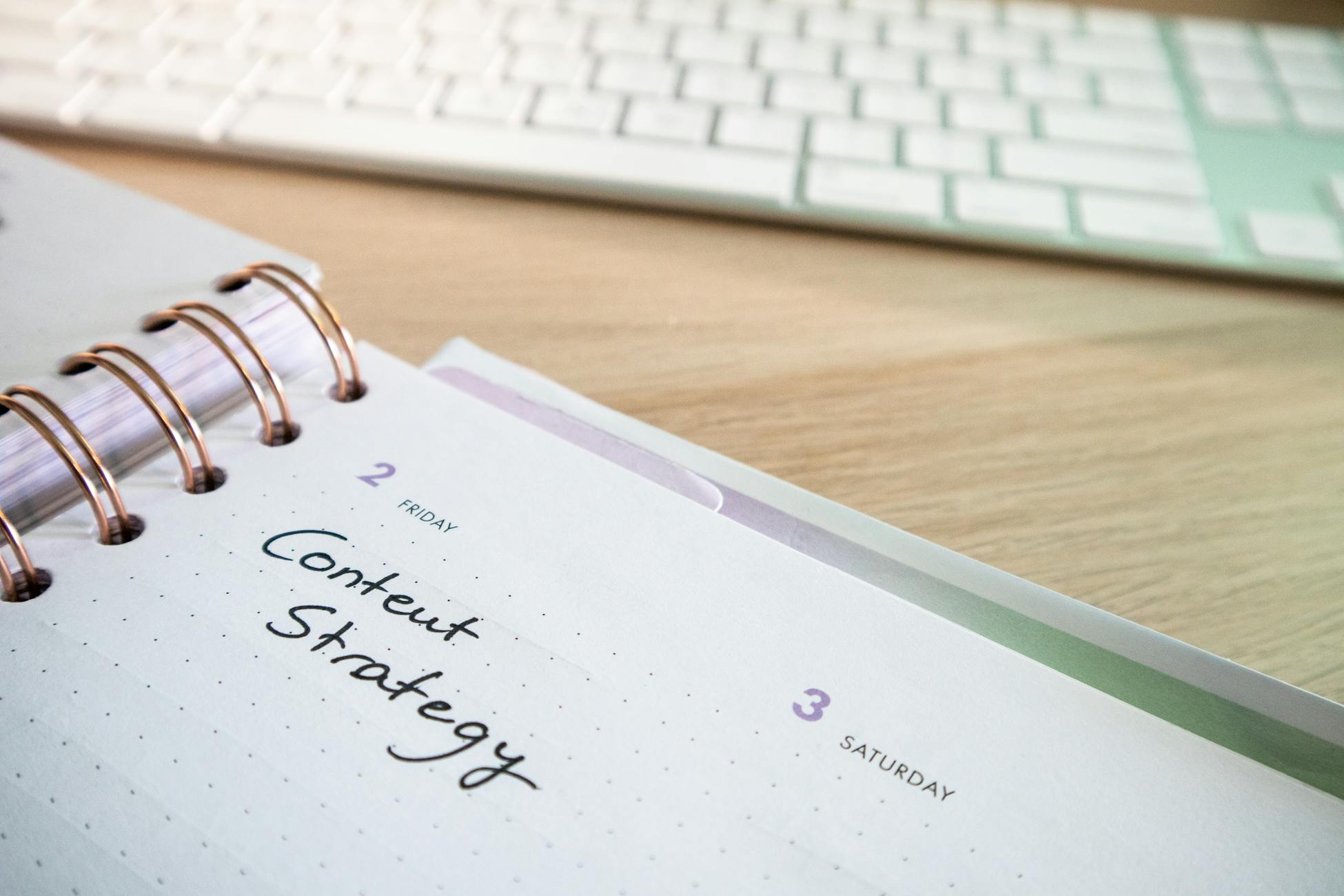
Autonomy as the Variable Almost Nobody Measures
The well-being literature has been catching up with this for some time. A recent cross-national analysis reported by researchers studying happiness found that autonomy — the felt sense of choice and control over one’s life — predicts well-being especially strongly in wealthier countries, where material needs are mostly met and what remains scarce is the sense of being the author of one’s own days. The finding is intuitive once stated. The people who have everything they need often still feel they have very little they choose.
The task manager, in this framing, is not a productivity instrument that has been misused. It is a private autonomy instrument that happens to be shaped like a productivity instrument. The user opens it not to get things done but to perform a small ritual of authorship: I decided this. I moved this. I named this. I will move it again tomorrow if I want.
This is not the same thing as procrastination, although it can look identical from the outside and often co-occurs. Procrastination is task-avoidance in service of mood repair — people delay aversive tasks to manage the negative feelings associated with them. The compulsive arranger is doing something subtler. They are not avoiding the task so much as substituting one form of agency for another. The task itself may feel impossible to control. The shape of the column it sits in does not.
Why the Distinction Matters
Treating the behaviour as ordinary procrastination produces a particular kind of useless advice. Close the app. Use a paper list. Set a timer. Pick the smallest task and just do it. The advice is useless not because it is wrong about productivity but because it misreads what the behaviour is for. You cannot productivity-hack your way out of an autonomy deficit. You can only acknowledge the deficit or find another way to fill it.
The clinical literature on coping behaviours offers a useful parallel. Anxiety coping tools can backfire precisely when they are deployed as substitutes for the underlying conditions producing the anxiety. The tool works in the moment — a feeling lifts, an itch is scratched — but the structural problem is unchanged, and so the tool gets used again, and again, with diminishing returns. The compulsive rearrangement of a digital workspace has this shape. It works. The user feels briefly calmer, briefly in charge. Then the calm fades because the conditions producing the need for it have not moved.
What the Arranging Is Actually Doing
Several things, simultaneously. It produces a small reward, the kind that any act of completed organisation produces. The nervous system responds to reduced visual clutter. It is rehearsing a fantasy of the next week or month in which the user is calm, ahead of schedule, and unambushed by the unexpected. It is also — and this is the part that matters — generating a sustained, low-key sense of authorship that the rest of the day does not provide.
Writers on this site have explored how unstructured time has nearly vanished from the modern day, and the rearrangement ritual partly fills the vacated space. It feels like work. It produces the surface texture of work. It does not require a meeting or a manager or a deliverable. For a knowledge worker whose entire day is spent reacting to other people’s priorities, half an hour of moving rectangles in a private interface can be the closest thing to a self-directed afternoon they have had in months.

The Pattern Across Different Populations
The behaviour shows up most visibly among knowledge workers with high cognitive demands and low procedural control — the project manager whose project keeps being redefined, the early-career consultant whose hours belong to the client, the academic whose calendar is colonised by committee work. It also shows up in parents of young children, particularly mothers, whose domestic logistical load is enormous and whose ability to author the order of their own day is almost zero. The shared grocery list, the family calendar, the meal-planning app — these are often arranged with the same intensity, and for the same reason. Inside the interface, the user is the one deciding.
It shows up in people recovering from periods of acute loss of control: after illness, after job loss, after the end of a long relationship, after a move. The arranging spikes. The completion does not. This is sometimes read as evidence of difficulty with planning and task initiation or as a symptom of something diagnosable, and sometimes it is. More often, it is the nervous system reaching for the one lever it can still pull.
What Helps, and What Doesn’t
What does not help: telling the person to stop. The arranging is meeting a real need, and removing the behaviour without addressing the need produces either a new substitute behaviour or a worse mood. What also does not help: switching to a simpler tool. The complexity of the tool is part of the appeal, because complexity is what makes authorship visible. A paper list cannot be rearranged into seventeen new configurations. That is precisely why it does not scratch the itch.
What sometimes helps: noticing what the behaviour is for. The shift from thinking one is procrastinating again to recognizing that task manager organization provides a rare space for personal authorship and control is a clarifying shift. It does not make the underlying condition better. It does make the behaviour stop being a source of self-recrimination, which removes one of the loops that keeps it running.
What helps more: locating other domains where authorship is possible and underused. Cooking, for the person who has been ordering takeaway. A garden bed, for the person who has been scrolling. A weekly evening that belongs to no one else. Even a small physical space — a desk, a corner of a room, a drawer — that is arranged by no one but the user. The point is not to replace one tool with another. The point is to widen the surface area of authored life beyond a single rectangle of pixels.
The Quiet Argument the Behaviour Is Making
What the rearranger is saying, without saying it, is that the rest of their life has too few places where they get to decide how things are ordered. The task manager is not the problem. It is the symptom, and also the small, private answer. The user has located one piece of territory in which their preferences are sovereign, and they are visiting it as often as they need to.
This is not a moral failing. It is a reasonable response to a structural condition. The condition is that modern work and modern domestic life have, for many people, hollowed out the everyday experience of authorship to a degree that prior generations would have found strange. The columns get renamed because the rest of the day cannot be. The tags get recoloured because the meetings cannot be moved. The system gets rebuilt because the user, somewhere underneath the productivity language, is rebuilding a small private statement that they still get to decide something.
The advice that follows from this is not to optimise the system or to abandon it. It is to notice what the system is for, and then to ask the harder question: where else, in the remaining hours, does the person get to be the one who decides.
