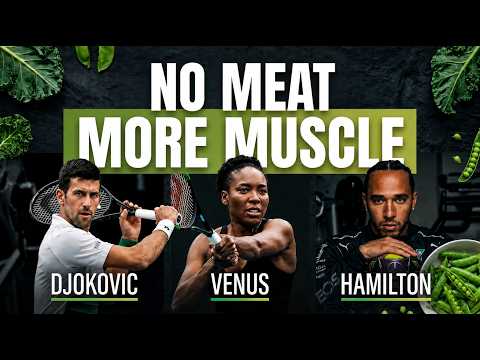
Novak Djokovic was struggling with illness during a 2010 Australian Open match against Jo-Wilfried Tsonga when Dr. Igor Cetojevic, a Serbian physician and acupuncturist watching from home, decided the problem was not simply nerves or fitness.
According to The New Yorker’s 2013 profile of Djokovic, Cetojevic saw the breathing trouble on television, later met Djokovic, and suspected an imbalance in his digestive system. Months later, he asked Djokovic to hold a slice of bread against his stomach while resisting downward pressure on his arm.
Djokovic later wrote in Serve to Win that his arm weakened during the test. Cetojevic told him to eliminate gluten, then, after blood work, also advised him to cut dairy and reduce other foods.
What followed became one of the most famous diet stories in modern sport.
The bread test that became tennis folklore
The test itself was unconventional, and it should not be treated as a standard medical diagnostic tool. But Djokovic’s account of what happened afterward is specific: he stopped eating gluten, then dairy, and says he felt lighter, clearer, and better able to breathe.
That matters because Djokovic’s body had been part of the public conversation for years. He had retired from matches. He had struggled in heat. He had been mocked by commentators and rivals as a player whose talent disappeared when matches became physically brutal.
Cetojevic’s explanation gave him a different story about his own body. Whether every part of that explanation would satisfy modern sports science is another question. Djokovic believed he had found a pattern, and in elite sport, belief is not a small variable.
What he actually changed
Gluten went first. Bread, pasta, pizza, and many of the foods he had grown up around became off limits.
Dairy followed. Djokovic has spoken in later interviews about congestion, breathing problems, and the effect he felt after removing gluten, dairy, and refined sugar from his routine. In a 2025 interview with Business Insider, he said the change produced a major shift in energy and recovery.
The adjustment was not just a case of swapping one sandwich for another. It meant rebuilding how he ate on tour: more vegetables, fish, rice, gluten-free pasta, nuts, seeds, fruit, and plant-based milk alternatives.
It also meant giving up the foods most emotionally tied to his childhood. Djokovic grew up in a family that ran restaurants, and gluten was not an abstract ingredient. It was bread, dough, pizza, routine, and memory.
The 2011 season still looks unreal
Then came 2011.
Djokovic won the Australian Open, Wimbledon, and the US Open. He beat Rafael Nadal in six finals. He rose to world No. 1 after Wimbledon and finished the season with a 70-6 record.
The ATP later described that season as historic, noting that he won 10 titles, including three majors and five Masters 1000 crowns. It remains one of the cleanest before-and-after stories in tennis: the player who had looked physically fragile in the biggest moments became the player nobody could outlast.
That does not prove the diet caused the transformation by itself. Djokovic was also entering his physical prime, sharpening his training, maturing mentally, and building a more disciplined recovery routine.
But it does explain why the food story stayed attached to him. The change arrived right before the leap.

The twelve-major number belongs to his thirties
The number often gets repeated loosely, so it is worth being precise.
Djokovic did not win only twelve Grand Slam titles after the dietary change. He had one major before 2011, the 2008 Australian Open, and went on to build a record total of 24 men’s singles majors.
The “twelve” figure refers to what he did after turning 30. The Australian Open has noted that twelve of Djokovic’s 24 Grand Slam titles came after his 30th birthday, a remarkable split in a sport where most champions decline long before that point.
That is the more interesting longevity story anyway.
He won the French Open in his thirties. He kept winning Wimbledon in his mid-thirties. He won the Australian Open at 35 and 36. By the time younger players were supposed to have pushed him out of the frame, he was still collecting the trophies that define tennis history.
What the science says, and what it does not
Non-celiac gluten sensitivity is a real but complicated category. A person can feel unwell after eating gluten without having the intestinal damage that defines celiac disease, but the biology is still debated and diagnosis is usually based on excluding other conditions.
Medical News Today’s overview of celiac disease and gluten intolerance describes non-celiac gluten sensitivity as involving symptoms such as fatigue, digestive discomfort, bloating, and brain fog, while also noting that no single specific test can identify it.
That distinction matters. Djokovic’s story is not a universal lesson that every athlete should give up bread.
Research on non-celiac athletes has not shown that a gluten-free diet reliably improves performance. A small controlled study reported by TIME found no short-term athletic advantage in competitive cyclists without celiac disease.
The article’s safest reading is narrower: Djokovic believed gluten and dairy were hurting him, he changed his diet under the guidance of a practitioner, and he says the effect on his body was dramatic.
The dairy question is less famous, but just as central
The gluten story gets most of the attention because the bread test is vivid. The dairy change is quieter, but it became part of the same routine.
Djokovic has linked the removal of dairy to breathing, congestion, sleep, and recovery. In the Business Insider interview, he described respiratory issues that affected his fitness and said removing gluten and dairy improved how he felt on court and off it.
Lactose intolerance is common globally, though it varies widely by population. Dairy sensitivity and allergy are different issues, and they should not be collapsed into one diagnosis.
For Djokovic, the practical result was simple. Cow’s milk, cheese, and standard dairy products largely disappeared from his diet. Almond, hemp, rice, and other alternatives took their place.

The skeptics still have a point
There is another possible explanation for the transformation: Djokovic did not just remove gluten and dairy. He became radically more attentive to everything he ate.
He cut refined sugar. He reduced processed food. He ate more whole foods. He timed meals more carefully. He treated food as part of training rather than as background noise.
Any of those changes could help a world-class athlete feel better. Together, they could do even more.
The mental side is also impossible to separate. Djokovic in 2010 looked like a player waiting for his body to betray him. Djokovic in 2011 looked like a player who believed he had solved the problem.
That does not make the effect fake. It makes it human.
The pizzeria kid who gave up bread
The detail that makes the story linger is still the family pizzeria.
Djokovic did not give up a food trend. He gave up part of his childhood. The bread, dough, pasta, and cheese he later blamed for his collapses were also the foods around which his early life had been built.
That is why the story has lasted beyond the usual athlete-diet cycle. It is not just about macros or menu discipline. It is about a player deciding that the thing he came from might also be the thing he had to leave behind.
By his late thirties, Djokovic had not merely extended his career. He had rewritten the age curve of men’s tennis.
Food was not the only reason. But by Djokovic’s own account, it was one of the first doors he opened.
VegOut’s breakdown of Djokovic’s plant-based shift is worth watching for more context on the 2011 turning point, the diet changes he credits, and how that overhaul fits into his unusually long run at the top of men’s tennis.