
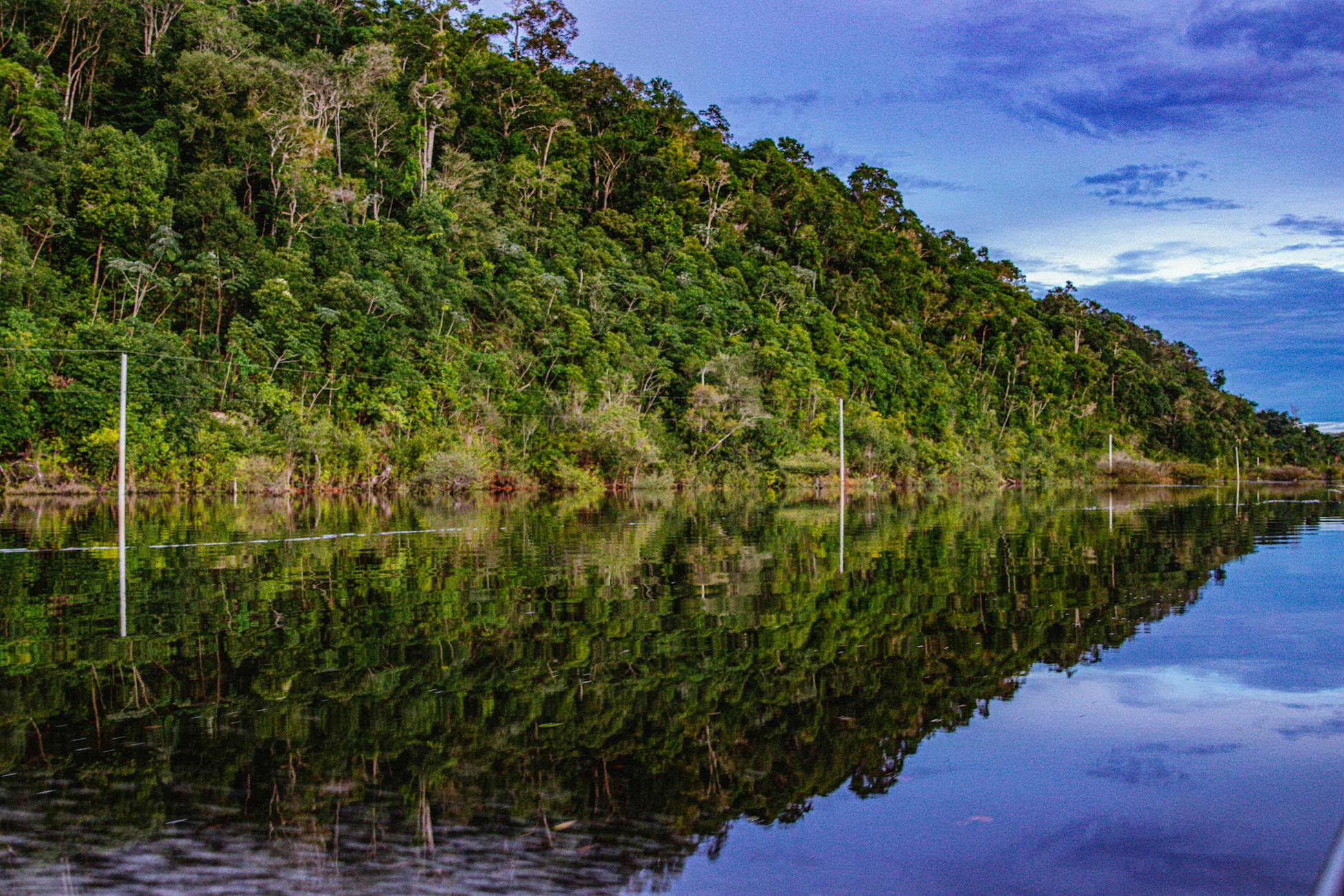
Ask a shaman in the upper Amazon how his ancestors learned to combine the two specific plants that make ayahuasca work, and the answer that comes back is not the one a Western pharmacologist would offer. The plants told us, he will say. The vine taught us how to prepare it. The leaves explained where they belonged in the brew. The framing is consistent across language groups, across river systems, across centuries of recorded ethnographic interviews. It is also, by the conventions of modern empirical science, not an answer at all.
And yet something has to account for the discovery, because the discovery itself is real, and on any honest accounting of the arithmetic, it should not have happened.
What the brew actually is
The popular framing of ayahuasca treats it as a single substance, a kind of jungle tea with mystical properties. That framing is badly incomplete. Ayahuasca is not a plant. It is a pharmacological system — a two-component drug delivery mechanism that requires both ingredients to function, and the discovery of which ranks among the more improbable achievements in the history of human botany.
The active psychedelic compound is N,N-dimethyltryptamine, or DMT. When smoked or injected, it produces an intense, short-lived psychedelic experience. When swallowed in any conventional form, it produces nothing at all. The reason is mechanical: an enzyme in the human gut and liver called monoamine oxidase, or MAO, breaks DMT down before it can cross into the bloodstream.
The shamanic preparation solves this with a second plant. The vine Banisteriopsis caapi contains beta-carbolines that temporarily disable the enzymes that would otherwise destroy the tryptamine. The leaves of Psychotria viridis, called chacruna, supply the DMT. Neither plant alone produces the effect. The brew is a pharmacological engineering solution to a specific enzymatic problem, engineered by people without access to enzyme assays, mass spectrometry, or any of the analytical chemistry that allowed Western researchers to work out what was happening only in the mid-twentieth century.
The arithmetic of the discovery
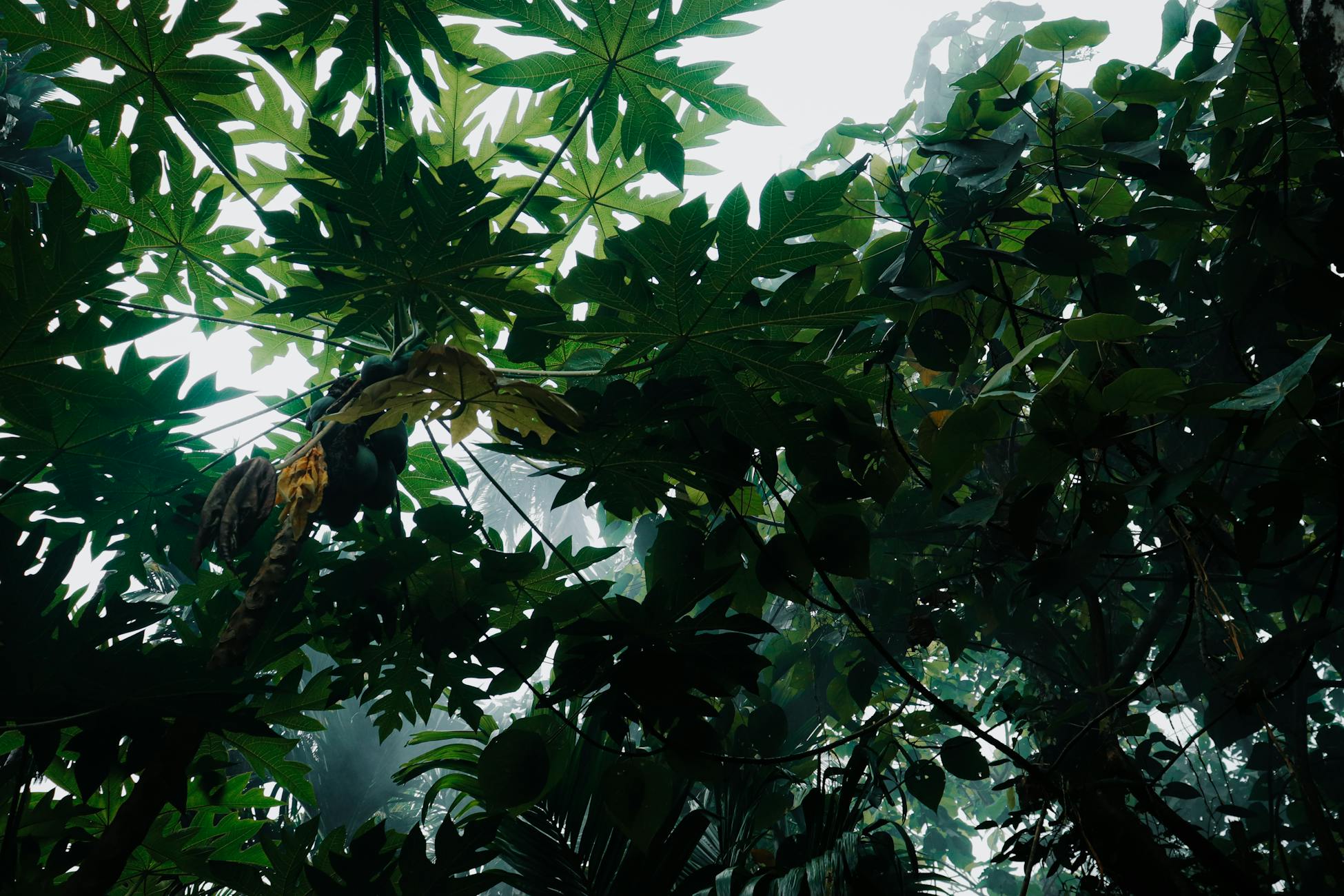
The Amazon basin contains tens of thousands of plant species. The number of unique two-plant combinations available from a pool of that size runs into the billions. The actual psychoactive combination requires not merely the right two species, but the right two species prepared in the right way: the vine must be pounded and boiled for hours, and the leaves must be added during the boiling process. A cold-water infusion of the same two plants would not produce a meaningfully active brew.
The standard explanation when this combinatorial problem comes up is that indigenous knowledge accumulated over thousands of years through systematic trial and error. That explanation is correct in the narrow sense that experimentation clearly occurred, and slightly misleading in ways that matter. Pure random sampling of two-plant combinations, even at a rate of one new combination tested per day, would require millions of years to exhaust the possibility space. The discovery cannot have been random. Some structuring principle must have narrowed the search.
It is worth being precise about what the discovery required, beyond the species identification. The shamans had to determine that the vine needed to be macerated and boiled rather than chewed or infused cold. They had to determine that the leaves needed to be added to an already-active extraction. They had to determine the approximate dosing ratios that would produce a workable experience rather than violent illness. They had to identify which other plants in the surrounding environment could be safely co-administered and which could not — the MAO-inhibited state produced by the brew is itself a pharmacological hazard zone in which many otherwise innocuous foods become acutely dangerous.
The shamans’ own account
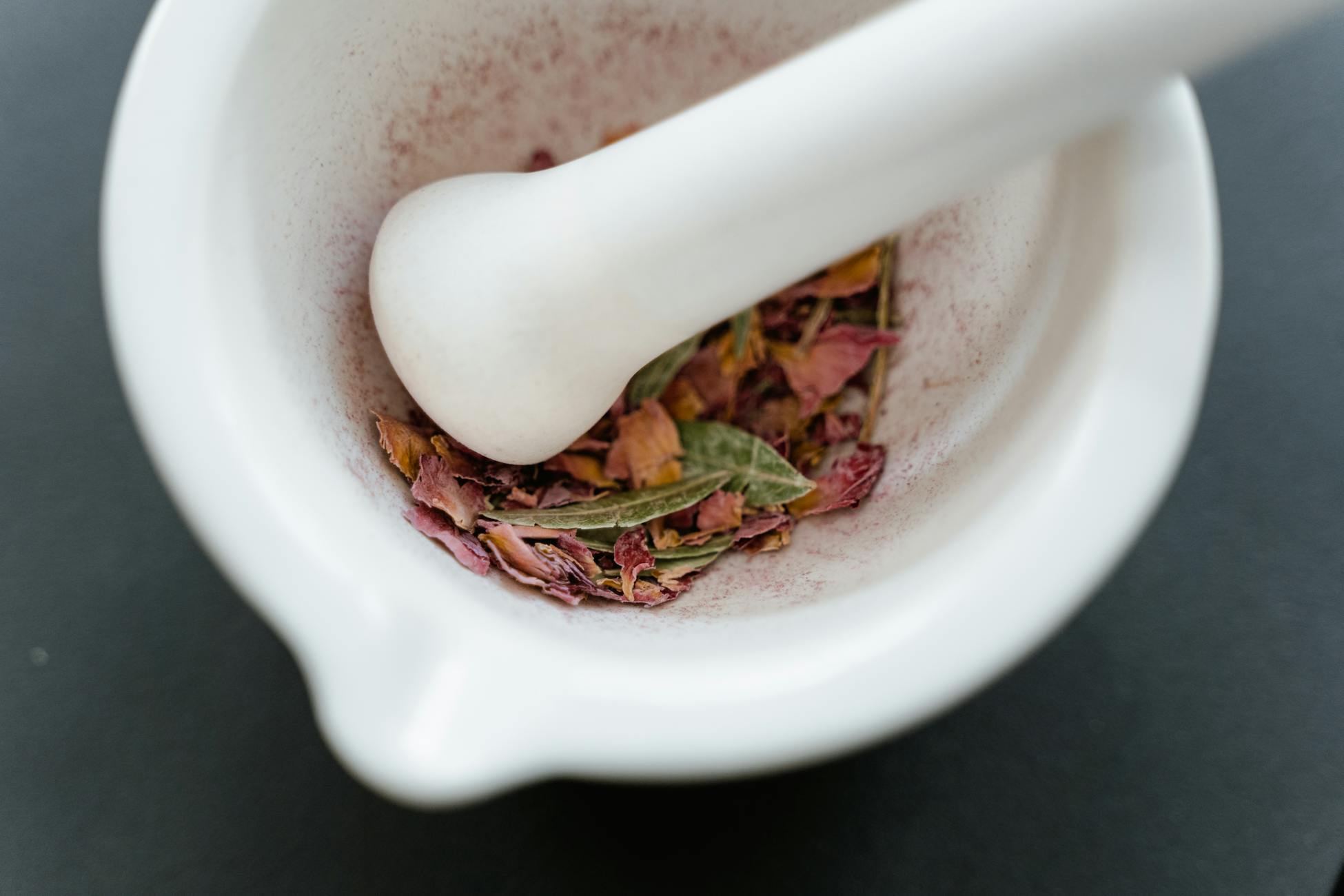
When practitioners in the Amazon are asked how the knowledge was acquired, the answers consistently invoke the plants themselves as the source of the information. The vine instructs. The brew teaches. A particular preparation reveals itself across nights of attentive practice. This framing is dismissed in most Western analytical traditions as mythological rather than methodological, a piece of indigenous metaphysics to be politely set aside before the real explanation — careful empirical trial and error — is reconstructed in terms a chemist would recognize.
Work on the epistemology of indigenous ecological knowledge has argued that this dismissal underestimates the sophistication of the observational systems involved, which combine multi-generational botanical cataloging, sensory testing protocols, and pattern recognition across thousands of species. The Western reconstruction is not necessarily wrong. It is, on the available evidence, incomplete. It does not, on its own, account for the arithmetic.
Reverse-engineering, four centuries late
Western pharmacology arrived at an understanding of the mechanism roughly four hundred years after Europeans first encountered the brew. The first chemical characterization of harmine from Banisteriopsis caapi occurred in the early twentieth century. DMT was first synthesized in 1931, but its psychoactivity was not recognized until the 1950s. The connection between the two — that harmine’s MAO-inhibiting activity is what renders oral DMT bioavailable — was established in the Western literature during the mid-twentieth century.
The analytical infrastructure required to explain why ayahuasca works was assembled across roughly five decades of twentieth-century biochemistry, by researchers in well-funded laboratories with isotope-labeled compounds, chromatography, and enzyme kinetics. The shamans had arrived at the working configuration without any of it.
What this implies about knowledge itself
The interpretation favored by most ethnobotanists is that indigenous Amazonian knowledge systems represent a form of distributed, multi-generational empirical science that operated under conventions different from Western experimental method but achieved comparable results in specific domains. The plants were not selected at random. They were selected within frameworks that incorporated taxonomic intuitions — beta-carbolines occur in several related vine species, DMT-containing leaves cluster in particular families — along with sensory cues, observational testing, and accumulated tradition. The search space was never truly measured in billions. It was structured from the beginning by an epistemology that Western science is only beginning to characterize on its own terms.
This is a reasonable account, and it may well be the right one. But it is worth noting what it concedes. It concedes that there exist routes to accurate knowledge of pharmacological mechanism that do not pass through anything resembling a controlled experiment, a laboratory, or a written record. It concedes that what looks from the outside like mythology — the plants told us — may in practice describe a working observational discipline whose internal logic the analytical tradition has not yet learned to read. And it concedes that the modern apparatus of biochemistry, for all its precision, arrived at this particular answer last, not first.
What remains, after the mechanism is mapped and the arithmetic acknowledged, is a working pharmacological system whose discovery cannot be reconstructed by any of the methods that now describe it. The brew functions because of an enzyme inhibition pathway that was not formally characterized until the twentieth century. Someone, or some long sequence of someones, working without any of that vocabulary, identified the configuration and built a ceremonial architecture around it that has survived into the present day. The mechanism is now understood. How it came to be known is a question that the conventional history of human knowledge is not yet equipped to answer.
