
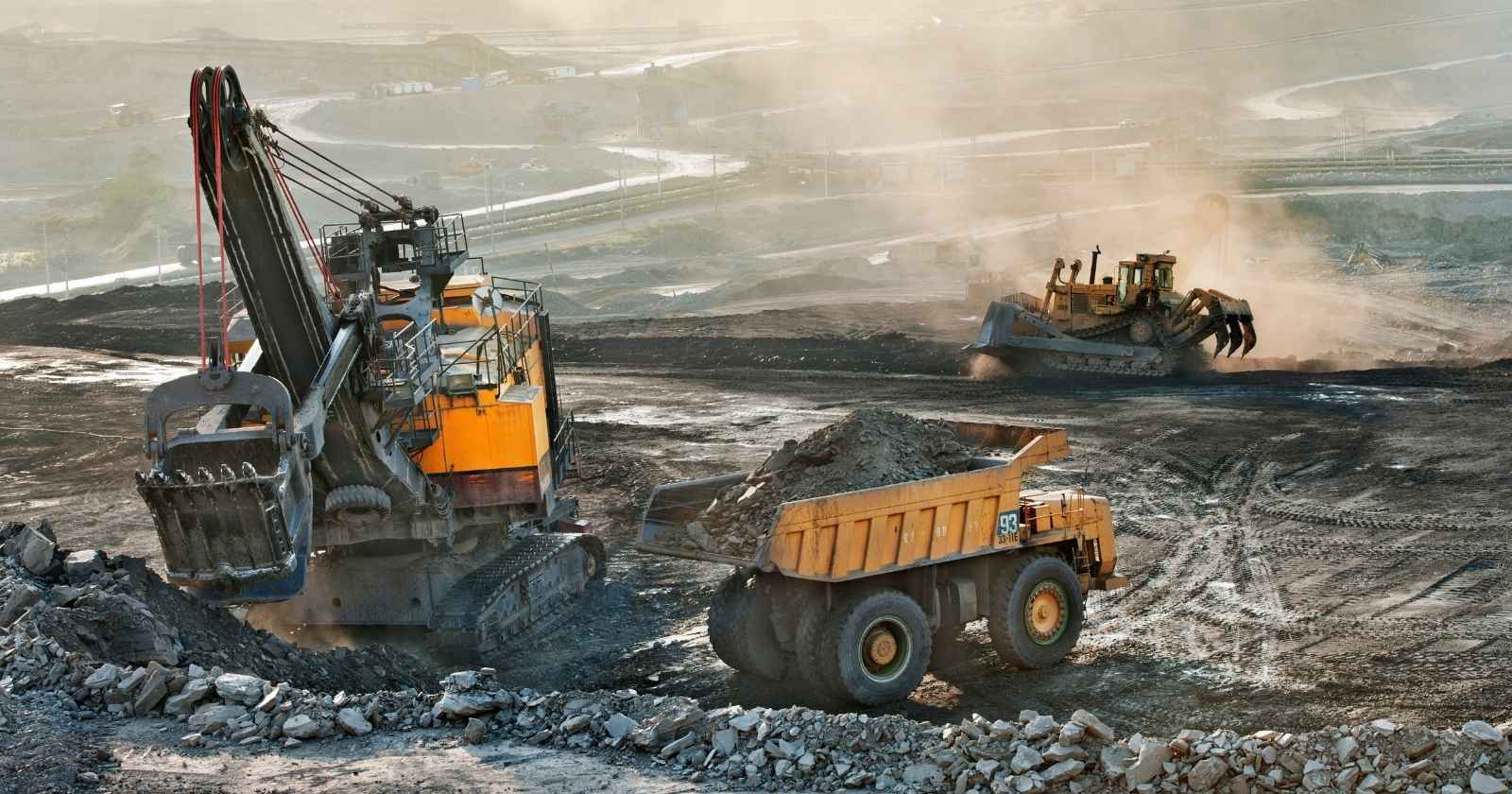
In May 2008, a 32-year-old former electrician from the Hunter Valley named Nathan Tinkler sold his stake in Macarthur Coal to global steel giant ArcelorMittal for roughly $422 million in cash — a deal that closed just months before Lehman Brothers collapsed, coal prices cratered, and the commodities supercycle that had minted him a fortune came to a violent halt.
Tinkler had received those Macarthur shares less than a year earlier, as part-payment for a Queensland coal project called Middlemount, a tenement he had secured in late 2006 with a $1 million deposit financed partly by mortgaging his house in Newcastle. By the time the dust settled on the ArcelorMittal cash, his original outlay had multiplied into the hundreds of times its starting size, achieved in about 24 months.
The timing was almost surgical. Thermal coal, which had traded near US$55 a tonne when Tinkler picked up Middlemount in 2006, peaked above US$190 a tonne in mid-2008 and then fell off a cliff. By early 2009 it was back below US$70. Anyone still holding undeveloped Queensland coking-coal acreage at that point was holding an asset worth a fraction of what Macarthur — or anyone else — had been willing to pay.
The $1 million deposit nobody else would put down
Tinkler was not, in any conventional sense, a coal magnate when he made the Middlemount bet. He had grown up in the Hunter Region of New South Wales, trained as an electrician, and worked in the open-cut pits around the Hunter Valley servicing the giant Caterpillar and Komatsu trucks that haul overburden. The detail that became Tinkler folklore in Sydney financial circles is that he remortgaged the family home in Newcastle suburbia to help fund the deposit on Middlemount, an exploration tenement in Queensland’s Bowen Basin that the major miners had passed over.
What he understood — and what most of the analysts in Sydney and Melbourne did not, in 2006 — was that Chinese steel demand was about to vertical-launch coking-coal prices, and that even a marginal Queensland deposit with rail and port access would become strategically valuable to a mid-tier producer trying to bulk up. Macarthur Coal, run by founder Ken Talbot, was exactly that kind of buyer.
What $422 million looked like in May 2008
The path to that $422 million was a two-step trade. In December 2007, Tinkler sold his Middlemount holding to Macarthur Coal in a transaction structured largely as Macarthur stock plus a cash component, with the total value of the package reported in the high A$200 million range. He walked out of that 2007 deal as Macarthur’s largest individual shareholder. What he then watched happen was that Macarthur itself became a takeover target during the 2008 commodities surge, and its share price ran hard.
In May 2008, with global coal prices near their cyclical peak, he sold those Macarthur shares to ArcelorMittal for roughly A$422 million in cash. Reports at the time described it as one of the largest personal cash exits ever recorded for a single private mining transaction by an Australian under 35.
For context on how lucky the timing was: BHP Billiton’s share price peaked within weeks of the ArcelorMittal transaction closing and then fell more than 60 per cent over the next nine months. Rio Tinto, which had paid US$38 billion for Alcan in 2007, would spend the next two years scrambling to refinance debt that had been priced for a world that no longer existed. Fortescue Metals briefly traded below $2 a share. Tinkler’s cash, by contrast, was already in the bank.
Buying horses, jets and a football team
What he did next is the part that turned the story from a financial-pages curiosity into a tabloid serial. Within a few years of the ArcelorMittal sale, Tinkler had assembled one of the largest thoroughbred racing operations in the southern hemisphere — Patinack Farm, with stud properties in Queensland, New South Wales and Victoria and a stable of more than 1,000 horses. He bought the Newcastle Knights rugby league club. He bought the Newcastle Jets A-League soccer franchise. He acquired a Dassault Falcon corporate jet and a helicopter. He moved his family to a mansion in Singapore.
He also kept betting on coal. Some of the cash from the ArcelorMittal sale was rolled, with leverage, into the Maules Creek coal project in northern New South Wales, which Tinkler acquired from Rio Tinto in 2008 for $480 million. He folded the asset into a new vehicle, Aston Resources, which floated on the ASX in 2010 at a valuation of around $1.2 billion.
By 2011, Tinkler’s paper net worth had ballooned to an estimated $1.13 billion on the BRW Young Rich List — making him, briefly, the youngest Australian billionaire on record. In May 2012, Aston and Tinkler’s other coal vehicle, Boardwalk Resources, were folded into Whitehaven Coal in a merger that valued the combined entity at more than $5 billion.
The leverage that ate everything
The pattern that emerged in the years after 2008 is one that financial behaviour researchers have catalogued exhaustively. Analysis of the investor behaviours that destroy more wealth than any market crash identifies market-timing greed, FOMO and the conviction that a recent win is repeatable as the standard wealth-killers. Tinkler’s Middlemount-to-ArcelorMittal call had been close to perfectly timed. Almost nothing he did afterwards was.
By 2012, coal prices were sliding again, and Tinkler’s holdings — pledged and re-pledged as collateral against loans from Farallon Capital, US hedge funds and Australian banks — began unwinding. His attempt to take Whitehaven private in mid-2012 with a roughly $5.3 billion buyout proposal collapsed when financing fell through. Margin calls cascaded. Patinack Farm was put up for sale. The Knights and the Jets were handed back. By 2015, the Federal Court of Australia had heard him questioned by liquidators over debts in the tens of millions. In February 2016, he was declared bankrupt by the Federal Court, with debts later reported above $540 million.

The behavioural pattern hiding inside the win
The ArcelorMittal cash-out, viewed in isolation, looks like genius. Viewed alongside everything that came after, it looks like something the literature on cognitive bias would predict with depressing precision. The confidence-gap between financial literacy and investor overconfidence describes how even investors with strong literacy scores systematically overweight their own skill in explaining a single successful trade — attributing to judgment what was substantially attributable to timing, leverage and the prevailing price of the underlying commodity.
Tinkler had, in 2006, taken a leveraged punt on a single asset class at the exact moment that asset class was about to enter the steepest price ramp in its modern history. He sold at the top. The signal he took from that experience was that he was good at picking coal assets. The signal a more conservative reading would have offered was that he had been astonishingly lucky on entry, astonishingly lucky on exit, and that the conditions producing both were not repeatable.
The shape of what happened next is familiar in executive biographies: a track record becomes a liability the moment it is mistaken for a method. Every subsequent Tinkler deal — Aston, Maules Creek, the abortive Whitehaven privatisation, the Patinack expansion — was financed by pledging the proceeds of the original win against more coal acreage, on the assumption that the Middlemount conditions would, broadly, hold.
Where the money actually went
By the time the Federal Court bankruptcy proceedings closed out, the $422 million in ArcelorMittal cash had effectively been recycled three times: once into Aston Resources, which made him rich on paper; once into the Whitehaven merger, which crystallised that wealth into a single illiquid stockholding at exactly the wrong point in the coal cycle; and once into the racing, sporting and aviation businesses that produced no cash flow and consumed enormous quantities of it.
Patinack Farm alone is estimated to have lost more than $200 million over its operational life. The Newcastle Knights deal required Tinkler to commit to tens of millions in player payments and stadium upgrades that the club’s revenues could not support. The Falcon jet, by 2014, was reportedly being chased by creditors across two jurisdictions.
The fact that lingers
The cleanest way to hold the Tinkler story in your head is this. In May 2008, a former pit electrician converted a tenement he had secured two years earlier on a $1 million deposit, against the family home, into roughly $422 million in cash — and did so within weeks of the price of his underlying commodity collapsing by more than 60 per cent. Almost nobody in the modern history of Australian commodities has called a top that cleanly. And then, having called it, he spent the next eight years demonstrating, in public and at enormous expense, that the call had been the easy part. The hard part — the part the win itself obscured — was knowing when to stop.
The Middlemount tenement, the original $1 million bet, is now operated as a 50/50 joint venture between Peabody Energy and Yancoal in the Bowen Basin, and is still producing coking coal. The Newcastle house Tinkler mortgaged to buy his way in has changed hands more than once. The Falcon jet was sold. The bankruptcy itself was annulled by the Federal Court in 2018 — a rare order under Section 153B of the Bankruptcy Act, after creditors who had refused his initial $1 million settlement offer accepted a revised arrangement two years later. And the figure that began it all — roughly $422 million, banked in May 2008, four months before Lehman — remains one of the most precisely timed personal cash-outs in the country’s corporate record.
Silicon Canals traces what happened after that $422 million exit — the coal pit nobody wanted that Tinkler turned into a billion-dollar empire, the private jet invoice that buried him, and the rarely-granted legal maneuver that let him erase a $540 million bankruptcy two years later as if it never existed.

