

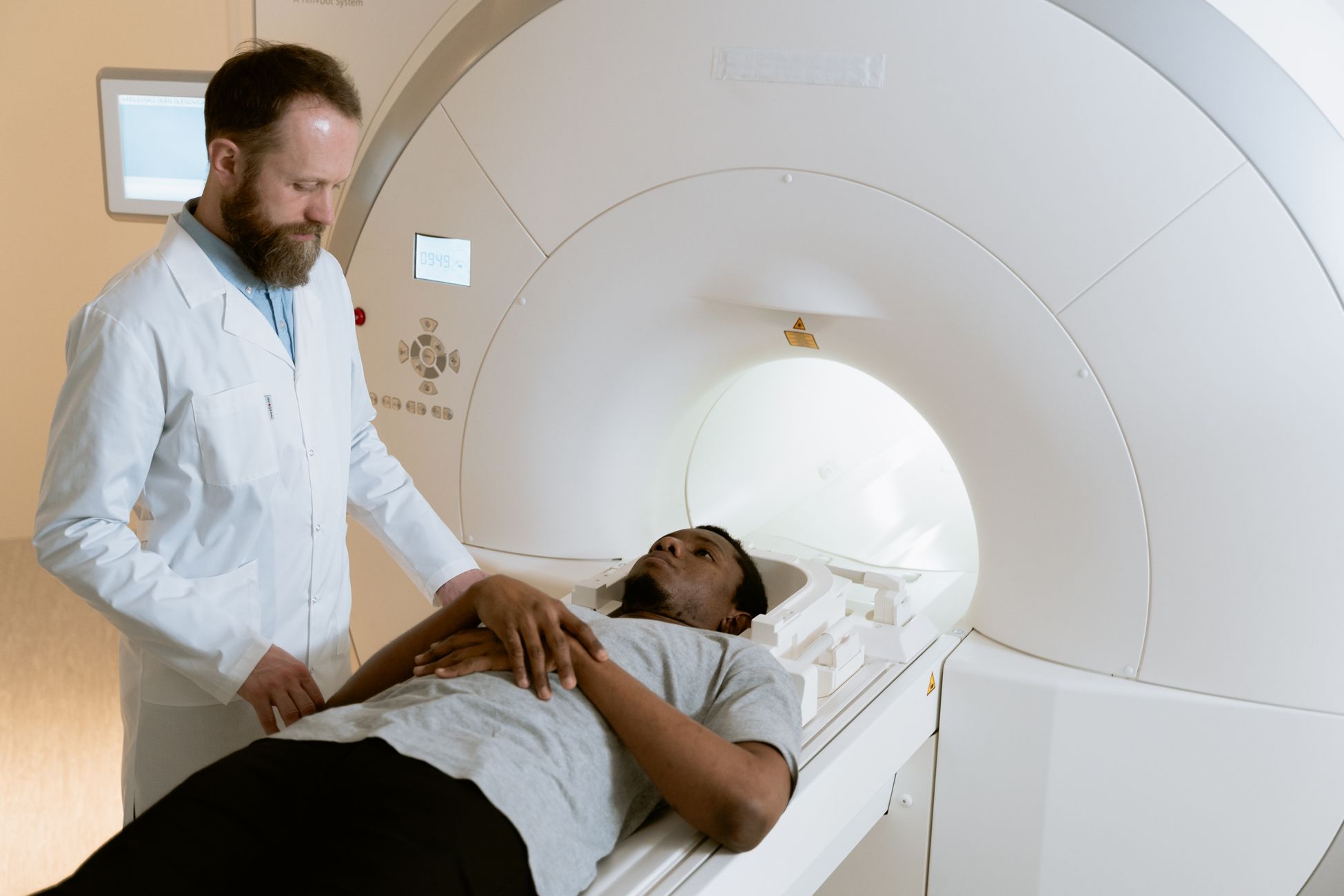
A PhD researcher at the University of British Columbia spent the final years of the last decade wheeling an EEG cart into the rooms of dying patients at a Vancouver hospice, fitting soft electrodes around their scalps while families sat nearby. A 2020 study, published in Scientific Reports, found that the brains of unresponsive hospice patients in their last hours of life still registered tones and patterns of sound in ways statistically indistinguishable from healthy young adults listening to the same recordings. The finding gave clinical weight to something hospice nurses had been telling families for generations: keep talking, they can probably still hear you.
The study tracked actively dying patients, comparing their EEG responses to a control group of healthy volunteers and to recordings made of the same patients earlier, when they were still conscious and able to respond. The brain signals the team was hunting for are called event-related potentials, tiny voltage shifts that appear within a few hundred milliseconds of an unexpected sound.
What the researchers found was that the dying brain still produced those signals. Quieter, slower, a little less crisp, but present. The auditory system was still doing its job hours before the heart stopped.
The last sense to leave
Hospice clinicians have long operated on the assumption that hearing fades last. The reasoning was partly anecdotal, drawn from patients who briefly regained consciousness and recalled bedside conversations, and partly anatomical. The auditory pathway runs through deep, evolutionarily ancient structures in the brainstem and midbrain that keep working long after the cortex has begun to dim.
Those same structures are increasingly suspected of being central to consciousness itself. A growing body of neuroscience argues that the roots of awareness lie in the deep brain rather than in the cortical surface, which would explain why a body that cannot blink, swallow, or squeeze a hand might still be processing the timbre of a daughter’s voice.
Before the 2020 study, the evidence for end-of-life hearing was almost entirely indirect. Survivors of cardiac arrest reported hearing the resuscitation team. Patients who emerged from comas occasionally repeated phrases spoken in the room. Families described a flicker of eyelid movement when a grandchild spoke. None of it was data. It was testimony.
What the electrodes picked up
The team played the patients sequences of tones, some predictable and some odd. The brain’s response to an unexpected sound, the so-called mismatch negativity, is one of the most reliable signatures of auditory processing in cognitive neuroscience. It shows up even when a person is asleep, anesthetized, or in a vegetative state.
In the dying patients, the mismatch negativity was still there. Even in the final session, recorded within hours of death, the brains were detecting the anomaly. The signal-to-noise ratio was poorer than in healthy volunteers, and individual variability was high, but the pattern held across the group. Something in the auditory cortex was still surprised by surprising sounds.
The team was careful in what they claimed. Detecting a tone change is not the same as understanding a sentence. A brain registering pitch is not necessarily a brain comprehending grief. The presence of an EEG waveform does not prove the presence of subjective experience.
Still, the finding cracked open a door. If the most basic machinery of hearing keeps running into the last hours, the higher machinery that interprets meaning may also still be flickering. There is no clean line in neuroscience between hearing a sound and recognising a voice.
Why the auditory system holds on
The auditory pathway is unusually robust. Sound is converted to electrical signals in the cochlea, relayed through the brainstem, the inferior colliculus, the thalamus, and finally to the auditory cortex in the temporal lobe. Several of those stations sit in deep brain regions that receive blood and oxygen even when the cortex is starving.
That redundancy is why hearing tests work on newborns who cannot speak, on coma patients who cannot respond, and on anesthetized surgical patients whose brainstems still flag a too-shallow plane of sedation. The system was built for vigilance. A creature that stops hearing in its sleep does not survive the night.
Studies on aphasia patients at Purdue, for example, have demonstrated that auditory attention and cognition can persist in patterns that bedside testing misses entirely. The ear keeps working when the mouth cannot.
The bedside implication
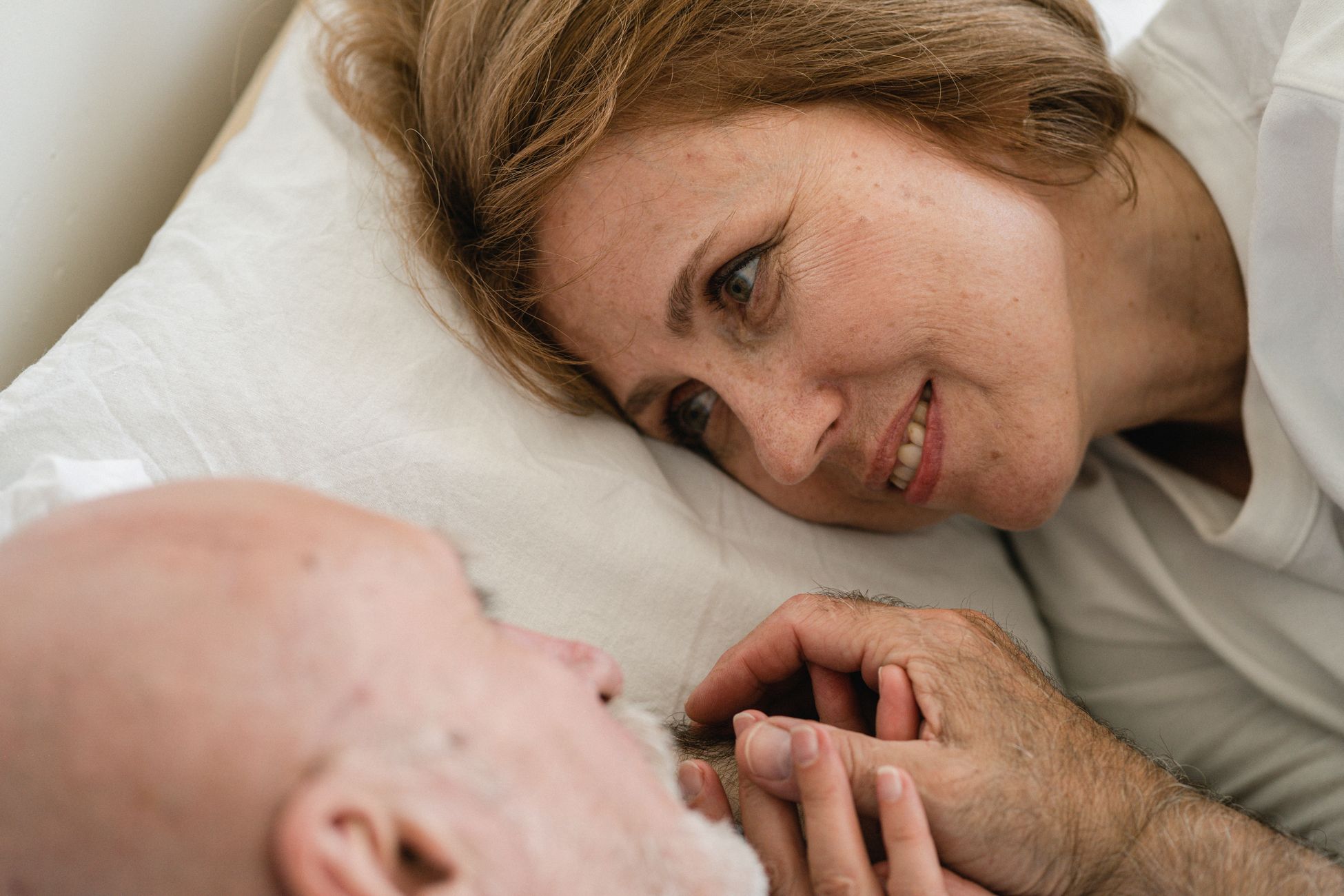
For families gathered in a hospice room, the practical takeaway is direct. The person in the bed, eyes closed, breathing irregular, hands cool, is probably still registering the sound of the room. Not every word, perhaps, and not with the clarity of waking attention. But the brain has not gone silent.
Palliative care nurses have been giving families this advice for decades. Speak normally. Say what needs to be said. Play the music the person loved. Avoid bedside conversations about funeral arrangements or family disputes, because the dying may be listening even when they cannot answer. The 2020 study gave that advice a neural correlate.
Hospice workers have written extensively about how end-of-life communication shapes both the dying person’s final hours and the surviving family’s grief. The new evidence that hearing persists changes how clinicians coach families through those hours. The words spoken may not get a response, but they are not falling into a void.
What the brain may still be doing
Hearing a sound and feeling something about it are linked but separable processes. Emotional responses to voices, music, and language depend on circuits that connect the auditory cortex to the amygdala, the insula, and other limbic structures. Whether those circuits are still firing in the final hours is harder to test.
Recent neuroscience suggests that emotions can be sustained in the brain long after the triggering stimulus has ended, with brief inputs producing slow-burning neural states that outlast the moment. If a dying patient hears a familiar voice, the emotional echo of that voice may persist in their nervous system for some time, even if no behavioural response is visible.
There is also intriguing work on how the brain processes internally generated sound versus external sound. A 2026 study on auditory hallucinations found that schizophrenia involves a breakdown in how the brain distinguishes its own inner voice from external speech. The fact that the brain maintains such fine-grained categorisation of sounds even in unusual states underscores how central auditory processing is to selfhood.
The limits of the evidence
The sample was small. The patients were on various medications, in various stages of organ failure, with various underlying diagnoses. Some had cancer, some had end-stage organ disease, some had neurodegenerative conditions that may have altered auditory processing well before death.
The team also could not test the patients’ subjective experience, because subjective experience is, by definition, inaccessible to outside observers. An EEG signal is a correlate, not a confession. The waveform indicates that the brain detected a difference, but cannot reveal whether the person felt comforted by it.
The researchers were clear about that gap. Their paper does not claim that dying patients understand their loved ones’ words. It claims that the auditory cortex is still doing what auditory cortices do, in the final hours, in a small group of carefully studied patients.
What it changes
The study has shaped training materials in hospices across North America and Europe. The shift it produced is small but real. Where before the advice to talk to a dying loved one was framed as a kindness without proof, it is now framed as a kindness with at least the beginnings of evidence behind it.
For the family at the bedside, the difference matters. The conversation in the room is not a monologue into nothing. Somewhere under the closed eyelids and the slow breath, a brainstem is still relaying signals upward, and a cortex is still flagging the unexpected. The voice of a child, a partner, a sibling, is arriving at a destination that has not yet shut its doors.
The researcher who conducted this work ended one interview about it by noting that hearing, in the end, may be the sense that most stubbornly tethers a person to the room they are leaving. The electrodes she taped to those scalps could not capture the experience itself. They could only capture the fact that the experience, in some form, was still there.
