

Most productivity systems start with a promise: work harder, plan better, become more disciplined. David Allen’s Getting Things Done became famous for a different, simpler idea. Your mind is for having ideas, not holding them.
That phrase, now central to Allen’s public description of GTD, sounds almost too neat. But it captures the system’s real power. The problem Allen was trying to solve was not laziness. It was the mental drag of unfinished commitments, half-decided next steps, and small obligations that keep returning at the worst possible moment.
Allen’s company traces the first version of a pre-GTD course to 1981, when his consulting practice was also being established and his productivity methods were being tested in the field. By 1983, according to a later Wired profile, Allen was consulting at Lockheed, filtering personal-growth techniques through the practical needs of corporate work.
The book that made the system famous, Getting Things Done: The Art of Stress-Free Productivity, arrived in 2001. Its premise was not that smarter people get more done. It was that smart people lose enormous cognitive energy when their brains are forced to act like unreliable storage devices.

The consultant who watched executives drown in their own commitments
Allen was not a neuroscientist. He had worked diverse jobs before becoming a consultant. What he brought to the productivity question was the eye of someone who had watched smart people fail at organising themselves from a dozen different angles.
The pattern he kept seeing was simple. A manager might sit in a meeting while silently rehearsing the fact that he needed to call his accountant, answer an email, finish a memo, buy batteries, and remember something for his child after work. None of those things would be done any sooner because they were being mentally rehearsed. But the meeting he was actually in would get less of him.
Allen called these clutched obligations “open loops.” His core claim was that the mind treats every unresolved commitment, from “finish the quarterly report” to “buy batteries,” as something that still needs attention. Until that item is either done or captured somewhere reliable, part of the brain keeps checking whether it has been forgotten.
Working memory is a tiny, expensive room
The cognitive premise Allen built around has, in the decades since, been mapped out in considerable detail. Working memory is the mental scratchpad that holds the information you are actively using: a phone number you just heard, the sentence you are mid-way through writing, the three steps of the math problem in front of you. It is small, fragile, and easily flooded.
Research from the University of Kansas published in 2025 found that targeted interventions for working memory helped improve word-problem solving in students with math difficulties, underlining how directly working memory gates higher reasoning. When the scratchpad is overloaded, the parts of cognition that depend on it, including planning, problem-solving, and reading comprehension, have less room to operate.
A piece in Psychology Today on lightening cognitive load describes how trying to keep too much in mind ties up cognitive resources that would otherwise be available for solving problems and making decisions. Allen had arrived at the same practical lesson from the consulting side of the desk.
The five steps Allen made practical
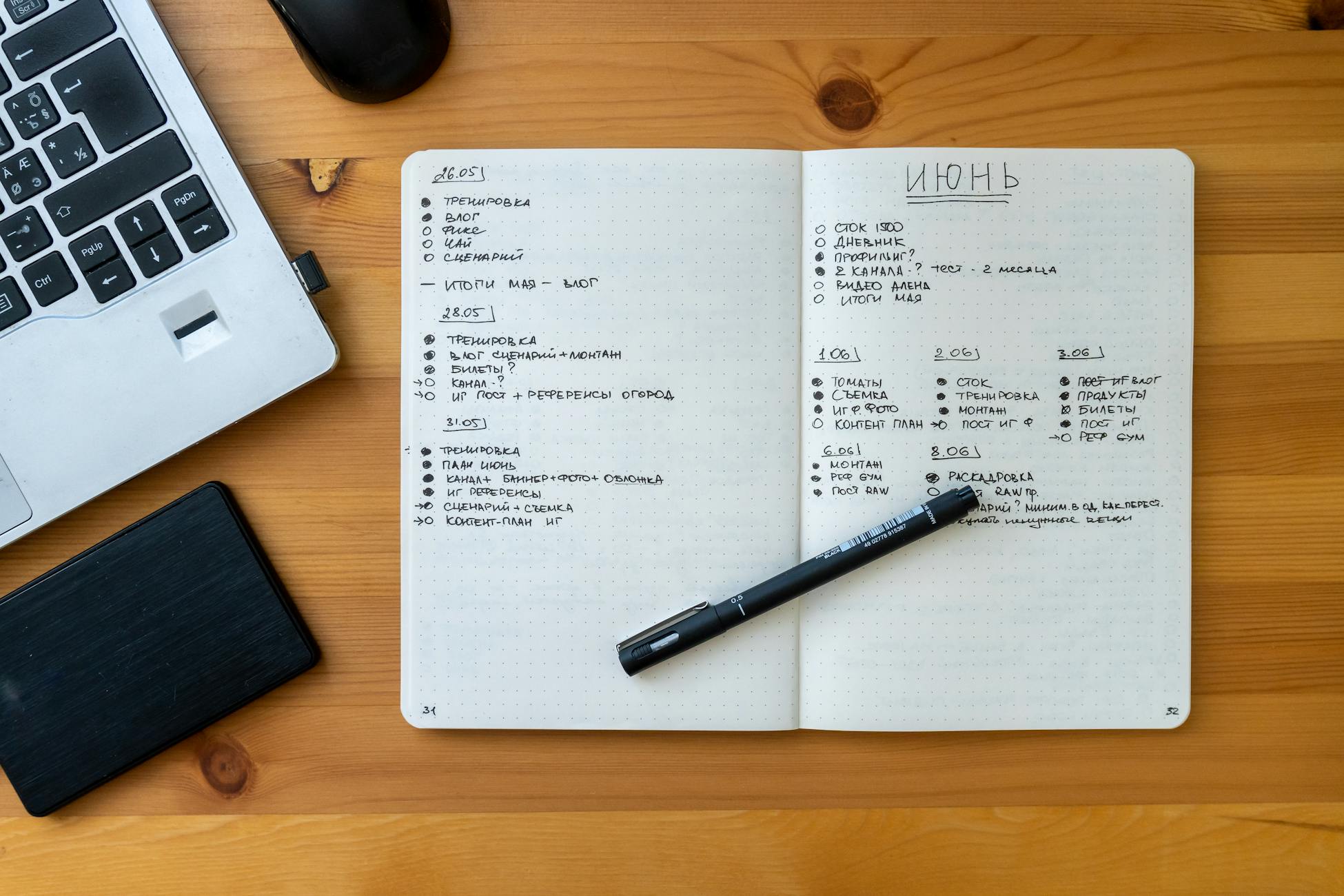
The method itself is unfussy. Allen broke it into five moves: capture, clarify, organise, reflect, engage. Capture meant getting every open loop out of the head and into a trusted external system, whether that meant a notebook, an inbox, or a list. Clarify meant deciding what each item actually was: a next action, a project, a reference item, or a someday-maybe. Organise meant putting it where it belonged. Reflect meant reviewing the whole system weekly. Engage meant actually doing the work, freed from the background noise of forgetting.
The famous two-minute rule sat inside step two. If clarifying an item revealed it would take less than two minutes to finish, you did it immediately, because filing it would cost more cognitive overhead than just executing it. Allen’s clients found this almost embarrassingly effective. The drag was rarely the task itself. It was the repeated negotiation about the task.
Why the brain keeps nagging you about batteries
The reason an unfinished errand can interrupt a strategy session has to do with how the brain flags incomplete tasks. This phenomenon, known as the Zeigarnik effect, describes the tendency for incomplete or interrupted tasks to remain more accessible in memory than completed ones. Open loops stay loud. Closed ones go quiet.
Allen’s contribution was to turn that annoyance into a system. If the brain nags you about anything unresolved, the move is not to nag back. The move is to convince the brain that the item is being tracked elsewhere, reliably, with a defined next action. Only then does the working-memory room begin to clear out.
Strategies for building this kind of external scaffolding, including checklists, calendars, written reminders, and environmental cues, are also common in work on ADHD and executive-function challenges. A Psychology Today piece on boosting working memory recommends external reminders such as sticky notes, planners, and whiteboards because they reduce the memory demands placed on the brain. Allen had been teaching a broader productivity version of the same principle decades earlier.
The mind like water metaphor
Allen borrowed from his martial arts background to describe the goal state. He called it “mind like water,” a mind that responds to whatever hits it with exactly the appropriate force, no more and no less, then returns to stillness. A pebble produces ripples proportional to the pebble. A boulder produces ripples proportional to the boulder. Neither produces lingering chop.
The opposite, in Allen’s framing, was the typical knowledge worker walking into a Monday with a mind already churning from 200 unresolved items. Every incoming email becomes another stone dropped into water that was never calm to begin with. Performance suffers. So does sleep. So does the ability to enjoy dinner, because part of the brain is still rehearsing Tuesday.
The Silicon Valley adoption that nobody predicted
When the book came out in 2001, Allen expected an audience of executives and managers. Instead, it was picked up almost evangelically by software engineers, bloggers, and early product managers. The GTD methodology spread through the Bay Area tech scene in the mid-2000s, particularly as technology-focused blogs and communities championed the approach. Wired ran a long profile in 2007. Programmers built GTD-shaped to-do apps; OmniFocus, Things, and Todoist all owe at least part of their information architecture to Allen’s list categories.
The engineering crowd took to it because the system was essentially a specification. Inputs in, decisions made, items routed to defined containers, weekly review as garbage collection. It treated the human operator as a processor with finite RAM, which is close to how working memory behaves under strain.
What modern brain research has added
Since Allen’s book, cognitive-science reporting has given his premise more granular support. Sustained cognitive effort, the kind required to hold tasks in mind across a busy day, produces fatigue that affects attention, decision-making, and reaction time. A review of training-load research aimed at first responders noted that cognitive fatigue impairs attention, decision-making, and reaction times in ways that compound over a shift, the operational version of the executive’s clogged Monday.
Other work has shown that anything that further degrades working memory makes the problem worse. A 2025 imaging study reported by Healio found that 63% of heavy lifetime cannabis users showed reduced brain activity during working memory tasks, a reminder that the scratchpad is biological hardware, vulnerable in the way all hardware is.
The corollary holds in the other direction too. Practices that reduce cognitive load can improve the conditions for clearer thinking. Recent neuroscience reporting on laughter and social bonding, for instance, describes how humour and connection can reduce cognitive load in learning contexts. Allen’s externalisation rituals do something similar through a different door: not by boosting capacity, but by reducing what has to be held.
The trusted system, and why trust is the operative word
The part of GTD that practitioners most often get wrong is the weekly review. Allen was emphatic that the system only works if the brain believes the system. If you write items down in a notebook you never reopen, your mind learns this quickly and resumes nagging you, because the external store has been revealed as a fiction. Trust is what allows the working-memory room to actually empty.
This is also why GTD tends to fail for people who try to adopt it casually. The logic is unforgiving. You either have a complete, reviewed, current capture of your open loops, or you have most of your loops on a list and the rest still circulating in your head. The second state may feel productive, but it still leaves the brain doing storage work while also maintaining the list.
Forty years on, the premise still bites
Allen is now in his eighties, and the question around GTD has changed less than the tools around it. Slack, infinite-scroll inboxes, project-management dashboards, smart reminders, and AI assistants have multiplied the number of inputs. They have not enlarged the human working-memory scratchpad.
That is why the system still has force. It does not promise that a list will make life simple. It promises something smaller and more useful: that a mind relieved of storage duty has more room to notice, decide, connect, and think. The brain may be excellent at producing ideas. It is much less reliable as a warehouse for everything you are afraid to forget.
