
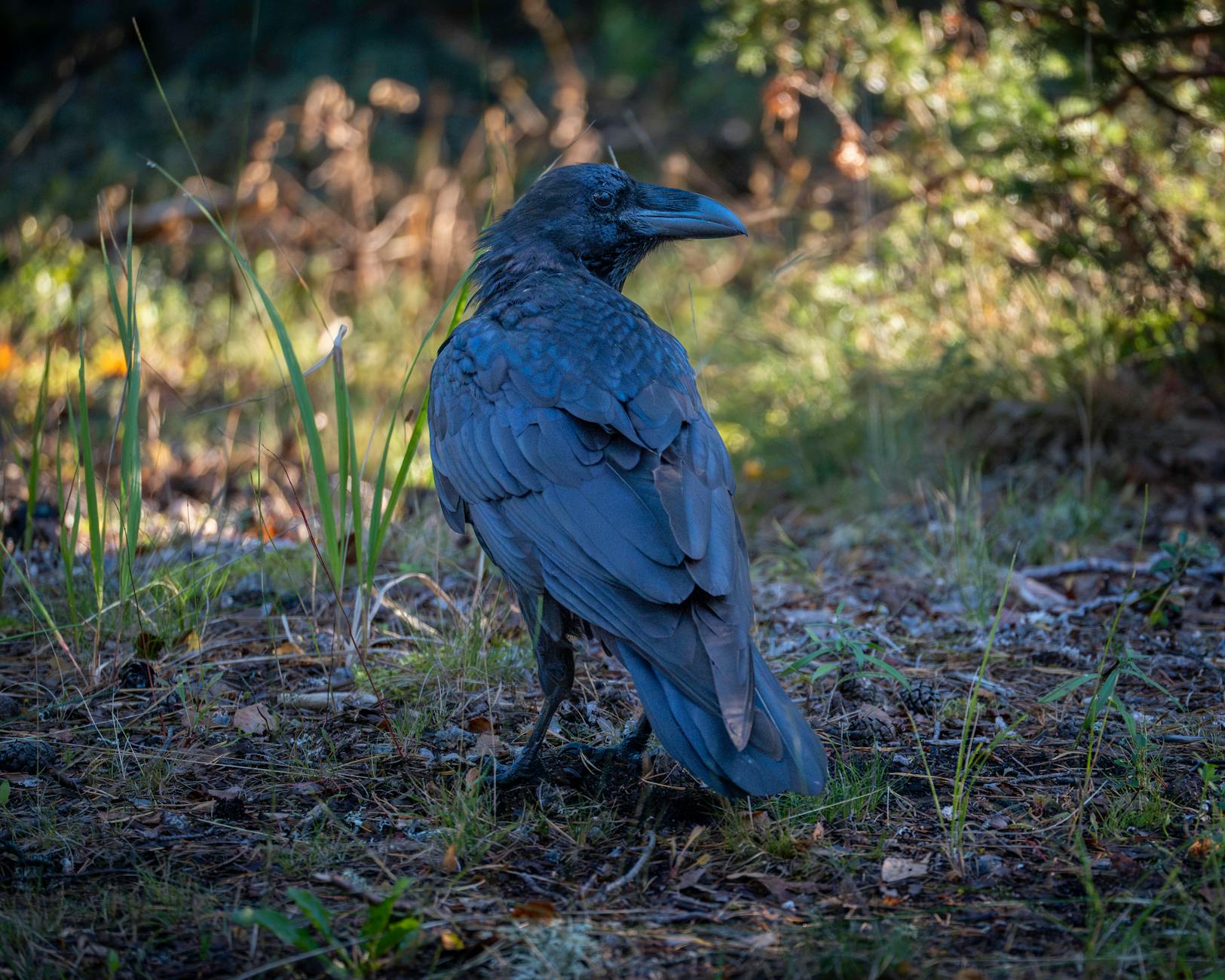
A wild crow that has never seen you, never been trapped by you, never been harassed by you, can still recognize your face and scream at you from a tree because its parents told it to. That sentence sounds like folklore. It is, in fact, the documented result of fieldwork by John Marzluff and colleagues at the University of Washington, who set out to test whether American crows could identify specific human individuals and pass that information through their social networks. The answer turned out to be yes, with a precision that has unsettled the people studying it.
The popular framing of this finding goes roughly like this: crows are smart, crows hold grudges, do not mess with crows. That framing is approximately right in its emotional effect and almost entirely wrong in the parts that matter. The interesting question is not whether crows remember. Plenty of animals remember. The interesting question is how a bird with a brain the size of a walnut performs individual human face recognition under field conditions, retains that recognition across years, and then transmits the relevant identity information to unrelated flock members and to offspring who were not present at the original encounter.
What the dangerous-mask experiment actually tested
The methodology is the part of this story worth slowing down on, because the experimental design is what gives the conclusions their weight. Marzluff’s team did not simply note that crows seemed to dislike certain people. They built a protocol designed to isolate face recognition from every other possible cue.
Researchers wore a rubber caveman mask while trapping and banding wild crows on the University of Washington campus. The trapping itself is mildly stressful for the bird but causes no lasting harm. Crucially, a different neutral mask was worn by researchers walking the same routes without trapping anyone. The masks controlled for clothing, gait, height, and route. The only thing the crows had to discriminate was the face.
The dangerous mask, once associated with capture, drew immediate scolding, dive-bombing, and mobbing behavior whenever it reappeared on campus. The neutral mask did not. As the biologist Scott Travers walked through in a recent breakdown of the research, the scolding response persisted over time, which is the opposite of what would be expected if the birds were simply reacting to a recent unpleasant stimulus and then forgetting.
The team then did something unusual. They kept wearing the masks for years.
The two clocks of crow memory
There are two timescales at work in this finding, and conflating them obscures what is genuinely surprising.
The first clock is individual memory. A crow that was trapped in the original experiment continued to scold the dangerous mask years after the original capture, with no intervening reinforcement. That alone places corvid associative memory in a category occupied by very few non-primate species. The neural substrate for this — the nidopallium caudolaterale, a functional analog to the mammalian prefrontal cortex — has become a central object of study in comparative neuroscience precisely because birds evolved sophisticated cognition along an entirely separate evolutionary path from mammals.
The second clock is harder to explain and more important. Over time, the proportion of crows scolding the dangerous mask on campus increased rather than decreased, even as the originally trapped birds aged out of the population. Juveniles that had never been trapped — birds that in some cases had not been alive when the original trapping occurred — were scolding the mask. The information had moved.
How a grudge becomes inheritable
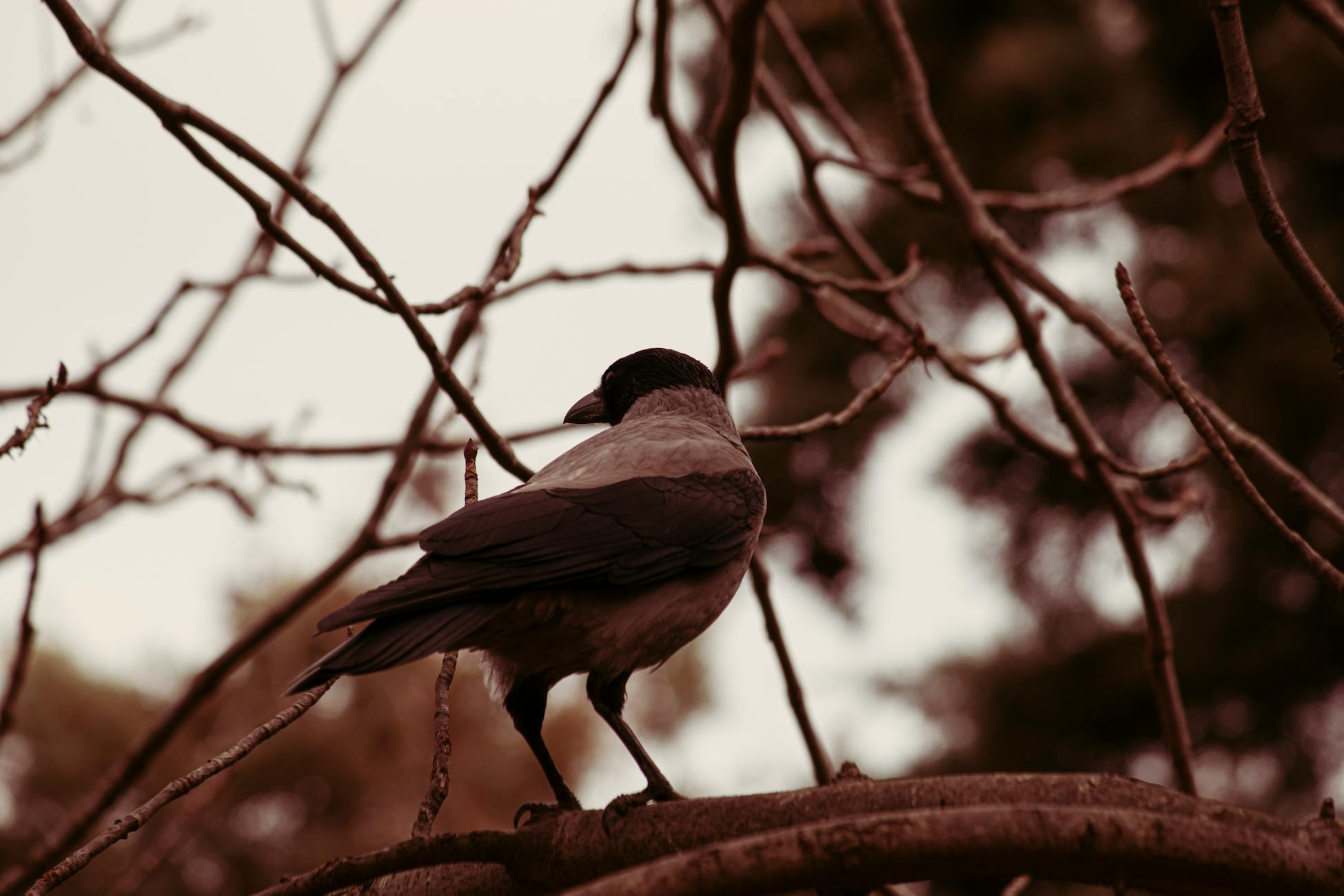
The mechanism here is not genetic. Nobody is claiming that crows are born hating a specific rubber mask. The transmission is social, and it operates through two pathways that corvid researchers have spent decades documenting.
The first is transmission within the flock. When a crow mobs a perceived threat, other crows in earshot pay attention. They observe what is being mobbed, where it is, and which individual is doing the alerting. Crows that did not have the original negative experience update their own threat assessment based on the alarm calls and behavior of birds they trust. The speed and reliability of it in corvid populations is unusual.
The second pathway is transmission from parent to offspring. Juvenile crows stay with their parents for an extended fledgling period, considerably longer than most songbirds, and they accompany adults on foraging routes through their natal territory. During this period they are essentially apprenticing. When a parent scolds a specific human face, the juvenile registers the face as a known threat category. The parent does not need to explain why. The mobbing behavior is itself the lesson.
This is the part that tends to be reported as crows teaching their offspring to recognize threatening humans, a characterization that may be dramatic but reflects the underlying behavior. The pedagogical content is not encoded as instruction. It is encoded as demonstrated alarm, witnessed repeatedly, attached to a specific face. The juvenile fledges already carrying a list of humans its parents consider dangerous.
What the brain scans showed
Some of the strongest evidence that crows are processing human faces specifically — rather than reacting to some lower-level feature like clothing color or movement pattern — came from a follow-up study in which researchers scanned crow brains while showing them the dangerous and neutral masks. The brain regions that activated in response to the dangerous face were associated with threat detection and emotional memory, the same circuitry that handles these functions in mammals. The neutral mask activated regions associated with novelty and attention but not the threat circuit.
In other words, the crows were not just behaving differently toward the two faces. They were experiencing them differently at the level of neural activation. The dangerous mask was being processed as a threat the way a face would be processed by a mammal that had learned to fear it.
This finding sits alongside a growing body of work suggesting corvid cognition has converged on capabilities that were long assumed to require a mammalian neocortex. A 2024 study covered by CNN found that crows can count vocalizations up to four, producing a specific number of caws on cue — a capability previously documented only in humans and certain primates. More recently, researchers reported that crows can recognize geometric regularity, identifying the odd shape in a set of otherwise regular polygons.

What “grudge” actually means here
The word grudge is doing a lot of work in the popular coverage, and it is worth being careful about it. A grudge in the human sense involves rumination, narrative, and a sustained emotional state directed at a specific person across contexts. There is no evidence that crows ruminate. What they appear to do is maintain a long-term threat classification attached to a specific human face, expressed behaviorally only when that face is present.
That distinction matters because it changes what the finding is actually demonstrating. The crows are not stewing. They are maintaining a discrimination — a stable assignment of a particular face to a particular category — across years and across the boundary between individual memory and social memory. The behavior toward the face is consistent enough to look, from the outside, like resentment. The cognitive content is closer to a persistent identification that fires when the relevant input appears.
The original reporting on the early Marzluff studies, captured in coverage sometimes referred to as the crow paradox, framed this distinction well. The paradox is not that crows have rich inner lives. The paradox is that an animal we have lived alongside for the entire history of urban human civilization has been quietly maintaining detailed dossiers on individual people the whole time, and almost no one noticed until someone put on a mask and started counting.
Why this changes how we think about urban wildlife
The implications run further than the headline. If crows can identify individual humans, retain that identification across years, and propagate it socially, then the crow population around any human settlement is carrying a continuously updated map of which humans are safe, which are indifferent, and which are dangerous. That map is not stored in any one bird. It is distributed across the flock and refreshed each generation. The grudge against a particular person is, in effect, an item in the flock’s institutional memory.
This is a different model of urban wildlife than the one most people carry around. The standard model treats the animals as essentially anonymous: indistinguishable individuals reacting to stimuli. The corvid evidence suggests the relationship is asymmetric. The birds know who we are. We do not know who they are. Other corvids, including ravens and magpies, show similar capacities for individual recognition, and there is preliminary work suggesting parrots and some shorebirds may as well.
It also means that the crow watching you from the fence as you take out the trash is, in a meaningful sense, watching you specifically. It has a record. If you have never given it reason for concern, that record is probably neutral or positive — crows are also known to favor humans who feed them reliably, and to bring small objects in apparent exchange. If you have given it reason for concern, the record persists, and it is being shared.
The mask is still being worn occasionally on the University of Washington campus, more than fifteen years after the original trapping. The scolding has not stopped. None of the crows currently doing the scolding were alive when the original offense occurred. They learned about it from their parents, who learned about it from theirs, in an unbroken chain of avian gossip that has now outlasted at least three full generations of crows and shows no sign of fading.
