In February 1985, the Soviet space station Salyut 7 went silent and began tumbling with dead batteries, frozen instruments and frost covering its windows; four months later, two cosmonauts docked with the powerless 20-tonne station by hand, entered wearing gas masks and brought it back to life with flashlights and improvised wiring
Salyut 7 fell silent in February 1985, tumbling and frozen. Four months later Soyuz T-13's crew docked with the dead station by hand and nursed it back to life, one of the hardest repairs ever done in orbit.
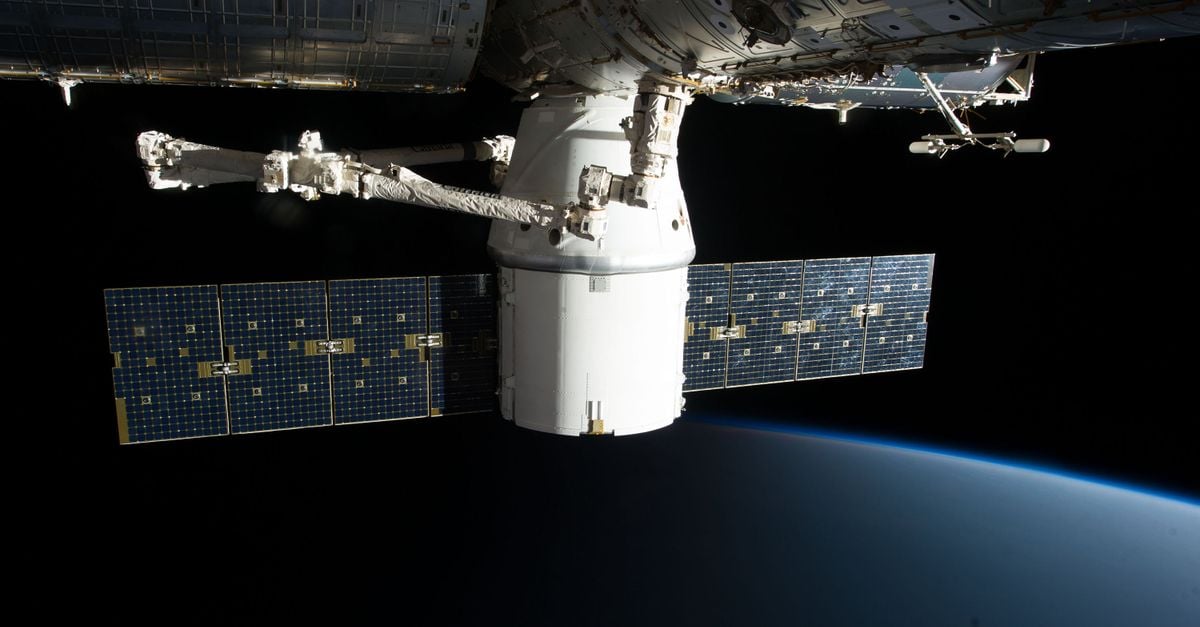
In 1985, two cosmonauts docked by hand with the dead, frozen Salyut 7 and revived it. Representative image of a space station in orbit. Photo: SpaceX / Pexels.
In February 1985 the Soviet space station Salyut 7 stopped answering. The station was empty at the time, orbiting between crews, when a fault in its electrical system cascaded until it had killed the radios, drained the batteries and left the station drifting. It fell silent and began to tumble, its heaters dead, its instruments frozen, frost creeping across the inside of its windows. Four months later, two men flew up, caught the powerless station by hand, and brought it back to life.
It remains one of the most difficult repair jobs ever carried out in space, and it started with a problem that should have been unrecoverable.
How the station died
The trouble began on 11 February 1985. A current surge on the vacant station tripped a protective breaker and shut down its main radio transmitter. When controllers on the ground tried to bring the transmitter back, a second surge set off a chain of electrical failures that took out both transmitters and the receivers as well. In one stroke the station lost the ability to hear commands or to send anything back.
With no one aboard to intervene, the rest followed on its own. The systems that kept Salyut 7 pointed at the Sun stopped working, so its solar panels no longer faced the light and the batteries ran flat. Without power there was no heat. The interior temperature fell below freezing, moisture in the air settled onto the cold metal, and a thin layer of frost formed over the walls and the windows. Close to 20 tonnes of spacecraft was now a dark, frozen hulk, turning slowly in orbit and saying nothing.
Why this was so hard to fix
Docking with a space station was routine by 1985, but it was not done the way this would have to be done. Soviet spacecraft normally closed in and docked automatically, a process that depended on the two vehicles talking to each other by radio and cooperating through the final approach.
Salyut 7 could do neither. It could not broadcast its position, could not answer, and was slowly rotating rather than holding steady. Any craft that wanted to reach it would have to find it, match its drift, and connect to it entirely by hand, with no help from the station at all. Nothing like it had been attempted.
The approach by hand
The job went to Soyuz T-13, launched on 6 June 1985 with Vladimir Dzhanibekov in command and Viktor Savinykh as flight engineer. Dzhanibekov had docked with Salyut 7 before and was one of the most experienced pilots in the programme.
After a two-day chase to catch the station, the crew closed the final distance manually. Dzhanibekov flew the approach by eye, using a handheld laser rangefinder to judge the closing distance and lining the Soyuz up with the slowly turning station. On 8 June he matched its rotation and made a hard connection at the forward docking port. It was the first time any spacecraft had docked with a dead one.
Inside the frozen station
Getting there was only the start. Before they opened the hatch, the crew sampled the station’s air, wary that it might have turned foul while the station sat sealed and frozen. It proved bitterly cold but breathable. They pulled on heavy winter clothing and fur-lined caps and went in.
They worked by flashlight in the dark. Frost coated the walls and the instruments, the water supply had frozen solid, and the whole interior sat at around minus 20 degrees Celsius. There was no power to switch on and nothing running. The two men were effectively boarding a wreck and had to work out, in the cold and the dark, what had failed and whether any of it could be reversed.
Bringing it back
The core problem was electrical. Of the station’s eight batteries, two were ruined and the rest had gone flat, and a fault in the system that kept the solar panels pointed at the Sun had stopped them recharging in the first place. That was why everything had died, radios included. The crew went at it directly, running improvised cabling to connect the batteries to the solar panels and using the Soyuz to turn the whole station until its arrays faced the Sun.
With sunlight finally reaching the panels, a trickle of charge began to build. The crew switched the air heaters on around 10 June, then brought systems back one at a time as power allowed. Within roughly ten days they had the station working again. Fully restoring it took longer: the frozen water tanks thawed only towards the end of June, and normal humidity was not reached until late July, nearly two months after docking. Salyut 7 recovered, and went on to host further crews.
Why it is remembered
The rescue stands as a landmark for a simple reason: it proved that a large spacecraft written off as dead could be reached, boarded and repaired by people, rather than abandoned or left to fall. Docking with an uncooperative, powerless station by hand, and then nursing it back from frozen silence with cables and flashlights, showed how much a skilled crew could recover when the automatic systems had nothing left to offer.
The episode stayed relatively obscure outside Russia for years, better known later through the 2017 film made about it, but among people who work on spacecraft it has never lost its standing. It is still cited as one of the hardest and most complete in-space repairs anyone has managed, a reminder that the last resort in orbit, as on the ground, is often a person willing to go and have a look.
Written by
Space Daily Editorial Team
The Space Daily Editorial Team is the publication’s general news desk across Space and Missions, Universe, Earth and Life, Science and Engineering, and Human Factors. Space Daily takes responsibility for current articles under this byline.