
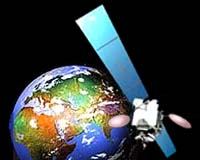
The Greek and Cypriot Transport ministries have signed an agreement with Hellas Sat Consortium Limited, to manage the procurement and launching of the first Greek-owned satellites.
According to a report by the Kathimerini newspaper the plan will provide significant economic and political benefits for Greece, and end Turkey’s monopoly in the Balkans and the eastern Mediterranean with its fleet of three satellites.
Under the agreement, Greece by 2004 will own and operate two satellites, with the first to be launch by August 31, 2002.
Cooperation with Cyprus emerged when, during the process of consultations with the companies interested in the project, it was found that it made business sense only on the basis of the joint use of the frequencies of two orbital (geostatic) positions.
According to the Kathimerini report, Canadian-based Telesat, which is a partner with Cyprus’ Avacom-Net, proposed the joint use of the frequencies of Hellas Sat and Kypros Sat in the same position (i.e., 39 degrees east longitude), in which the Cypriot satellite has 16 frequencies and the Greek one 24.
Additional proposals were submitted by New Skies Satellites (for Hellas Sat on the frequencies of position 38 degrees east, which belongs to Pakistan) and by Eutelsat (for Hellas Sat on the frequencies of position 40 degrees east, which belongs to Russia) met neither the time nor the legal specifications of the tender.
The saga of Hellas Sat is will be nearly 10 years by the time the first satellite is launch later next year, with long delays and indecision from 1993 until 2000, when a final round of negotiations was launched.
The participants in Hellas Sat are the Cyprus Development Bank and Avacom-Net with 55 percent, Greece’s OTE Telecom with 25 percent and Canada’s Telesat and Hellenic Aerospace (EAB) with 10 percent each. Total cost for the project is estimated to be $250 million.
Under the agreement, the Greek and Cypriot governments will cede use of their respective 24 and 16 frequencies at 39 degrees east to Hellas Sat for 20 years.
For ceding the licence the Greek government will receive use of three transponders on the satellite and a cash payment of one million euros. While the Greek Cypriot government will be paid an undisclosed amount for ceding the frequencies instead of transponders, reported Kathimerini.
Hellas Sat will cover Greece, Cyprus and another 25 countries in the Balkans, central Europe and the Middle East.
