
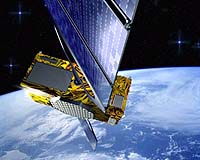
In the dispute between Italy and Germany on the leading role in the European satellite navigation system Galileo, Sigmar Wittig, director of the German space agency DLR (Deutsches Zentrum f¿r Luft- und Raumfahrt), recently claimed leadership, because of Germany’s financial contributions to the project. Does that sound reasonable to you?
Leadership is a very sensitive issue in space missions. It’s quite understandable that the US insisted, the commander of the first permanent ISS crew had to be American. But it’s also understandable that Russian cosmonaut Anatoly Solowjew rejected to be a member of that crew.
At that time Solowjew could claim to be probably the most experienced space traveler (to avoid the Cold War distinction between astronauts and cosmonauts) on Earth, with four missions summing up to 14 months in space and more EVA hours than anyone else. And shouldn’t the best be the leaders?
Right, experience doesn’t necessarily make a good leader. But big bucks or Euros doesn’t make it either. Paying for something gives you the right to control your money isn’t wasted, but not automatically the right to lead.
Studies in space flight analogue environments have shown that an effective leader in human space flight is one that seeks advice from crew members through frequent contact, uses impartiality in decision making, and expresses concern over crew members’ well-being.
And for all team members Canadian astronaut Roberta Bondar named “compassion, understanding and the ability to communicate” as the three most important requirements. That sounds like a good foundation for ground teams, too.
There’s another important component. Creating something new and big like a space infrastructure requires creative leadership. It needs leaders that have an idea of the dimensions of space – not only the physical, but the mental ones.
Going to space is probably the biggest cultural revolution in human history, offering an unprecented multitude of perceptions, perspectives, opportunities. It’s a variety that doesn’t fit into account books.
Of course, space exploration needs to be done on a sound financial basis. But money only can pave the way into space. It cannot show the direction.
If Wittig doesn’t have more to his side than money, he should think twice if he really wants to lead Galileo.
Dr. Hans-Arthur Marsiske is a science journalist based in Germany who writers occassional articles for SpaceDaily.com among many other publications in Europe.
