Two Spanish-tiled stucco gateposts once stood at the mouth of Tennessee Valley in Marin County, opening onto nothing at all.
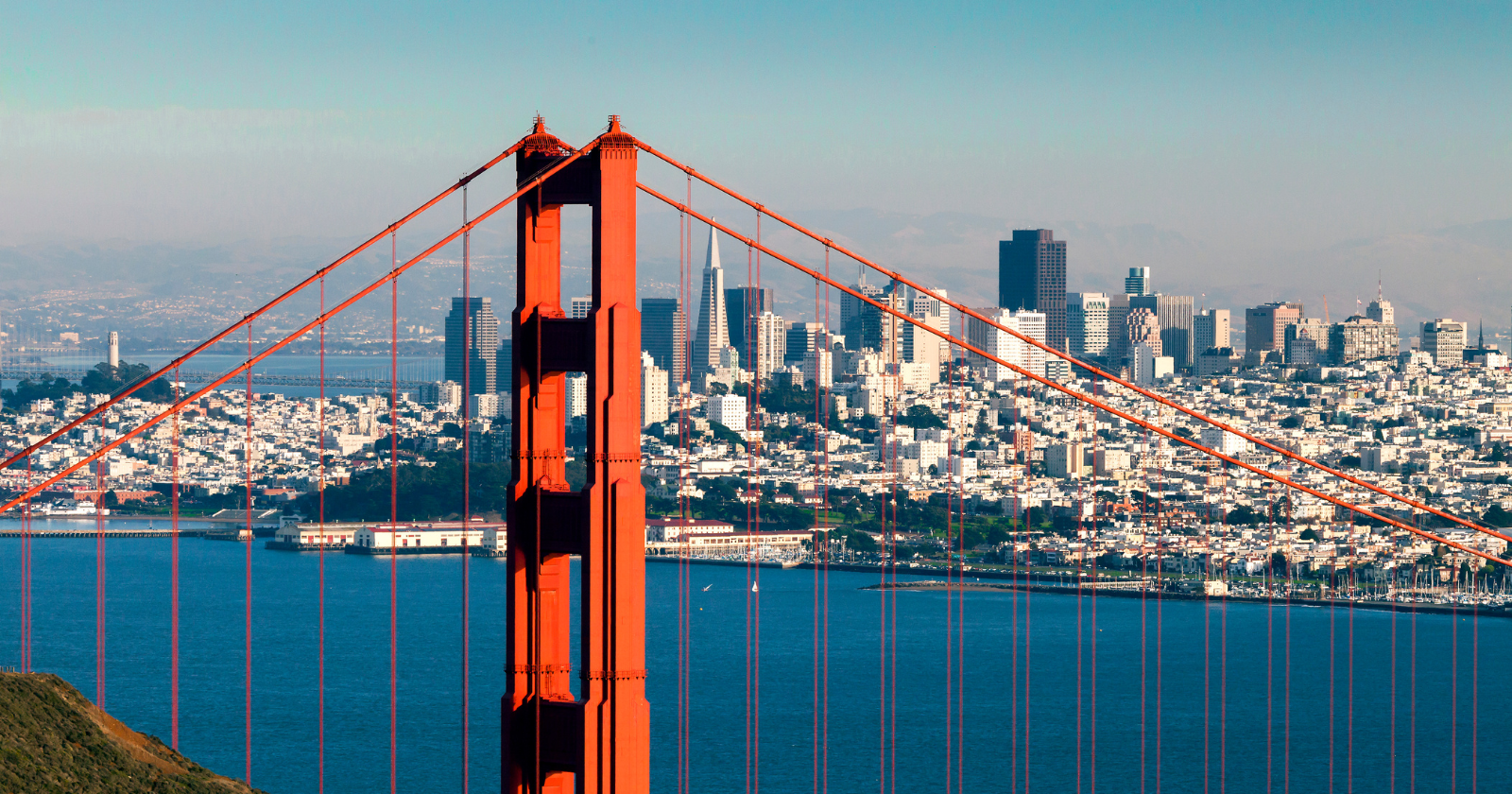
Behind them a road climbed into the hills and stopped. It had been bulldozed wide enough to carry commuter traffic, because that was the entire idea. Those gates were the front door of Marincello, a city of 30,000 people planned for the slopes directly across the water from San Francisco. In the mid 1960s it came alarmingly close to existing.
What the plans actually showed
Thomas Frouge, a developer working out of Pittsburgh, fell for the site hard. Writing in Bay Nature, John Hart records that Frouge called it probably the most beautiful location in the United States for a new community, which is a generous read on 2,100 acres of wind, fog and coyote brush. Gulf Oil agreed to bankroll him.
Modesty was not a design feature. Fifty apartment towers, hundreds of houses and townhouses, 250 acres of light industry, a shopping mall running a full mile with ornamental pools and elephant trains, and a square ringed by churches and named Brotherhood Plaza. A hotel would crown the highest hill on the property. Hart costs the twenty-year build at $285 million in 1964 dollars.
An earlier draft was madder still. The Bay Area history archive FoundSF records a scheme originally drawn up for more than 150,000 residents, which the planning process eventually talked down to 30,000.
Frouge pitched the whole thing as a New Town: dense, self-contained, everything within walking distance, a cure for the sprawl chewing through the rest of the county. Marin’s leadership found that persuasive.
Marin County said yes
The Board of Supervisors approved the master plan on 12 November 1965, a few towers lighter, on the first anniversary of Frouge’s opening press conference. The conservative Marin Independent Journal backed the plan. So did the Pacific Sun, the county’s liberal weekly.
Hardly anyone defended the landscape itself. That argument had not really been invented yet, and several opponents complained mainly that the site was too windy to live on.
Crews arrived within weeks and began carving the boulevard. Huey Johnson of the Nature Conservancy later told Carl Nolte of the San Francisco Chronicle that the developer was “ready to go with his cement trucks”.
The lawyers who kept filing
Then the paperwork caught up.
Robert Praetzel of San Rafael, with Martin Rosen and Douglas Ferguson of Sausalito, went after the approval on procedural grounds. Marin County had rushed the decision through and disqualified a petition drive that would have put Marincello to a countywide vote. Rosen, a future founder of the Trust for Public Land, told Bay Nature his motive was civic rather than environmental.
Momentum drained away regardless. Frouge and Gulf Oil fell out and ended up suing each other. Costs climbed, and by late 1967 the site had gone quiet. Frouge died in January 1969.
A state appellate court ruled on 2 November 1970 that the 1965 approval could not stand and the plan would have to be lodged again from scratch. A lawyer for Gulf Oil called it silly to kill a multimillion-dollar development on a technicality. Praetzel’s answer, years later, was that the technicality in question was the law.
Marin’s supervisors dropped their support the following day.
The land became a park instead
Washington had been circling the same hills. A federal study that started with Alcatraz had grown into a proposal for a national park at the Golden Gate. The National Park Service’s own history of its creation treats postwar development pressure, Marincello included, as the force behind it. Congress established the Golden Gate National Recreation Area on 27 October 1972.
Johnson had spent the interim quietly working on Gulf Oil. A Park Service timeline dates the sale to December 1972, and Bay Nature puts the price at $6.5 million. The buyer was the Nature Conservancy, which handed the land on to the federal government and still lists the headlands among its founding California wins.
What is left of it
Walk south from the Tennessee Valley car park and the track underfoot gets suspiciously wide.
This is the Marincello Trail, which the Golden Gate National Parks Conservancy measures at 2.9 miles return with 694 feet of climb. The same data gives a typical tread of 120 inches, or ten feet of graded roadway, waiting on cars that never turned up.
Park planners, as Hart reports, count roughly four million visitors a year across the Marin Headlands. Almost none of them realise they are strolling down somebody’s main street.