
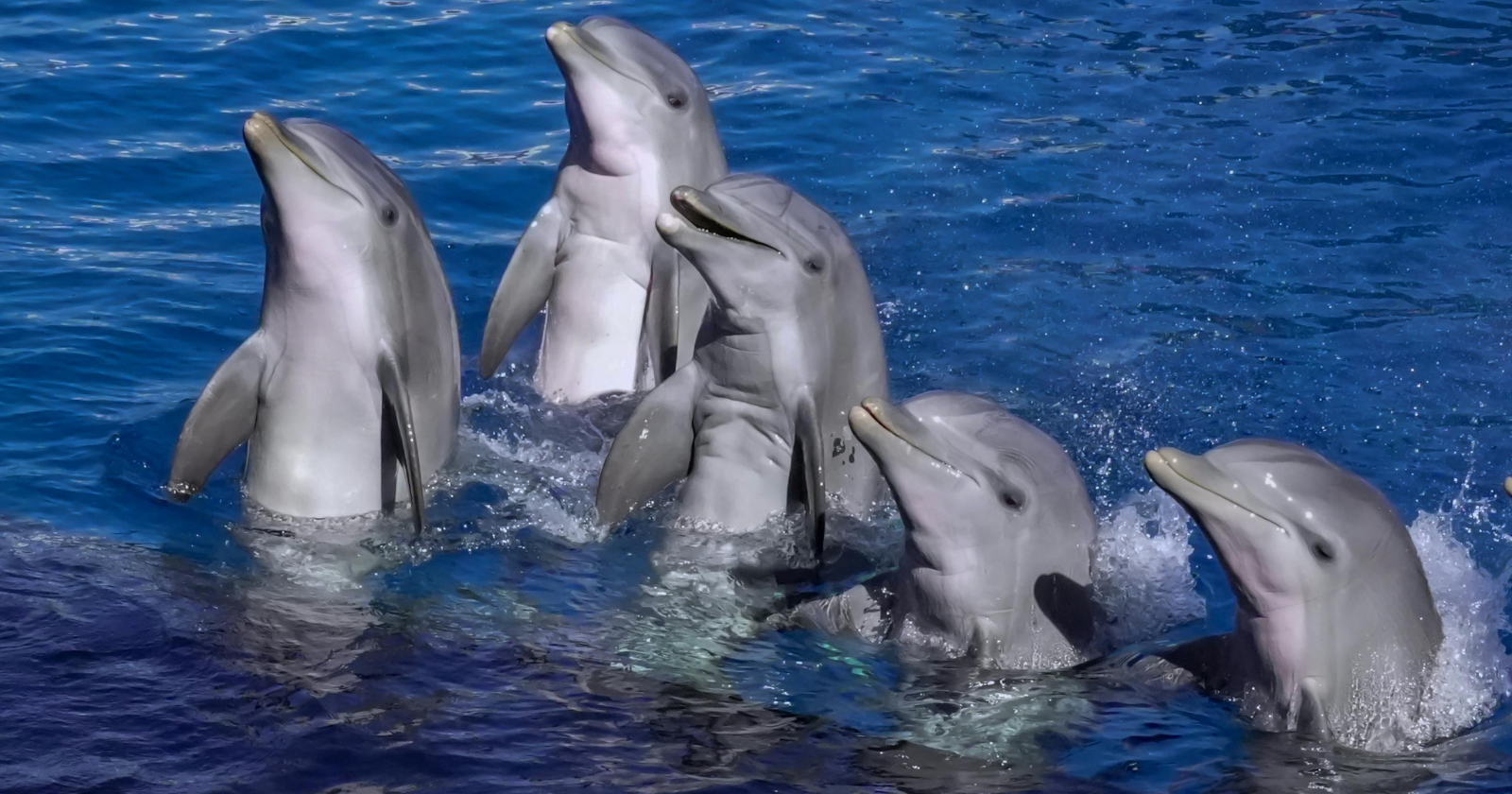
The proposition that another animal species besides humans uses personal names was, for essentially the entire history of comparative animal cognition research before the 1960s, considered a category error. Names — as humans use them — require a substantial set of cognitive abilities that the broader scientific consensus considered unique to the human species: vocal learning sufficient to produce novel sounds rather than instinctual calls; abstract symbolic representation sufficient to associate a learned sound with a specific individual; long-term memory sufficient to retain the association across years; social referential capacity sufficient to use the sound to call attention to a third party rather than merely to announce one’s own emotional state; and (most subtly) the capacity to recognise that the same sound produced by a different speaker still refers to the same individual. Each of these capacities had been considered, across various points in 20th-century animal cognition research, to be human-specific. The cumulative finding of approximately 60 years of bottlenose dolphin research — beginning with the original 1965 publication of the marine biologists Melba and David Caldwell in the journal Nature, continuing through decades of work by the Sarasota Dolphin Research Program in Florida and the University of St Andrews in Scotland, and culminating in the substantial referential studies published by Vincent Janik and his colleagues in the late 2000s and early 2010s — is that bottlenose dolphins possess all five of these capacities, and use them in a manner that the peer-reviewed comparative cognition literature now treats as functionally equivalent to the way humans use personal names.
The original 1965 Caldwell discovery established the first of these capacities. As described in Scientific American’s recent summary of the broader signature-whistle research literature, the Caldwells observed that the bottlenose dolphins they had been studying at captive marine facilities in Florida each produced a distinctive frequency-modulated whistle pattern that was specific to the individual animal — different from the whistles produced by every other dolphin at the same facility, stable across recordings made on different days, and (most importantly) reliably reproduced by the same dolphin across sufficient instances to establish that the whistle was not merely a random vocalisation but a learned, deliberate, individually-distinctive acoustic signal. The Caldwells called these patterns “signature whistles.” The terminology stuck. Across the subsequent four decades, signature whistles were documented in essentially every captive and wild bottlenose dolphin population that was systematically studied, in the same general form: each individual dolphin develops a unique whistle in approximately the first year of life, the whistle remains stable throughout the dolphin’s life, and the whistle constitutes approximately 30 percent of all the vocalisations the dolphin produces during typical social interactions.
The 2006 voice-independence result
The substantive question that the post-Caldwell signature whistle research had to answer was whether the whistles were functioning as names — referential identity labels that other dolphins could learn and use to address specific individuals — or whether they were merely acoustic versions of voices, recognisable to other dolphins in the same general way that humans recognise familiar voices over the telephone without necessarily treating those voices as separately-learnable name-like labels. The difference matters for animal cognition theory. Voices are involuntary acoustic byproducts of an individual’s physical anatomy. Names are learned, deliberate, symbolic. As detailed in a Proceedings of the National Academy of Sciences paper by Vincent Janik and his St Andrews colleagues on signature whistle shape and identity encoding, the critical experimental design to distinguish these two possibilities was to construct synthetic versions of signature whistles that preserved the frequency contour (the “shape” of the name) while removing all of the acoustic cues that would normally identify the producer’s voice — and then to play these synthesized whistles to dolphins who knew the original individuals, and observe whether the dolphins still recognised the name.
The 2006 PNAS result was that they did. The dolphins responded to the synthesized whistles in essentially the same way they responded to the original recordings — turning their heads, vocalising back, swimming toward the speaker, exhibiting the behavioural patterns associated with the recognition of a specific known individual. The identity information in the signature whistle was therefore encoded in the frequency contour itself, independent of the voice features. This was the substantive cognitive finding that distinguished signature whistles from mere voice recognition: the whistle was functioning as a referential label, recognisable as referring to a specific individual regardless of which dolphin (or which speaker) was producing the sound. By the standards of comparative animal cognition research, this was the result that established signature whistles as the first documented case of personal names in any non-human species.
What the dolphins actually do with the names
The substantive behavioural use of signature whistles by dolphins has been mapped across the subsequent two decades. Per an analysis published in The Conversation by Jason Bruck of Stephen F. Austin State University on the referential use of dolphin signature whistles, dolphins use their own signature whistles primarily as self-identification signals: announcing their location to other members of the pod, particularly during periods of separation or when joining a new group. The signature whistle accounts for approximately 30 percent of all the vocalisations a dolphin produces in social settings — a proportion that, by any reasonable comparative measure, is substantially higher than the proportion of human conversational speech devoted to self-identification. The more interesting referential use, however, is when dolphins copy each other’s signature whistles. A dolphin will produce a copy of another individual’s signature whistle to address that individual specifically — typically in contexts of close approach, reunion, or social tension where the equivalent human behaviour would be calling someone by name to get their attention. The copy is recognisable to the addressee as a reference to themselves. The copy is also recognisable to other dolphins in the area as a reference to the named individual rather than to the speaker.
The cognitive substrate that supports this referential signalling has been substantially mapped across the past decade. As reported in NBC News’ coverage of the Bruck signature-whistle and dolphin-memory research, bottlenose dolphins have been demonstrated to recognise the signature whistles of individuals they have not encountered for more than 20 years — the longest documented social memory in any non-human species, exceeding the recall capacity that has so far been demonstrated in primates, elephants, and the various corvid and parrot species whose long-term social cognition has been most extensively studied. The Sarasota Dolphin Research Program, which has been tracking individual wild dolphins in Sarasota Bay continuously since 1970, has documented signature whistles from dolphins that have been recorded across 50-year individual life-histories with the same whistle pattern persisting essentially unchanged from the animal’s first year of life through to old age. A 2018 study additionally established that male dolphins — previously thought to abandon their individual signature whistles in favour of alliance-group identity whistles in adulthood — actually retain their original signature whistles throughout their lives, contradicting an earlier hypothesis that had partially undermined the “personal name” interpretation. The current scientific consensus, as articulated across the cumulative peer-reviewed literature, is that bottlenose dolphin signature whistles function as personal names in the strict referential sense — learned, individual-specific, used to address third parties, retained across the lifespan, and recognised by other members of the species regardless of the voice features of the speaker producing them. A June 2024 paper in Nature Ecology and Evolution by Michael Pardo and colleagues at Colorado State University extended this finding to African elephants, which have now also been documented to use individually-distinctive vocal labels to address specific other elephants in their social groups. The Caldwells’ 1965 finding has, in the 60 years since its original publication, opened a substantial broader investigation into which other non-human species use names — but the bottlenose dolphins, for the entire period since the original signature whistle discovery, remain the first non-human species ever discovered to do so.
