

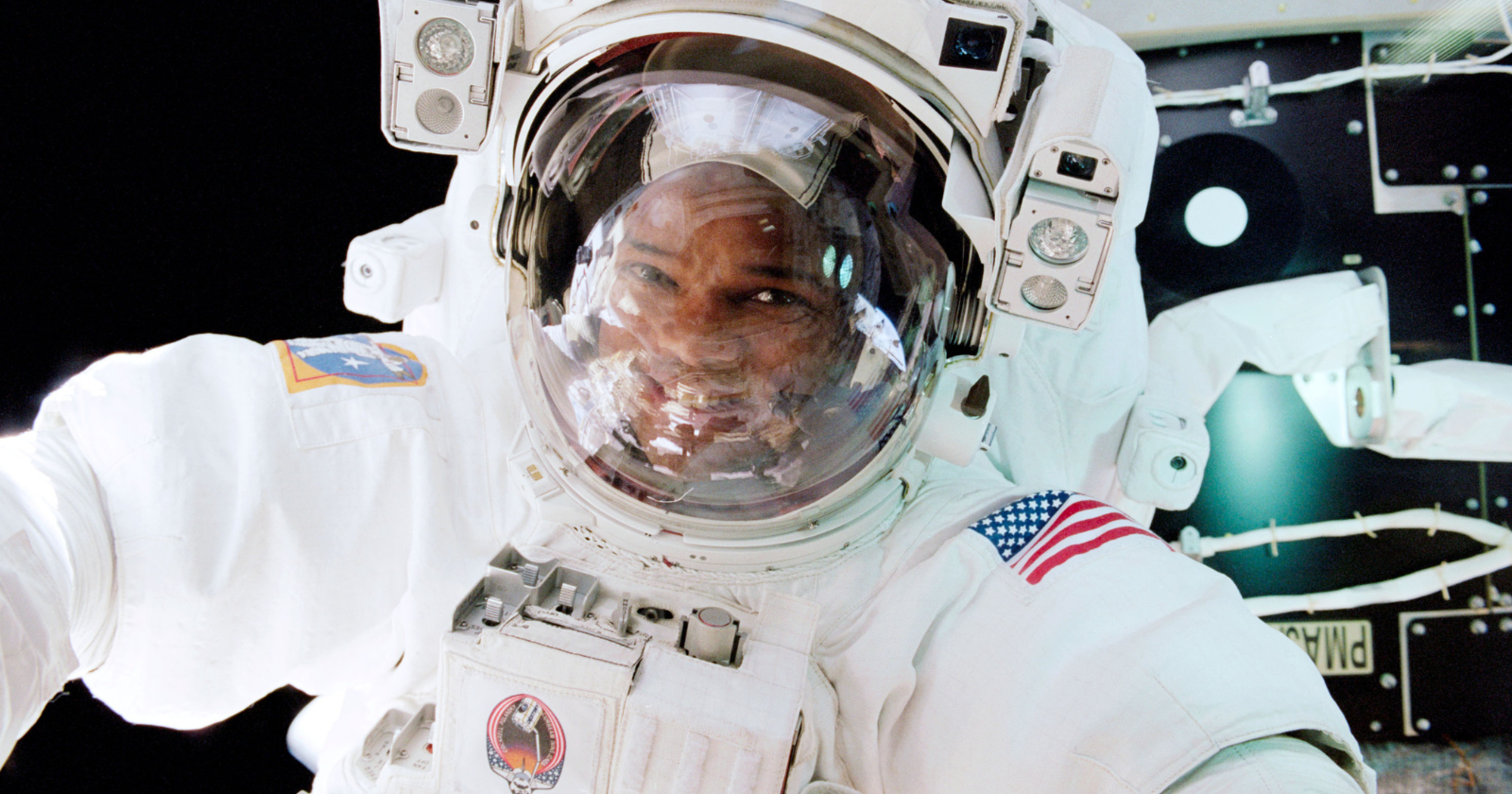
The first thing that happens to a body in orbit is that it starts to rearrange itself. With no gravity pulling blood and other fluids down toward the legs, they drift upward and settle in the chest, neck and head. Astronauts arrive on the International Space Station looking faintly puffy, fuller in the face and thinner in the leg, and many describe the opening day as something like a head cold that will not clear. A stuffed nose. A dulled sense of smell. Food that tastes of less than it should.
That headward, or cephalad, fluid shift is one of the most reliable early adaptations to weightlessness, and it sits at the head of a chain that space agencies now watch closely. It helps explain why crews eat less than they need, why the body sheds mass it can ill afford to lose, and why the daily menu aboard the station is treated as a piece of mission hardware rather than a comfort.
What the fluid shift actually does
On Earth, the circulatory system spends its day working against gravity. Remove gravity and fluid that would normally pool in the lower body redistributes toward the head and torso. NASA’s own accounts, drawn from decades of flight and from ground analogues such as head-down tilt bed rest, describe the redistribution as fast, with facial swelling and nasal congestion among the first things crews notice.
Congestion is the part that reaches the dinner table.
Smell carries much of what we casually call taste, and a blocked nose blunts both. The mechanism is less tidy than the short version suggests, though. Work on long-duration crews has found that measured intracranial pressure and reported symptoms do not always move together, which is a caution against treating the fluid shift as a single switch that turns flavour down. It reads better as one contributor among several.
Why the taste story is not the whole story
If congestion were the entire explanation, appetite would return once the body settled. The swelling and stuffiness usually ease within a few weeks aboard the station. The food problem does not leave with them.
A 2024 study led by Dr Julia Low at RMIT University in Melbourne, reported in the university’s release and published in the International Journal of Food Science and Technology, tested how people perceived vanilla, almond and lemon aromas in a confined setting simulated with virtual reality. Vanilla and almond smelled more intense in the simulated station environment, while lemon was unchanged. More useful for our purposes is Low’s wider point: crews still do not enjoy their food after the fluid-shift effects have gone, which suggests something beyond congestion is at work. The confined, isolated environment itself, and how each person reads it, appears to shape how food registers.
This was a ground study of 54 adults in VR goggles, though, not a measurement of astronauts eating in orbit. It points at a plausible factor rather than settling the matter. What it does puncture is the assumption that a decongestant would fix space food.
What exercise can and cannot do
Any of this matters because undereating meets muscles and bones that are already wasting. Lower-limb muscles go quickly without load, and the deep calf takes much of the hit. Single-fibre work on ISS crew by Fitts and colleagues, reported in the Journal of Physiology in 2010, found the slow-twitch type I fibres of the soleus lost about 20 per cent of their size after roughly six months, with a sharper drop in the force they could produce.
Crews train hard to hold this back, spending around two and a half hours a day, setup included, on a resistive device, a treadmill and a cycle. It helps a great deal without closing the gap. A 2023 npj Microgravity analysis of 46 astronauts found that roughly 600 minutes a week of aerobic and resistance exercise did not fully protect against multisystem deconditioning, and responses varied widely from person to person. The authors estimated that up to 17 per cent of astronauts could experience performance-limiting deconditioning under current countermeasures. The recurring difficulty, as reviewers of the muscle literature note, is that Earth-like loading forces are hard to reproduce in space. None of this reads as a failure of the training. It substantially reduces what would otherwise be lost, and the remaining gap is what keeps the countermeasure teams working.
Why nutrition is watched so closely
Here the menu becomes a countermeasure in its own right. A body losing tissue and eating too little loses it faster. In a study of eleven ISS crew members published in the Journal of Nutrition, Scott Smith and colleagues documented that astronauts consumed on average about 80 per cent of their recommended energy intake and weighed less on landing day than before flight, alongside raised markers of bone resorption and oxidative damage.
So NASA’s Nutritional Biochemistry Laboratory at Johnson Space Center, led by Smith, runs a clinical nutritional assessment on ISS crews and tracks dietary intake and body mass across the four-to-six-month missions. That 80 per cent is an energy-intake shortfall, not a claim about any single vitamin or mineral, and it is the shortfall, stacked on top of muscle and bone loss, that makes the daily bookkeeping worth the effort.
What to watch
Station missions run about six months. The trips now being planned do not. Artemis flights to the Moon, and any eventual crewed mission to Mars, stretch to years, well past the window in which the current understanding of appetite, exercise and nutrition has been tested. A modest daily calorie deficit is manageable over half a year. Over three years, with no resupply and no quick way home, the same deficit stops being a discomfort and becomes a mission risk. The open question is whether better food, better countermeasures, or the pharmaceutical approaches now in early animal testing can hold a body together for that long. For now, no single fix manages it, which is why the whole chain, from the fluid shift on day one to the last logged meal, stays under watch.