
The country that sent Sergei Krikalev into orbit on 18 May 1991 was the Union of Soviet Socialist Republics. The country that recovered him on 25 March 1992 was the Russian Federation. The two countries shared a cosmonaut corps, a space programme, a launch complex, and most of the same people in the same buildings doing approximately the same jobs — but one had quietly stopped existing while the other took over its furniture, its hardware, and its single citizen still in orbit, who had not been informed of any of this in real time and who would learn the details only through fragmentary radio communications across an eight-month stretch in which the world below him was rearranging itself faster than the news could be delivered to a man living in a tin can of roughly 250 cubic metres of pressurised volume, travelling at 27,000 kilometres per hour.
According to a comprehensive reference summary of Krikalev’s career and the political circumstances of his second Mir mission, the launch itself had been entirely routine. Krikalev was 33 years old, an experienced flight engineer with one prior Mir mission already behind him, married to a ground controller at the Russian space company NPO Energia, with a nine-month-old daughter at home in Leningrad. He launched alongside commander Anatoly Artsebarsky and Helen Sharman, the first British citizen in space, on a mission scheduled to last approximately five months. He was meant to be back on Earth, in his home city, in his Soviet country, by mid-October 1991. The schedule did not survive the summer.
The view from 400 kilometres up
The coup attempt against Mikhail Gorbachev in August 1991 was the first event Krikalev observed from orbit that suggested the country below him was not behaving normally. The coup failed within three days, but its failure substantially accelerated the dissolution it had been intended to prevent. Through the autumn, Krikalev watched a sequence of events unfold across the surface that would not have seemed plausible to anyone reading the standard Soviet briefings six months earlier. The Baltic states declared independence. Kazakhstan demanded substantial new fees for use of the Baikonur Cosmodrome — the same facility from which Krikalev had launched, and to which any return mission would have to be coordinated. The Soviet ruble began collapsing against Western currencies, with hyperinflation eroding Krikalev’s own salary (paid in absentia to his wife in Leningrad) faster than the wages themselves could be deposited.
On 6 September 1991, while Krikalev was approximately 110 days into a planned 150-day mission, the Presidium of the Supreme Soviet of the Russian SFSR signed the decree restoring Leningrad’s pre-revolutionary name. The home city Krikalev had launched from no longer technically existed by that name; the place his wife and daughter were living was now called Saint Petersburg. Krikalev was informed of the change by radio. He continued his orbital research programme. His mail from home, intermittent and delayed, began arriving with the new city name in the return address.
Why he could not come home
The Soviet decision-making structure responsible for scheduling Krikalev’s return collapsed in increments through the autumn of 1991. As reported by Russia Beyond’s account of the political pressures that extended Krikalev’s stay, the experienced cosmonaut originally scheduled to replace him as Mir’s flight engineer was bumped from the October 1991 Soyuz TM-13 mission in favour of Toktar Aubakirov, the first Kazakh cosmonaut — a political concession to the Kazakh Soviet government, which by then controlled the territory Baikonur sat on and was demanding both prestige and money in exchange for continued Russian use. Aubakirov spent eight days on Mir, returned to Earth with Artsebarsky and Austrian researcher Franz Viehböck on 10 October 1991, and left Krikalev behind with new commander Alexander Volkov and no flight engineer replacement scheduled. The next planned crewed launch was cancelled entirely for lack of funds. The launch after that was sold to Germany, which paid $24 million for cosmonaut Klaus-Dietrich Flade to spend a week on the station.
Krikalev’s own reaction to learning he would have to stay was characteristically restrained. “The strongest argument was economic because this allows them to save resources here,” he said in a radio interview from the station. “They say it’s tough for me — not really good for my health. But now the country is in such difficulty, the chance to save money must be top priority.” He privately struggled with the extension. He later told interviewers: “Do I have enough strength? Will I be able to readjust for this longer stay to complete the program? Naturally, at one point I had my doubts.” He asked the next supply mission to send up jars of honey to raise his spirits. He communicated daily, for stretches of the mission, with a particular Australian amateur radio operator named Margaret Iaquinto, who had set up a digital bulletin board for the Mir cosmonauts and with whom he maintained one of the longer continuous personal radio relationships in the history of human spaceflight.
What he came home to
On 25 December 1991, Mikhail Gorbachev resigned as president of the Soviet Union and gave a televised farewell address. On 26 December 1991, the USSR was formally dissolved. Krikalev was approximately 400 kilometres above the surface, still wearing the patches that identified him as a citizen of a state that had now joined the list of countries that used to exist. He continued operating Mir under the new institutional arrangement that emerged from the wreckage: the Russian Federation inherited the cosmonaut programme, the space station, the launch contracts, and the man currently in orbit. Per an Inverse retrospective on Krikalev’s experience as the cosmonaut without a country, Krikalev’s status as “the last Soviet citizen” became, retrospectively, an accurate description of a specific 88-day window between the dissolution of the USSR and his actual return to Earth — a window during which he was, in the most literal possible sense, a citizen of nowhere.
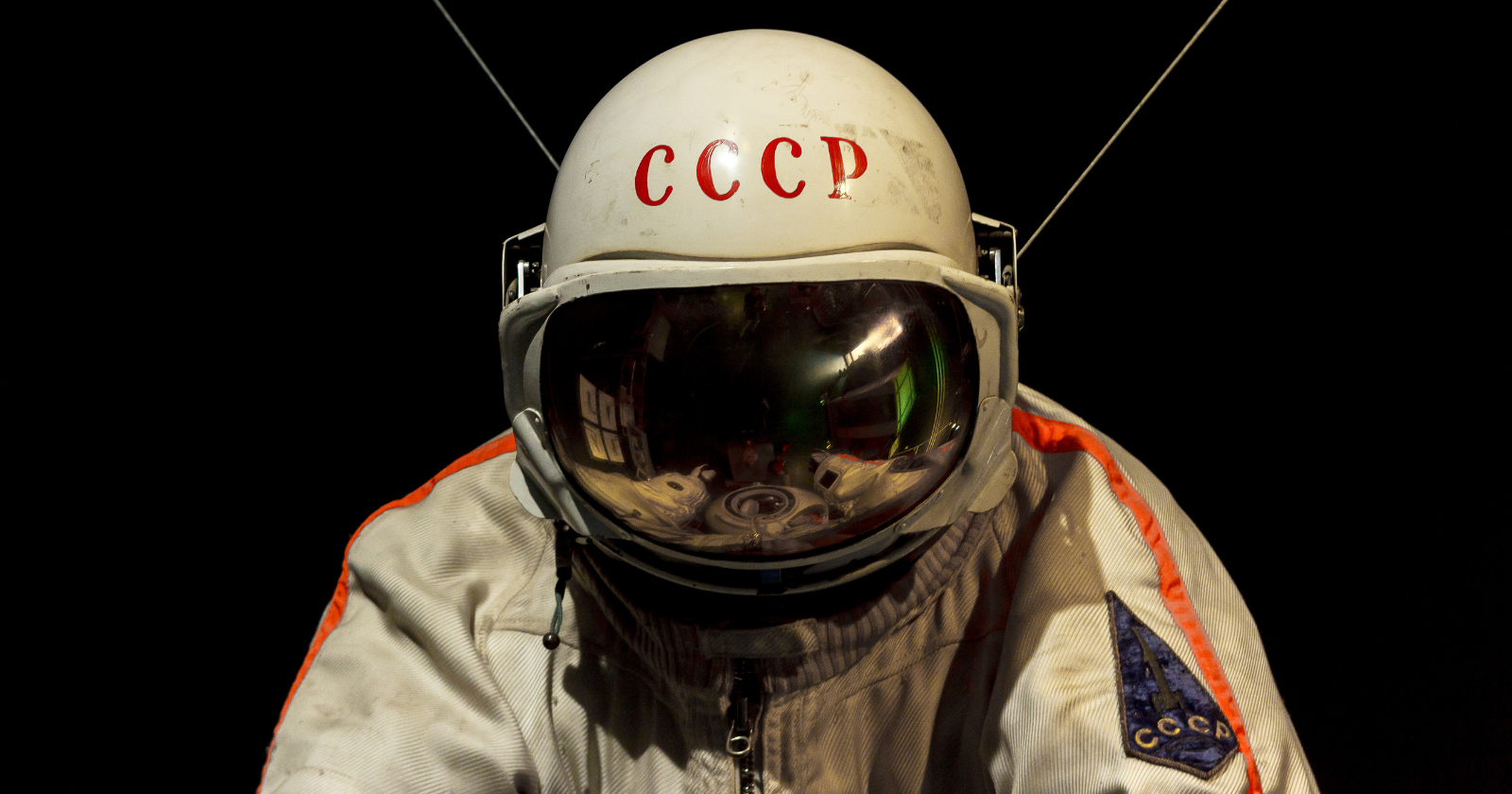
The return itself was filmed and photographed by the international press, which had become aware over the preceding months of the strange situation in orbit. As described in HistoryNet’s account of the landing, Krikalev emerged from the Soyuz capsule pale, sweaty, and unable to stand without assistance, wearing the spacesuit he had launched in — with the four letters USSR still stitched to it and the red Soviet flag still on the shoulder. The ground crew helped him to his feet. Someone threw a fur coat over his shoulders. Someone else brought him a bowl of broth. He was the last person to land on Earth still wearing the insignia of the country that had launched him, because the country had stopped existing while he was in transit and he had been issued no replacement uniform. His next mission, two years later, would be flown for the Russian Federation on STS-60, the first joint US-Russian Space Shuttle flight. He would eventually become Deputy Director General of Roscosmos and would be one of five cosmonauts selected to raise the Russian flag at the Sochi 2014 opening ceremony. His total time in space, as of the present moment, places him fourth in the all-time cumulative rankings — behind Oleg Kononenko, Gennady Padalka, and Yuri Malenchenko. None of his subsequent flights produced anything like the experience of his second one — when he went to work as a Soviet, watched his city renamed from orbit, watched his country dissolve underneath him, and came home, eight months late, still in uniform.