
The Chinese hospital workers digging an air raid shelter in 1971 expected to find rock, soil, and possibly some inconveniently large tree roots. What they actually found, after their shovels broke through into an unexpected void, was a sealed wooden burial chamber containing a body that, when the innermost coffin was eventually opened the following year, looked less like a 2,200-year-old corpse than like a woman who had died the previous week. The hillside above the chamber — known locally as Mawangdui, the “Horse King Mound” — had been suspected for centuries of containing some kind of ancient burial complex, but no formal investigation had ever been conducted. The shelter excavation accidentally penetrated the outer wall of what would turn out to be a three-tomb family burial complex. The workers reported the find. Provincial authorities contacted archaeologists. A formal excavation began in January 1972 under the direction of the Hunan Provincial Museum, with the assistance of more than 1,500 local high school students who were enlisted to help with the dirt removal. The eastern tomb of the complex — designated Han Tomb No. 1 — turned out to contain the body of Xin Zhui. The other two tombs contained her husband Li Cang, who had died in 186 BC, and a younger man, probably their son, who had died around 168 BC. Li Cang’s tomb had been plundered by grave robbers at some point in the intervening millennia. Xin Zhui’s tomb had not been touched since the day it was sealed.
According to a comprehensive reference summary of Xin Zhui’s life, death, and the discovery of her tomb, the engineering of the burial structure substantially explains the extraordinary preservation. The tomb sat approximately 12 metres below ground level. The body was wrapped in 20 layers of silk and ribbons, then placed inside four progressively smaller lacquered wooden coffins of cypress and pine that nested one inside the other in the manner of Russian matryoshka dolls. The outermost coffin was a plain box; the three inner coffins were painted in elaborate lacquer in black, red, and white. The coffins themselves were placed inside a five-compartment wooden burial chamber, and the entire chamber was packed with approximately five tons of charcoal, which absorbed moisture and stabilised the atmosphere immediately around the coffins. The wooden chamber was then sealed with several feet of white clay paste, which prevented any further water or air from penetrating from above. Xin Zhui’s body inside the innermost coffin was found floating in approximately 80 litres of a mildly acidic reddish liquid that contained trace amounts of magnesium and that appears to have served, whether by deliberate design or by accidental chemistry, as a substantial preservative.
What 2,200 years of sealed darkness produced
The condition of the body when the innermost coffin was opened was, by every available account from the archaeologists present, almost impossible to reconcile with the known biology of human decomposition. Skin should not remain soft and elastic after two millennia. Joints should not bend. Eyelashes should not survive. Blood should not still be present in the vessels. Internal organs should not retain their original shape. The vagus nerve of the lungs should not be thinner than a hair and intact along its full length. All of these features were observed in Xin Zhui. The pathologists who conducted the autopsy on 14 December 1972 — five months after the body was removed from the tomb — performed a full internal examination and were able to reconstruct her medical history to a degree of detail that exceeded what would be possible for many corpses recovered after only a few decades of burial, let alone after twenty-two centuries.
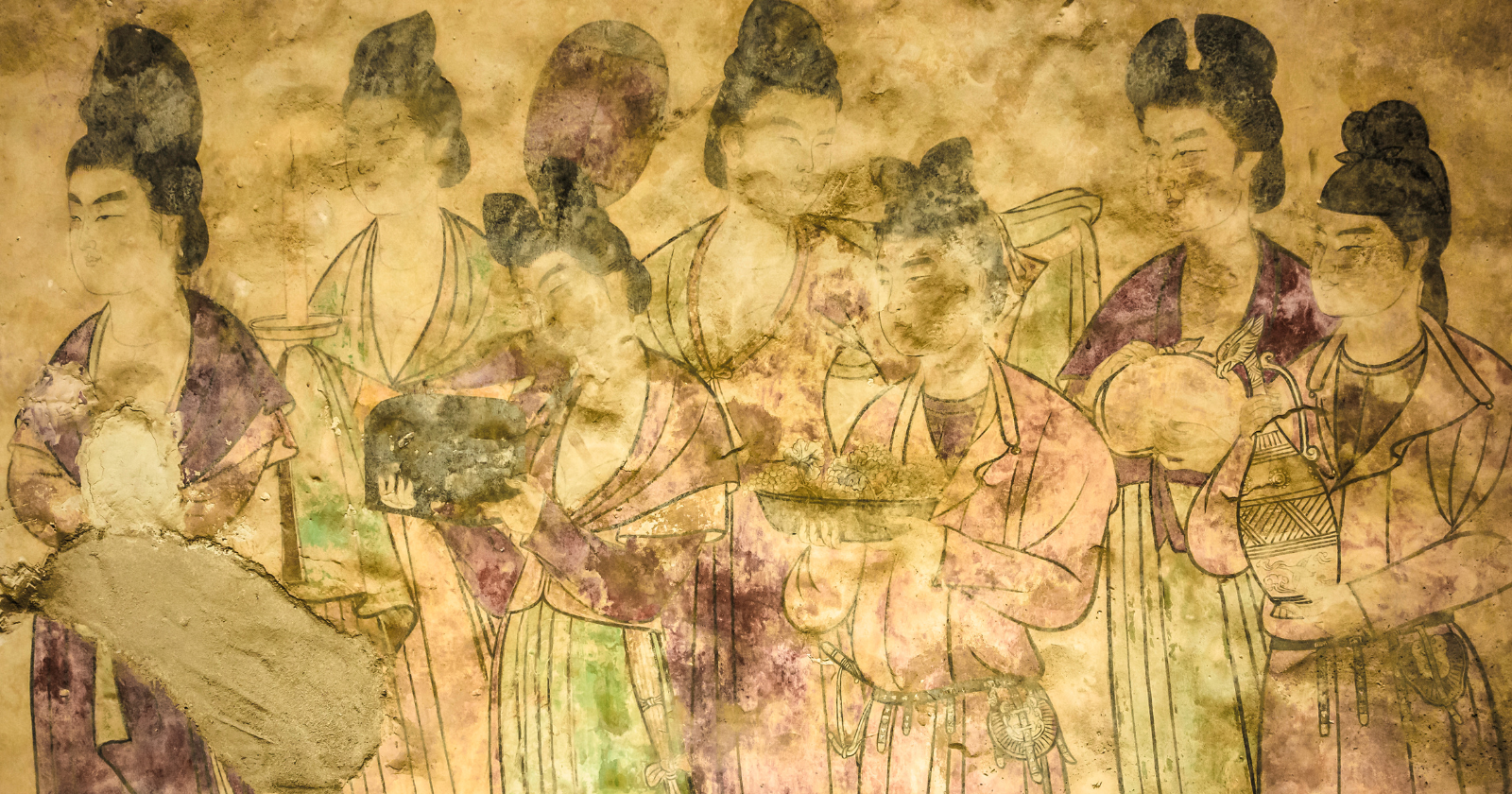
The medical findings were extensive. As detailed in All That’s Interesting’s account of the autopsy results and the lifestyle conditions revealed by Xin Zhui’s internal organs, the immediate cause of death was a heart attack — likely brought on by coronary thrombosis and severe arteriosclerosis. She also had, at the time of her death, schistosomiasis (a parasitic flatworm infection), Type II diabetes, fatty liver disease, gallstones (one of which had lodged in her bile duct), hypertension, angina pectoris, a herniated spinal disc, lumbago, and substantial obesity. Her arteries were heavily congested. Her remaining heart muscle showed evidence of multiple prior, less severe cardiac events. The autopsy findings were consistent with a person who had lived an extremely sedentary, indulgent, high-calorie lifestyle across her adult life — which the archaeological context fully corroborated. Xin Zhui’s tomb contained 162 carved wooden figures representing her household staff of servants, hundreds of richly embroidered silk garments, multiple lacquerware boxes of cosmetics, prepared meals, fine wines, a complete musical-instrument set, statuettes of personal musicians, and approximately 1,400 individual luxury items total — the material residue of a woman who had been wealthy, idle, and substantially overfed for most of her life.
The melon seeds and the funerary banner
The 138 melon seeds in Xin Zhui’s stomach — some sources cite 130, the precise count varying slightly across published accounts of the autopsy — provided one of the more unexpectedly intimate details from the examination. Melon seeds take approximately one hour to begin digestion after consumption. The presence of 138 of them, undigested, distributed across the esophagus, stomach, and intestines, indicated that Xin Zhui had eaten a substantial quantity of melon within approximately one to three hours of her death. The presence of melon in season suggested she had died in summer. The combination of findings — heart attack, summer, immediately following a large fruit consumption — produced an image of the moment of her death that no other surviving document from Han Dynasty China provides for any individual person of the period. A 50-year-old aristocratic woman ate melon. An hour later, she had a heart attack. She died.
The funerary banner placed over her innermost coffin — a T-shaped silk painting now considered one of the most important surviving artworks from the Western Han period — depicts her journey from the terrestrial world into the celestial realm of the immortals. As described in Smarthistory’s analysis of the funerary banner and the broader iconography of the tomb’s contents, the banner is organised in four vertical sections that depict, from bottom to top, the underworld inhabited by water creatures and the dead, the terrestrial level where Lady Dai’s funeral is taking place (with her recognisable figure at the centre, leaning on a cane, attended by her household), the intermediate heavens guarded by mythological beings, and finally the celestial realm of the immortals at the top, including imagery often interpreted as representing the legend of Archer Yi and his wife Chang’e. The banner was, in the cosmology of Han Dynasty funerary practice, intended to serve as a kind of map and passport for the deceased, guiding her soul on its journey out of the body and through the various realms of the afterlife to the destination of immortality among the gods.
As described in the comprehensive reference summary of the Mawangdui burial complex and its broader scientific and cultural significance, Xin Zhui’s body now resides in a glass case in the Hunan Provincial Museum in Changsha, eight metres underground, in a special chamber maintained at constant temperature and humidity, immersed in a formaldehyde-based preservative solution. She is visited by approximately three million people per year. Her tomb, the funerary banner, the 1,400 artifacts, and the bamboo manuscripts recovered from the adjacent tomb of her probable son together constitute one of the most important single archaeological discoveries in modern Chinese history — providing a granular, intimate view of the material, medical, culinary, religious, and aesthetic life of the Han Dynasty aristocracy of the second century BC that no other surviving source comes close to matching. Lady Dai herself, the centre of all of this, remains the best-preserved ancient body ever recovered from any archaeological site anywhere in the world. The 138 melon seeds that completed her last meal, undigested in her stomach for 2,194 years, are now part of the permanent museum record.