
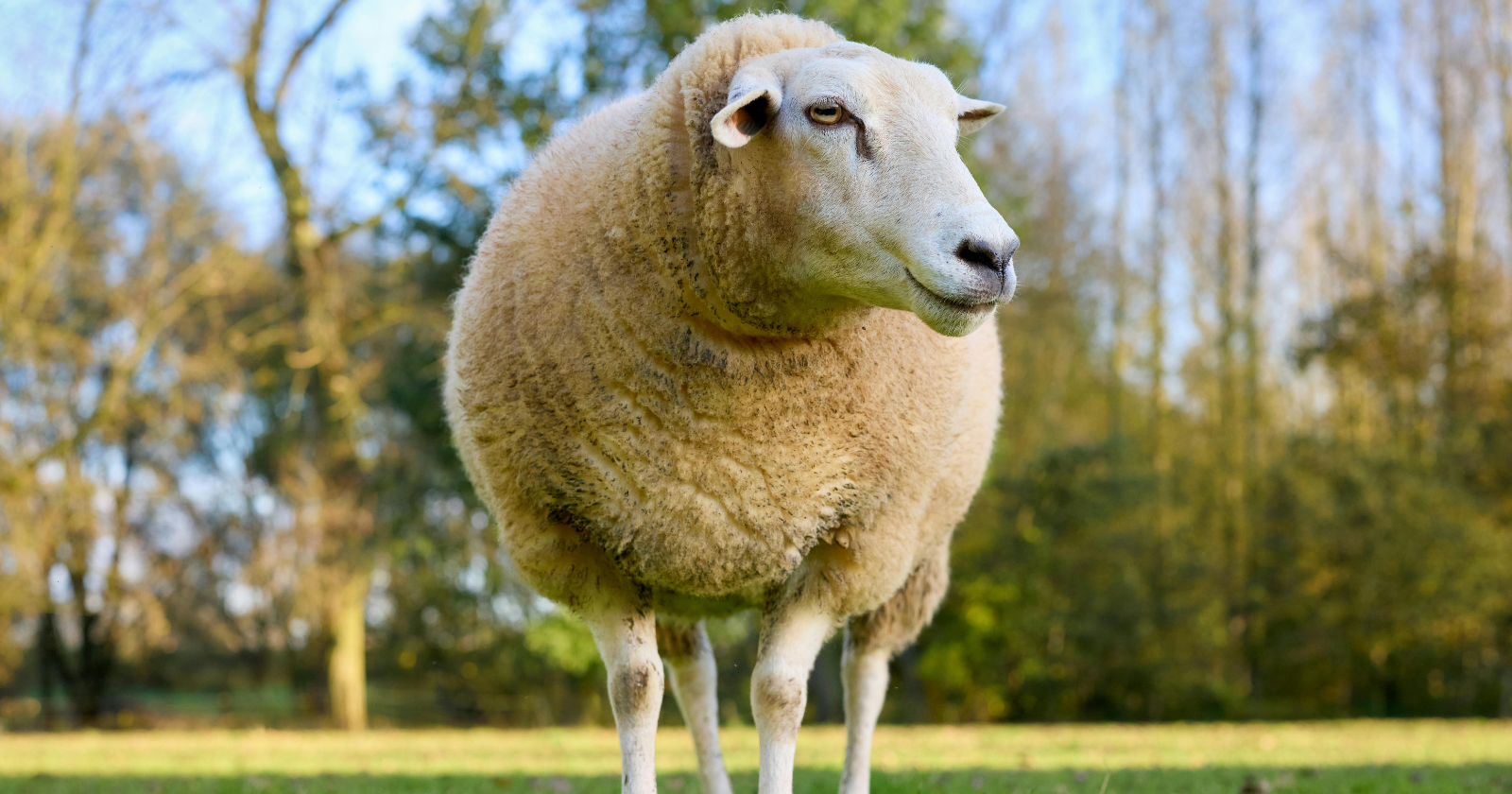
On 5 July 1996, in a barn at the Roslin Institute outside Edinburgh, a Finn Dorset lamb was born to a Scottish Blackface surrogate ewe. The lamb was given the laboratory code 6LL3. According to Retro Report’s interview transcript with the original team, it was John Bracken, the anaesthetist who assisted with the birth, who suggested calling her Dolly, after the country singer, because the donor cell had come from mammary tissue. The name stuck. Her birth was kept quiet for seven months while the research team finished the paper. According to Smithsonian Magazine’s account of the secrecy, the announcement came on 22 February 1997, with a publication in Nature five days later, by Ian Wilmut, Angelika Schnieke, Jim McWhir, Alex Kind and Keith Campbell. The paper was titled “Viable offspring derived from fetal and adult mammalian cells.” It ran four pages. Dolly’s face was on the cover.
The reason this mattered, and still matters, was specific. Dolly had been produced from a single cell taken from the udder of a six-year-old ewe. According to the Britannica entry on Dolly, the nucleus of that mammary cell, carrying a complete adult sheep’s worth of DNA, was removed and fused with an enucleated egg cell taken from a Scottish Blackface ewe. An electrical pulse triggered the fusion, and the resulting cell began dividing as if it were a newly fertilised embryo. After six days of growth in the laboratory, the embryo was implanted into the Scottish Blackface surrogate. The lamb that resulted shared its DNA with the donor ewe, not with the egg donor and not with the surrogate. She was, in the technical sense the field had been arguing about for decades, a clone produced from an adult body cell.
What developmental biologists had been arguing about
The textbook view through most of the twentieth century was that as cells specialise during development, the genetic possibilities available to them progressively narrow. A skin cell can only make more skin. A liver cell can only make more liver. The DNA in each cell remained the same, but most of it appeared to be permanently shut off, locked into a single committed identity. Whether this commitment was reversible, in principle, was an open question.
The first cracks in the textbook view came from amphibians. In the 1950s and 1960s, John Gurdon, then a doctoral student at Oxford, showed that nuclei from differentiated frog cells, transferred into enucleated frog eggs, could occasionally produce viable tadpoles. The result demonstrated that the genetic shutdown observed in adult cells was not, in fact, permanent. Gurdon shared the 2012 Nobel Prize for that work. But frogs are not mammals, and through the 1970s and 1980s many biologists held the view that the mammalian case was different, that the genome of a mammalian adult cell could not be persuaded to start over from the beginning. The Dolly experiment is what settled that question.
What is worth being precise about is that Dolly was not the first cloned animal, or even the first cloned sheep. The same Roslin group had produced Megan and Morag in July 1995, cloned from cells taken from a sheep embryo. Embryonic cells were already known to be flexible. The reason Dolly was different was that her donor cell came from a fully developed adult. By the time the mammary cell sat in the laboratory dish, it had spent six years committed to producing milk proteins for a single Finn Dorset ewe. The Roslin researchers coaxed that committed nucleus back to a state from which it could direct the development of an entire new animal.
How the Roslin team made it work
The technical innovation widely credited to Keith Campbell was the synchronisation of the cell cycle between the donor cell and the recipient egg. Campbell starved the cultured mammary cells of nutrients for several days, pushing them into a quiescent resting state in which most gene activity shuts down. When the quiescent cell was then fused with an enucleated egg, the egg’s cytoplasm appeared able to reprogram the adult nucleus, returning it to something like the state of a newly fertilised cell.
The success rate was low. According to the published Roslin account and the Roslin Institute’s own “Life of Dolly” page, the group constructed 277 embryos containing adult-cell nuclei. The viable ones were implanted into surrogate ewes. One pregnancy went to term, and that single pregnancy was Dolly. Wilmut himself later acknowledged in interviews that Campbell deserved most of the intellectual credit for the cell-cycle insight that made the experiment work.
What the result actually settled, and what came next
The Dolly experiment showed that the genome of a fully differentiated mammalian cell retained the capacity to direct the development of a complete organism, given the right environment. That was the specific claim. The paper did not show that cloning mammals from adult cells was easy, reliable, or safe. The 1-in-277 ratio, and the years of follow-up work showing high rates of developmental abnormalities in subsequent mammalian clones, made clear that the technique was hard. It also made clear that it worked.
Dolly herself lived six and a half years, gave birth to six lambs with conventional matings, and was euthanised on 14 February 2003 after developing a lung disease common in older sheep housed indoors. According to the obituary in JAVMA News, which quoted Harry Griffin, then acting director of the Roslin Institute, the necropsy confirmed sheep pulmonary adenomatosis, a viral lung disease common in sheep kept indoors, along with arthritis in her hind limbs first noted in 2002. Griffin’s statement to JAVMA was direct: “Sheep can live to 11 to 12 years of age, and lung infections are very common in older sheep, particularly those housed inside (such as Dolly).” There was no evidence that cloning caused either condition. Her preserved remains are on display at the National Museum of Scotland in Edinburgh, where she has been exhibited regularly since 2003.
The somatic cell nuclear transfer technique used to make Dolly was applied over the following decade to mice, cattle, pigs, goats, cats, horses and other mammals, with varying success rates. None matched the impact of the first one, because the central scientific question Dolly answered, whether a committed adult mammalian cell could be reprogrammed to start over, only needed an answer once. The answer, surprisingly to many of the developmental biologists who had insisted otherwise, was yes.
The longer consequence has been the field of cellular reprogramming, which culminated in Shinya Yamanaka’s 2006 demonstration that adult cells could be reprogrammed to a pluripotent state using a small set of defined genetic factors, without the need for an egg at all. Yamanaka and Gurdon shared the 2012 Nobel Prize for that line of work. Wilmut, who died in September 2023, had by then largely shifted his own research toward the technique Yamanaka introduced. The biology Dolly opened up moved past her in his own lifetime.
