
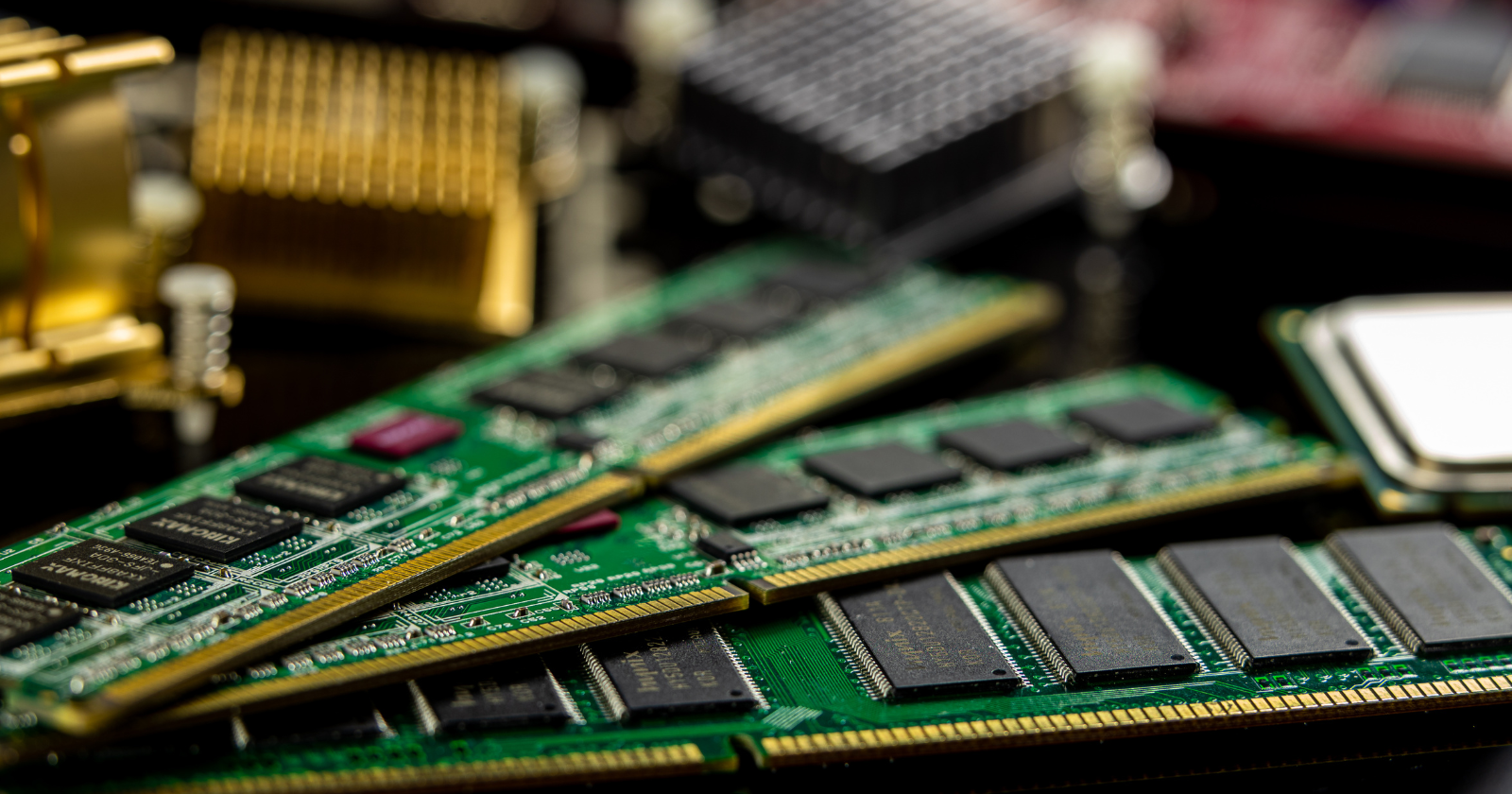
Open any device built in the past five years, look inside its memory subsystem, and the chips you find were almost certainly fabricated in one of three South Korean industrial cities — Hwaseong, Pyeongtaek, or Icheon — by one of two companies whose combined market capitalisation now exceeds $700 billion. The historical improbability of this situation is not a matter of degree but of category. Korea in 1953 did not have a semiconductor industry, a precision manufacturing tradition, an advanced engineering workforce, or the kind of capital markets that could finance industrial development. It had a per-capita income lower than essentially every other country whose subsequent economic trajectory has been studied by development economists, a primarily agricultural economy substantially destroyed by three years of active warfare, and a small population (~20 million) whose adult literacy rate stood at approximately 20 percent. The proposition that, 72 years later, two companies headquartered in the same country would manufacture the memory chips inside Apple’s iPhones, Google’s Pixel devices, Microsoft’s data centres, Nvidia’s AI accelerators, Tesla’s autonomous-driving computers, and essentially every other major piece of digital hardware sold globally — would have been considered, by any reasonable observer in 1953, structurally impossible.
The decision that made this outcome possible was made on 8 February 1983 in Tokyo, by a 73-year-old terminally ill Korean industrialist named Lee Byung-chul, the founder of the Samsung Group. As described in S&P Global’s reconstruction of the Korean semiconductor industry’s development and its current dominance of the global memory market, Lee announced — in what subsequent Korean business histories refer to as the “Tokyo Declaration” — that Samsung would commit approximately $400 million of the conglomerate’s reserves to enter the semiconductor manufacturing business, against the unanimous opposition of essentially his entire senior executive team. The Japanese semiconductor industry, then at its peak, was generally considered uncatchable. The American semiconductor industry had largely ceded the memory market to Japan. The Korean technological base was substantially behind both. Lee’s reasoning, as he subsequently explained, was that semiconductors were going to become the foundational input technology of essentially every future consumer-electronics product, and that if Samsung did not commit to building the industrial capacity to manufacture them, the company would have no role in whatever the next generation of consumer electronics looked like. The decision was made over the objections of his board. Lee died of lung cancer in November 1987, four years and ten months after the Tokyo Declaration. He did not live to see what his decision produced.
How the catch-up actually happened
The technical execution that followed Lee’s 1983 announcement was, by every available measure of how rapid industrial catch-up typically works, anomalous. Samsung produced its first commercial dynamic random-access memory chip — a 64-kilobit DRAM — approximately ten months after the Tokyo Declaration, in December 1983. The technology was substantially behind contemporary Japanese and American products at that point, but the time-to-first-product was substantially faster than any contemporary industry analyst had expected. Samsung released its first 1-megabit DRAM in 1986, its first 4-megabit DRAM in 1988, its first 16-megabit DRAM in 1990, and its first 64-megabit DRAM in 1992. The 1992 product was produced approximately six months ahead of comparable Japanese designs from Toshiba, NEC, and Hitachi. Samsung surpassed Toshiba as the world’s largest DRAM manufacturer in the same year. By 1993, Samsung was producing more DRAM by revenue than all of the Japanese semiconductor manufacturers combined. The Japanese memory industry, which had been the global market leader in 1983, never recovered the position it had lost to Samsung across the subsequent decade.
The second Korean memory manufacturer — SK Hynix, in its current corporate form — emerged from a different industrial trajectory. The company was originally founded in 1983 as Hyundai Electronics Industries, a subsidiary of the Hyundai Group conglomerate (the same chaebol whose shipbuilding division had, by then, become the world’s largest single shipbuilder). As detailed in KED Global’s coverage of the Korean memory industry’s current competitive structure, Hyundai Electronics was merged with the semiconductor operations of LG Group during the Asian financial crisis of 1999, becoming Hynix Semiconductor in 2001, and was subsequently acquired by the SK Group conglomerate in 2012 — at which point it became SK Hynix. The company’s trajectory across the subsequent decade involved progressive specialisation in DRAM (and, separately, the NAND flash memory used for solid-state storage), eventually rising from a distant second-place position behind Samsung to genuine competitive parity, and most recently to outright market leadership in specific high-margin segments where Samsung had previously been dominant.
What the AI boom changed
The market dynamic that has, since approximately 2023, substantially reshaped the relative positions of the two Korean memory companies is the explosion in demand for high-bandwidth memory — a specialised stacked-DRAM technology that the current generation of artificial-intelligence training and inference accelerators requires for their core computational performance. Per Counterpoint Research’s ongoing quarterly tracking of the global DRAM and HBM market share data, SK Hynix has, across the past several years, emerged as the primary supplier of HBM chips to Nvidia — the dominant manufacturer of AI accelerators. SK Hynix’s HBM market share has reached approximately 62 percent in the second quarter of 2025, with Samsung holding approximately 17 percent and the US-based Micron Technology holding the remainder. SK Hynix’s overall position in the DRAM market briefly exceeded Samsung’s for several consecutive quarters in 2025, ending Samsung’s 33-year reign as the world’s largest single DRAM manufacturer — a position Samsung has since substantially recovered as it has improved the yields on its own HBM products.
The combined position of the two Korean memory companies, in essential respects, defines the current global supply of the input technology that the artificial-intelligence industry depends on. As reported in SK Hynix’s own 2026 industry outlook on the trajectory of the global memory market through the current AI-driven demand cycle, the global HBM market is projected to grow from approximately $38 billion in 2025 to approximately $58 billion in 2026 — a 53 percent annual expansion driven primarily by the capital expenditure of Nvidia, AMD, Google, Amazon, Microsoft, and Meta on AI training infrastructure. The substantial majority of the HBM produced to meet that demand will be manufactured in the Korean fabrication facilities of Samsung and SK Hynix, with the remainder coming from Micron’s American facilities. The investment levels involved are commensurate with the strategic importance: Samsung committed approximately $25 billion in 2025 capital expenditure to its memory operations, SK Hynix committed approximately $21 billion, and both companies have announced planned capital expenditures exceeding $30 billion each for 2026. The Yongin Semiconductor Cluster — a joint Korean industrial development project involving both companies — is planned to receive approximately $470 billion in cumulative investment by 2050, which would make it the largest single semiconductor manufacturing complex ever constructed anywhere in the world. The country whose per-capita income in 1953 was lower than Somalia’s now operates the substantial majority of the world’s most strategically important semiconductor manufacturing capacity, on a national industrial trajectory that began with a 73-year-old terminally ill industrialist’s decision in a Tokyo hotel room in February 1983 to bet his company’s reserves on a technology essentially nobody in his executive team believed he could successfully manufacture.
