
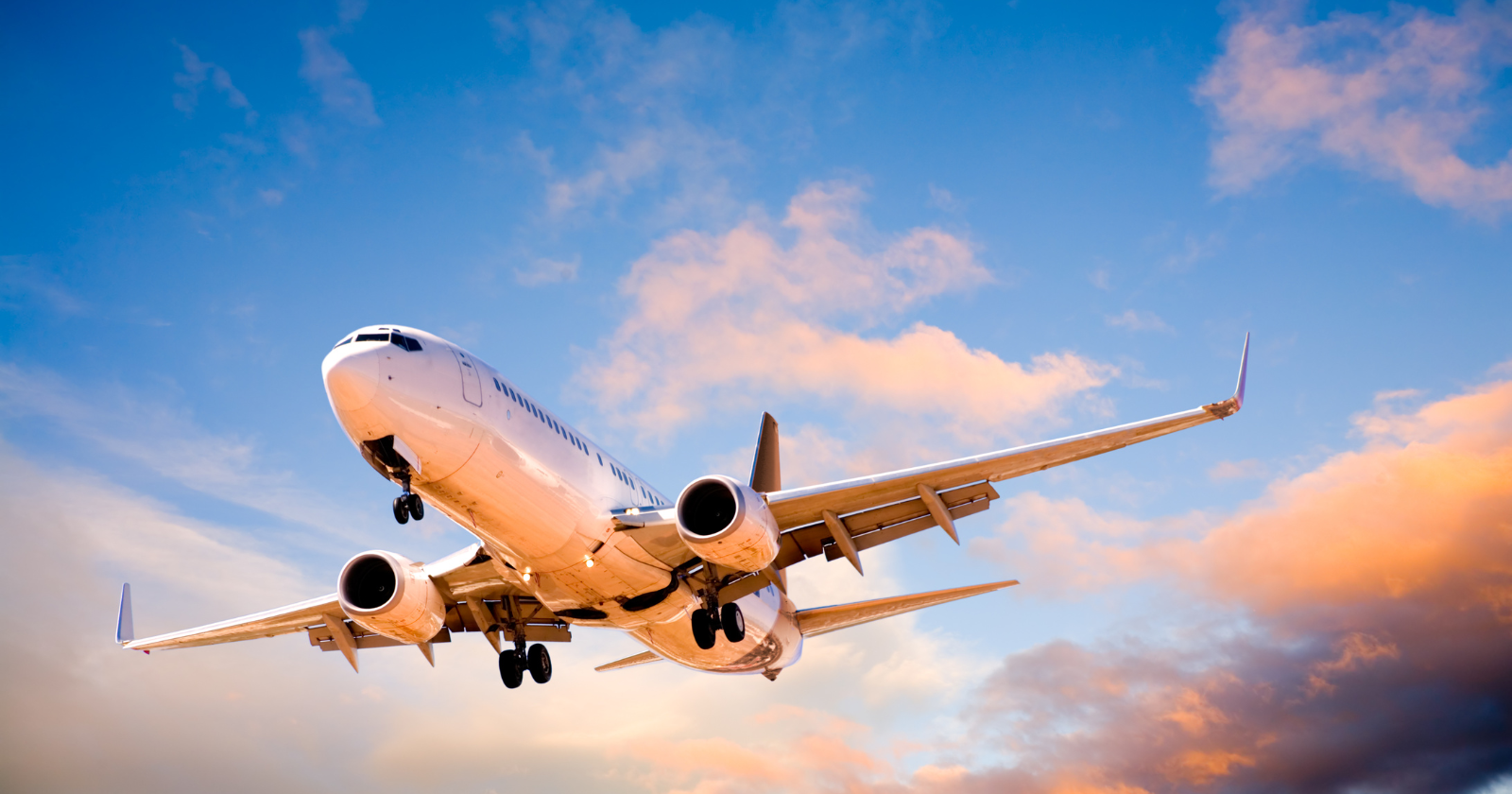
Singapore Airlines Flight SQ24 departs John F. Kennedy International Airport in New York at around 9:30 in the evening, lifts off into the Atlantic, and turns north. For most of the next 18 hours and 50 minutes, the aircraft flies a great-circle route across the Atlantic, through the upper latitudes near the Arctic Circle, across Europe and Central Asia, and finally south through Southeast Asia, before landing at Singapore Changi Airport in the local mid-morning two days after departure. The reverse flight, SQ23, runs the other direction from Singapore to JFK, typically routing over the Pacific Ocean and entering North America over Alaska. The two flights cover a great-circle distance of approximately 15,332 to 15,349 kilometres, depending on the specific routing on a given day, and are the longest scheduled non-stop commercial passenger flights anywhere in the world.
According to the Wikipedia reference on Singapore Airlines Flights 23 and 24, the JFK service launched on 9 November 2020. The route currently operates with the Airbus A350-900ULR — a specialised variant of the A350-900 designed specifically for ultra-long-range operations. The “ULR” designation stands for Ultra Long Range, and the aircraft’s principal modification over the standard A350-900 is a fuel-system reconfiguration that increased usable fuel capacity from 141,000 to 165,000 litres without requiring new physical fuel tanks. Singapore Airlines is the only airline in the world that operates this specific variant, with nine A350-900ULRs in service in 2026. The aircraft is configured with 161 seats in two classes — 67 business and 94 premium economy — and no economy cabin at all, a deliberate weight-reduction decision that helps make the ultra-long-range mission profile possible.
What the flight requires
The arithmetic of an 18-hour flight is more demanding than the figure suggests. The aircraft burns roughly 110,000 to 130,000 kilograms of jet fuel over the course of a single SQ24 service, with the exact figure depending on payload, weather, winds, and routing. That fuel burn represents nearly the entire 132,000-kilogram fuel capacity of the A350-900ULR. The flight crosses approximately 12 hours of time-zone difference between New York (UTC-5 in winter) and Singapore (UTC+8), although the great-circle route across high latitudes means the aircraft actually passes through fewer than 12 distinct longitudinal zones over the course of the flight. The cabin crew — typically four to five cabin crew sets working in rotation, with mandated rest periods — manage the service across two extended meal services, with passengers generally encouraged to follow a Singapore time-zone schedule for sleep and eating to minimise jet lag.
The aircraft’s range capability, according to a 2025 Simple Flying analysis of the route’s economics, is approximately 9,700 nautical miles, or just over 18,000 kilometres. The 15,300-kilometre Singapore-New York route uses roughly 85 percent of that range, leaving a margin for headwinds, diversions, and the regulatory fuel reserves that any commercial flight must carry. The A350-900ULR is also the longest-range commercial aircraft currently in service. The fact that the route is operationally possible at all is a function of incremental engineering improvements in airframe composition, engine efficiency, and fuel-system design that have accumulated over the past two decades. The previous generation of ultra-long-range aircraft, the Airbus A340-500, was used by Singapore Airlines for an earlier version of the New York non-stop route between 2004 and 2013, but consumed approximately 25 percent more fuel per seat and was retired as the route became economically unviable. The route’s relaunch in 2018 with the A350-900ULR represented the first time the technology had caught up to the geography.
What 15,000 kilometres of flight actually covers
The Earth’s circumference at the equator is approximately 40,075 kilometres. A great-circle flight of 15,300 kilometres covers roughly 38 percent of that distance — slightly more than one full turn through the planet’s circumference if reduced to a straight east-to-west traverse. Compared to historical reference points, the figure is genuinely large. The Roman Empire at its territorial peak under Emperor Trajan in 117 CE, encompassing 5 million square kilometres of land area spanning from Britain to Mesopotamia, stretched approximately 4,800 kilometres from west to east at its widest extent — roughly Portugal to the Persian Gulf. A single non-stop SQ24 flight, in other words, covers more than three times the linear east-west span of the Roman Empire at its territorial maximum, and does so in less than the time most people sleep in a single 24-hour cycle.
The flight also represents a meaningful fraction of the round trip across the entire planet. The shortest possible great-circle distance between any two points on Earth is half the planet’s circumference, approximately 20,000 kilometres, so the longest possible scheduled non-stop flight cannot exceed roughly 20,000 kilometres before the route would be shorter going the other direction. The Singapore-New York city pair is one of the very few major airport pairs on Earth that sits close enough to that theoretical antipodal maximum to push the limits of what current commercial aircraft can fly without refuelling. The geographic positions of the two cities — Singapore at 1.4° N latitude, New York at 40.6° N — leave them on roughly opposite sides of the globe, and the great-circle route that connects them necessarily passes over a substantial fraction of the Earth’s surface.
How long it really feels
Passenger accounts of the flight are surprisingly consistent in describing how 18 hours and 50 minutes structures itself, in practice, into a quiet two-meal-and-an-extended-sleep rhythm. The first meal service typically runs in the first two hours after departure from JFK. A long quiet period follows, with cabin lights dimmed for eight to ten hours, during which most passengers sleep across their lie-flat business-class seats or recline in premium economy. A second meal service runs in the final two to three hours before arrival in Singapore. The middle of the flight — the eight or nine hours during which the aircraft is over Greenland, the North Atlantic, Scandinavia, Russia, Central Asia, and Southeast Asia — is largely unmarked from inside the cabin. Passengers see the same darkened interior, the same in-flight entertainment system, the same flight-tracker map advancing slowly across an enormous and largely empty landscape.
The Singapore-New York route, according to Flightradar24’s 2025 review of the world’s five longest flights, will remain the world’s longest scheduled passenger flight at least until Qantas launches its planned “Project Sunrise” non-stop service between Sydney and London, planned for the late 2020s using the Airbus A350-1000ULR. The Sydney-London route, at approximately 17,000 kilometres, will exceed the Singapore-New York distance by roughly 1,700 kilometres and require around 20 hours of flight time. Until that route launches, SQ23 and SQ24 hold the records for the longest commercial flights ever operated on a regular schedule. The aircraft that flies them takes off with full tanks, climbs to cruise altitude over the Atlantic or Pacific, and then crosses more of the surface of the Earth in a single uninterrupted journey than the largest ancient empire ever administered at the height of its territorial power.
