
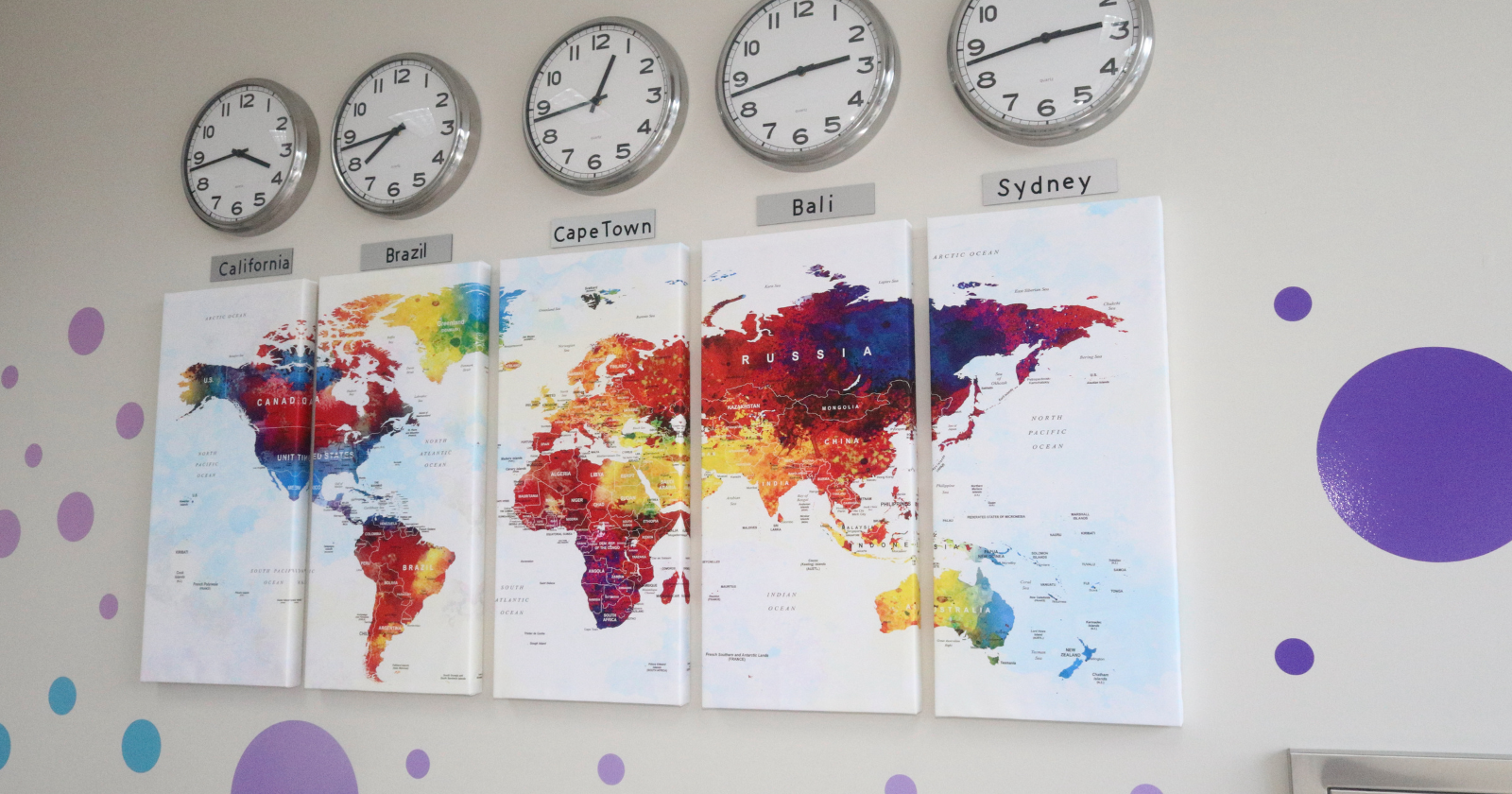
The map of the world hanging on the wall of nearly every classroom in the world, printed in the front of nearly every atlas, and displayed by default on Google Maps when most users open the application on their phones, is geometrically wrong about the sizes of countries. It always has been. The map is the Mercator projection, created by the Flemish cartographer Gerardus Mercator in 1569 for the navigational needs of the European age of sail, and the wrongness it produces is not a small error or a quirk of historical printing. It is a fundamental distortion built into the mathematics of the projection itself.
The most famous illustration of the distortion involves Greenland. On a standard Mercator map, Greenland appears roughly the same size as Africa. In reality, according to a 2025 Associated Press story carried by Fortune magazine, Africa is about fourteen times larger than Greenland. Greenland’s land area is approximately 2.16 million square kilometres. Africa’s is approximately 30.37 million. The Greenland that an attentive child traces with a finger from a wall map in Ohio or in Lagos, comparing its shape to that of the continent of Africa just below, is a Greenland that the Mercator projection has inflated by a factor of fourteen relative to how the two landmasses actually compare on the surface of the planet.
Why the projection distorts
The mathematical reason for the distortion is straightforward, and it was understood by Mercator himself when he designed the projection. According to a 2026 explainer by cartographers writing in The Conversation, Mercator was designing a map for sailors. The single most useful property a navigation map can have is that a straight line drawn on it corresponds to a constant compass bearing in the real world. A sailor who wants to set course due east-northeast can draw a straight line on the chart, point the ship along that bearing, and follow it without continuously recalculating. To achieve this property, called conformality, Mercator stretched the surface of the spherical Earth into a flat rectangle by mathematically expanding the spacing between lines of latitude as they approached the poles, in lockstep with the natural east-west stretching that occurs when you flatten a sphere into a cylinder.
The result preserves angles at every point on the map. A 90-degree turn on the ground produces a 90-degree turn on the map. Coastlines that meet at a right angle in reality meet at a right angle on the map. The cost is that area is not preserved. Lands at the equator appear at roughly their correct size relative to the global total. Lands at high latitudes appear vastly larger than they actually are, because the projection has stretched them in both north-south and east-west directions to maintain angular fidelity. Greenland, centred at about 72 degrees north, sits where the stretching factor is enormous. Africa, straddling the equator, sits where the stretching factor is approximately one. The visual comparison between the two landmasses on a Mercator map is therefore a comparison between heavily-inflated Greenland and undistorted Africa.
The same effect distorts every landmass at high latitudes. According to the Washington Post’s August 2025 interactive feature on the controversy, the United Kingdom on a Mercator map appears almost three times its actual size relative to equatorial landmasses. North America appears over four times its real size. Russia appears nearly twice the size it actually is. Antarctica is so badly distorted that it is typically cropped off the bottom of Mercator maps entirely, because including it accurately would produce a continent stretched into an infinite horizontal band.
How a navigation tool became the world map
The Mercator projection was never intended as a general-purpose world map. Its purpose was navigation, and within that purpose it was extraordinarily useful. The English, the Dutch, and the Spanish maritime powers adopted it for their charts during the 17th century. As European empires expanded, the Mercator map travelled with them. By the 19th century it had become the standard form in which Western publishers showed the world, partly through institutional inertia and partly because the projection’s flattering effect on northern European and North American landmasses suited the political sensibilities of the era. By the 20th century, the Mercator was the default map of the world in classrooms and atlases across Europe, North America, and most of the European colonial world.
The projection’s most recent expansion came through computing. When digital online mapping emerged in the 1990s and 2000s, the Mercator projection turned out to have a property that mattered for screen-based interactive maps: it tessellates cleanly into rectangular tiles at multiple zoom levels, with each tile bearing a consistent relationship to its neighbours. Google Maps, OpenStreetMap, Microsoft Bing Maps, and essentially every major digital mapping service adopted a variant of the Mercator projection (technically called “Web Mercator”) as their default. The same projection that 16th-century Flemish sailors used to plot rhumb lines across the Atlantic now structures the appearance of nearly every digital map on every smartphone in the world. Google Maps did add a 3D globe view as a desktop option in 2018, but the default mobile experience continues to show the Mercator-projected flat map.
The 2025 endorsement
The African Union’s August 2025 endorsement of replacing the Mercator projection was the most significant institutional support yet given to a decades-old campaign by cartographers and African advocacy groups. The campaign, which goes by the name “Correct the Map” and is backed by Africa No Filter and Speak Up Africa, has argued for years that the Mercator projection’s distortion is not a neutral mathematical curiosity but a long-term reinforcement of perceptions in which Africa and other equatorial regions appear smaller, less important, and more peripheral than they actually are. The AU’s 55 member countries voted to back the campaign and to formally support adoption of the Equal Earth projection, designed in 2018 by cartographers Bojan Šavrič, Tom Patterson, and Bernhard Jenny specifically to preserve area accuracy while remaining visually pleasing for general use.
According to Citi Newsroom’s December 2025 coverage of the campaign, the African Union also released an illustration showing the United States, the United Kingdom, Germany, France, Japan, Italy, Spain, Portugal, China, Peru, and India all fitting inside the outline of Africa simultaneously — a visual demonstration of how thoroughly the Mercator projection had compressed perceptions of the continent’s actual scale. The AU’s endorsement does not by itself change any classroom wall or any phone application. It does provide official institutional backing for what cartographers had been saying for decades. Mark Monmonier, the geographer at Syracuse University whose 1991 book How to Lie with Maps made him perhaps the world’s best-known critic of cartographic distortion, told the Associated Press in 2025 that the Mercator is “obsolete,” and that geographers have “long advised people to not use it as a world map.”
What the alternatives look like
The Equal Earth projection, which the AU specifically endorsed, is one of dozens of alternatives that cartographers have proposed over the centuries. Each makes its own tradeoffs. The Gall-Peters projection, developed in 1855 and revived in the 1970s, preserves area but distorts shape in ways that make familiar continents look unfamiliar (Africa elongated, Greenland squashed). The Robinson projection, used by National Geographic between 1988 and 1998, compromises between area and shape but is not mathematically rigorous about either. The Winkel Tripel projection, adopted by National Geographic in 1998, performs well across multiple distortion measures and is now widely used in atlases. The Equal Earth projection, the newest of the major alternatives, was designed to preserve area while remaining visually similar to the familiar appearance of Mercator-projected maps, so that the shift between projections does not look jarring to readers accustomed to the older view.
The shift, if it occurs, will not happen quickly. The Mercator projection has been the visual default for the entire world map for more than four centuries. Replacing it requires changing classroom posters, atlas reprints, news graphics, default settings on digital mapping platforms, and the unspoken mental image of the world that most adults carry with them from childhood. Africa, in the mental image most people now hold, occupies less space than it should. Greenland occupies more. The map on the wall has been telling the same small lie for 456 years, and only in 2025 did the largest institutional body on the continent most affected by the lie vote formally to ask the rest of the world to stop.
