
In the late 1950s, when the American oil reporter Wanda Jablonski travelled to Abu Dhabi, the town had no hotel, no paved roads and no electricity, and dinner at the one expatriate household was tinned meat or, as a treat, dugong stew. She had come because a British and French consortium was gambling that there was oil offshore, as documented by The National. Nobody had found any yet.
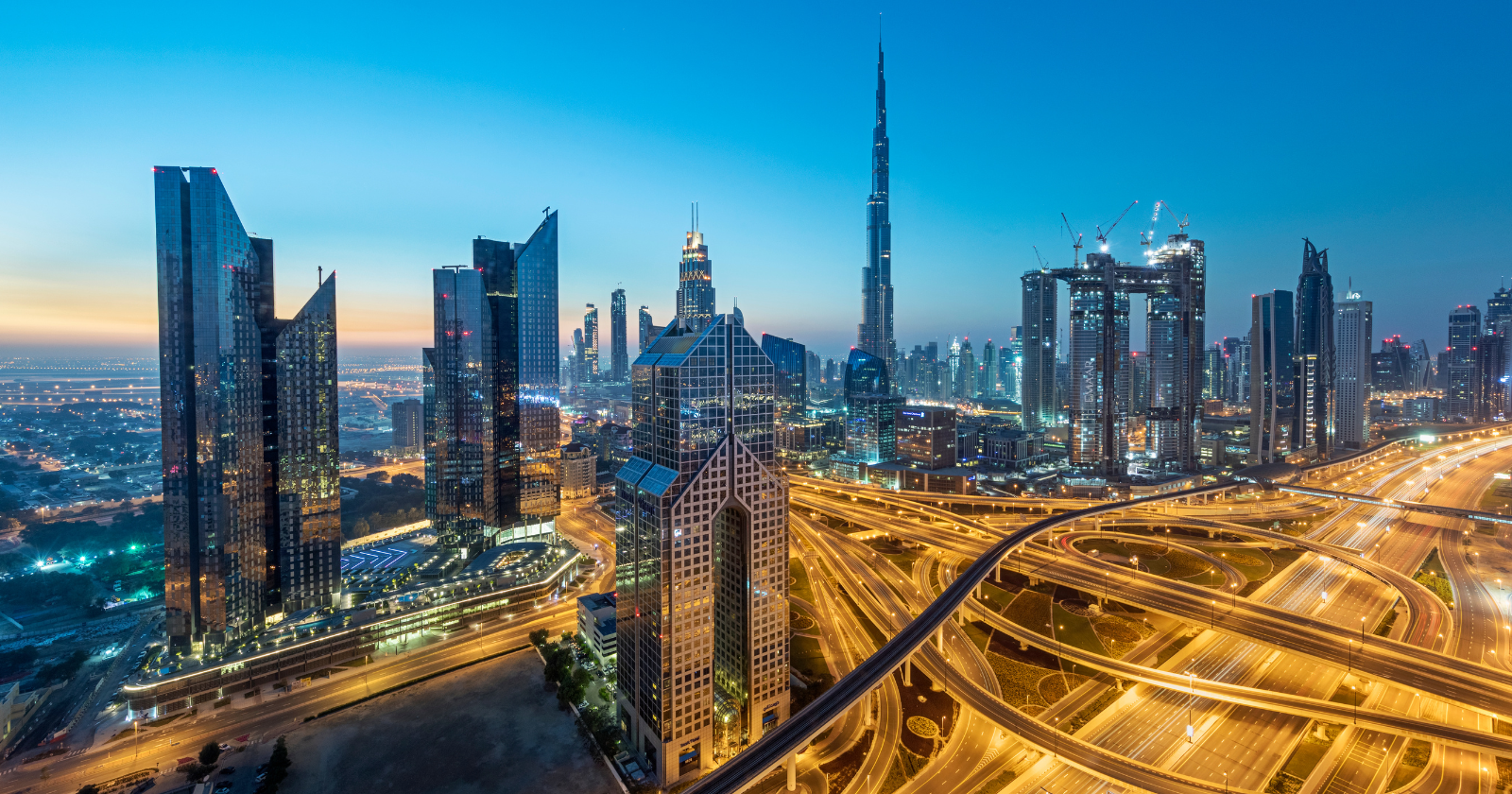
Roughly seventy years on, the same coastline carries the tallest completed building on earth, one of the busiest long-haul airlines in the world and a per-capita income that places it among the wealthier economies anywhere. The rise is real, and the popular version of it is mostly true. It is also compressed in a way worth straightening out, because the compression hides the part that explains the change.
When the country actually began
The United Arab Emirates did not exist as a country until 2 December 1971, when six of the seven emirates signed a federation agreement, with Ras Al Khaimah joining in February 1972. Before that there was no single government and no UAE. Seven sheikhdoms known as the Trucial States each had its own ruler, bound by treaties to Britain that ran back to the nineteenth century.
Calling the pre-oil coast a federation of fishermen and pearl divers is the one genuine slip in the familiar telling. A federation is the modern country, the thing that got built rather than the starting point.
Pearling belongs to an earlier chapter. Diving for natural pearls was the mainstay of the Gulf coast into the early twentieth century, and in some towns most working men spent the summer season aboard the dhows. That trade collapsed in the 1930s, undercut by Japanese cultured pearls and the Great Depression, decades before any oil money arrived.
Oil came later, and fast. Crude was struck offshore at Umm Shaif in 1958, and Abu Dhabi exported its first cargo in 1962, per the UAE government’s own history. Dubai began exporting in 1969. By the time the federation was signed in 1971, then, the pearl-diving era was already a generation gone and the oil era was nearly a decade old. That famous 55 years counts from 1971. The fishermen and pearl divers belong to a baseline further back.
The roads, and what their absence meant
Paved roads really were absent, though that needs context. As an NYU Abu Dhabi account of the period puts it, drawing on the work of the historian Matthew MacLean, the Trucial States had little need for paved roads because almost nobody owned a car. Until 1966 the currency in circulation was the Gulf Rupee, issued by the Reserve Bank of India. A first proper paved road, linking Abu Dhabi to the inland oasis of Al Ain, was built with early oil revenue in the 1960s.
What reshaped the physical landscape was not the federation but the decision by Abu Dhabi’s ruler, Sheikh Zayed bin Sultan Al Nahyan, to spend oil income on schools, housing, hospitals and roads through that decade. The building programme predated the country.
The building, the airline and the money
Three modern claims hold up, with one caveat. The Burj Khalifa in Dubai, at 828 metres, is the tallest completed building in the world. That title has an expiry date. Jeddah Tower in Saudi Arabia passed its hundredth floor in April 2026 and is on track to reach roughly 1,008 metres by around 2028, which would take the record, as reported by Newsweek. For now, and only for now, the tallest building on earth is in the UAE.
Emirates, based in Dubai, is among the largest international carriers by passenger traffic and operates the biggest fleet of Airbus A380s anywhere. That description is fair.
On the economy, the UAE’s GDP per capita sits around US$50,000, according to World Bank data, which places it firmly among high-income economies. The wealth rests heavily on hydrocarbons, particularly in Abu Dhabi, where oil and gas still account for a large share of output. Dubai, which has far less oil, is the emirate that pushed hardest into trade, aviation, property and tourism, and its skyline supplies most of the images the story trades on.
The part the short version drops
The tidy telling treats the change as a spontaneous leap from camels to skyscrapers. What it leaves out is that the shift was funded by one commodity and directed by a small number of rulers who chose to spend the proceeds on infrastructure rather than sit on them. Both facts matter. Oil accounts for the speed. The spending decisions account for why the money became ports, airlines and universities rather than simply leaving the country.
It is a fast change by any measure. It is not, though, the story of fishermen who woke one morning beside the tallest tower on earth. The pearl divers were gone before the oil arrived, the oil arrived before the country did, and the country spent its first decades building the thing the headline treats as its starting point.
