
By the Space Daily editorial team. This article describes the published science on sound masking and sleep. It is not a substitute for medical advice. Persistent sleep difficulty is worth raising with a qualified clinician.
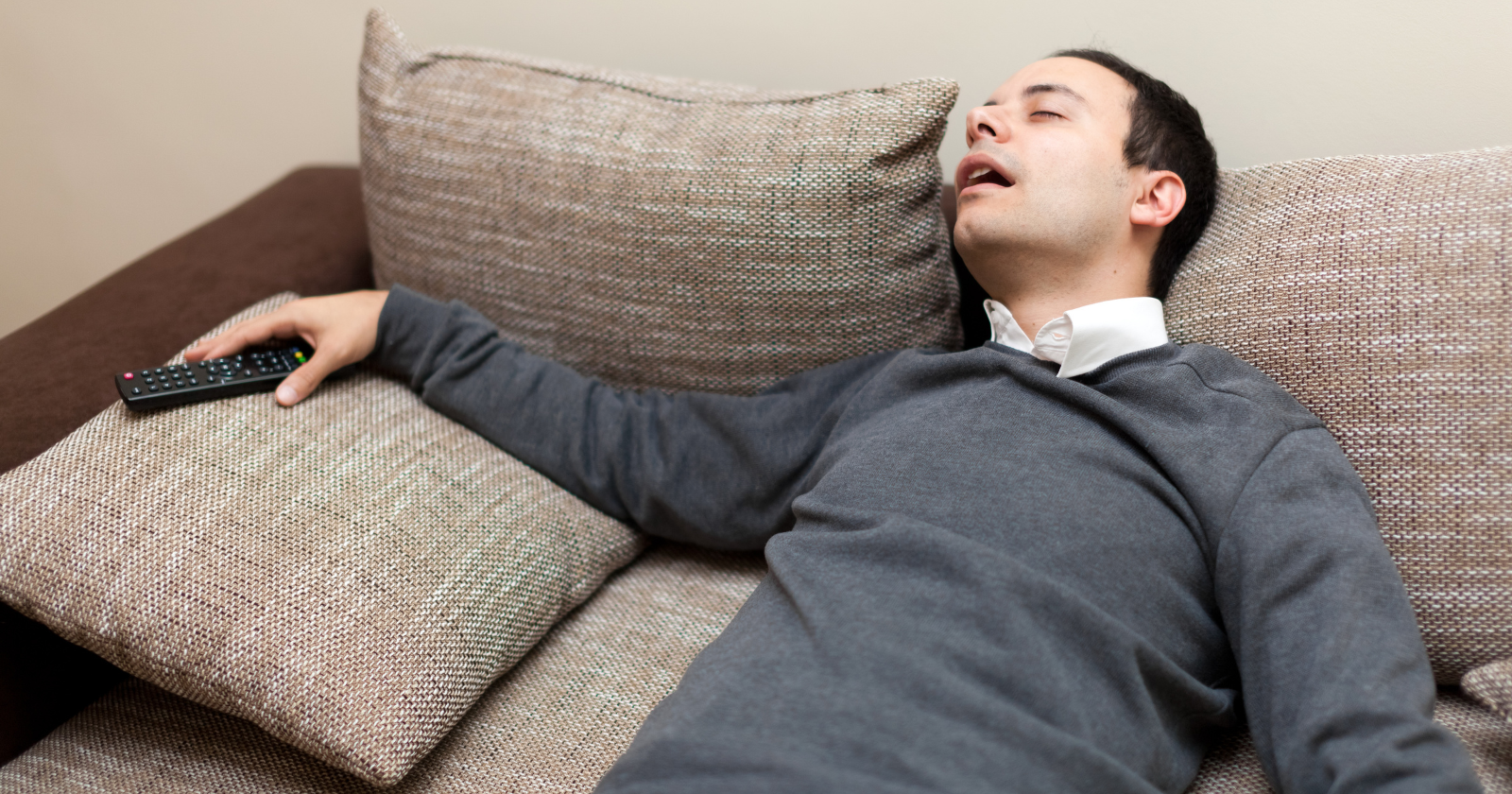
A substantial number of adults report sleeping better with the television on. The 2023 AASM Sleep Prioritization Survey, a poll of 2,005 American adults conducted by the American Academy of Sleep Medicine, documented widespread use of screens and sound at bedtime, with light and noise disruption identified as common contributors to fragmented sleep. The standard intuitive explanation for why a television seems to help, repeated in countless lifestyle articles, is that the soothing low-level chatter of late-night talk shows or familiar reruns is sedating, that the brain finds the steady murmur reassuring, that something about the television itself is putting the viewer under. Those explanations are incomplete. There is a real mechanism at work, and it is not sedation. It is sound masking, and once the mechanism is described properly, several things follow about how the television compares to other options.
What the television does, on the right settings, is mask the small environmental sounds that would otherwise interrupt sleep. The mechanism is a piece of basic acoustics applied to a piece of well-documented neuroscience. Almost any steady background sound at a comparable level would do approximately the same job. The television, for reasons set out below, is one of the worse ways to do it.
What the brain does with sound during sleep
The relevant piece of neuroscience is a brain wave called the K-complex. It is a sharp, brief electrical signal generated in the cerebral cortex during stage 2 of non-REM sleep, the lighter stage that takes up roughly half of a typical night. K-complexes were first identified in 1937 and have been studied intensely since. They have two recognised functions. One is internal: they appear spontaneously, contribute to the structure of stage 2 sleep, and seem to help the brain consolidate memory. The other is external: they are the brain’s standard response to a sudden environmental sound. A car door, a creak in the floorboards, a partner shifting position, all reliably trigger a K-complex in the sleeping brain.
If the sound is small and the sleeper is sleeping well, the K-complex passes without waking them. If the sound is larger, or the brain is already tilted toward arousal, the K-complex develops into a full EEG arousal, and the sleeper wakes up. According to a 2021 study in the journal Sleep, K-complexes are about twice as likely to occur in response to noise as full EEG arousals or awakenings, which means the brain is monitoring environmental sound continuously and only occasionally letting that monitoring tip into wakefulness. The threshold at which sound becomes disruptive is lower than most people assume. Noise above roughly 33 decibels, which is quieter than a normal whisper, was enough in the study to produce reliable K-complex responses. Above 39 decibels, the responses became full arousals.
The implication is that the difference between a good night of sleep and a fragmented one is partly a story about absolute environmental noise and partly a story about the gap between ambient noise and intermittent noise. A bedroom with a 25-decibel baseline that occasionally spikes to 45 decibels produces a 20-decibel jump, easily large enough to wake somebody. The same bedroom with a steady 40-decibel ambient sound, occasionally spiking to 45 decibels, produces a 5-decibel jump, which the brain often processes without disturbance.
Why masking works, and why “almost any steady sound” really does mean almost any
This is what acoustic engineers call sound masking, and it is the same principle used in open-plan offices, hospital wards, and high-end hotel rooms to reduce the disruptive effect of intermittent noise. The masking sound does not eliminate the intrusion. It reduces the relative magnitude of the intrusion, which is what the brain is actually measuring when it decides whether to escalate a K-complex into an awakening.
For practical purposes, almost any continuous broadband sound at the right level works. White noise (an even mix of all audible frequencies), pink noise (weighted toward lower frequencies and often described by listeners as more pleasant, closer to rainfall in character), and brown noise (weighted further toward the low end, often compared to deep ocean rumble) all mask environmental sounds with broadly comparable efficacy. Mechanical sources such as a fan, an air conditioner, or a humidifier work as well. The published research on which colour of noise works best for sleep specifically is mixed. According to a September 2025 perspective in the journal Sleep, two independent systematic reviews found no consistent evidence that white or pink noise reliably improves sleep outcomes in general adult populations. The same reviews noted that the most consistent benefits appeared in hospital-based studies, where masking of external disturbances had a clear measurable effect. The pattern is consistent across the literature. Sound masking helps when there is something to mask. It is less obviously useful in already-quiet environments.
This explains why people in noisy urban apartments, in houses near busy roads, in shared accommodation, or with light-sleeping partners tend to report the strongest benefits from background noise. The masking is doing real work because there are real interruptions to cover. It also explains why some people in quiet rural settings find that white noise actively makes their sleep worse. Without environmental sounds to mask, the masking sound is just an additional source of stimulus.
Why the television is one of the worse choices
If sound masking is the main acoustic mechanism, the television is a poor instrument for it. There are two reasons, both well-documented.
The first is acoustic. A television, unlike a fan or a noise machine, does not produce steady sound. It produces dialogue, music, sound effects, and advertisements at varying volumes. The dynamic range of a typical broadcast is wide enough that even with the volume turned low, the relative jumps between quiet and loud passages remain large. Commercial breaks are notoriously louder than the programmes they interrupt, despite various regulatory efforts to limit this. The result is that a television is doing the opposite of what good masking sound should do. Instead of producing a steady level that smooths over external interruptions, it produces its own irregular interruptions, layered on top of whatever is happening outside.
The second reason is light. Televisions emit substantial short-wavelength blue light, in the 450 to 480 nanometre range that the human circadian system is most sensitive to. According to a systematic review and meta-analysis published in the journal Sleep Health, evening exposure to LED-backlit screens reliably suppresses melatonin secretion and delays sleep onset. The effect is real even at relatively low light levels. The television’s typical viewing distance, several feet from the eye rather than inches, reduces the per-eye light dose compared to a phone or tablet held close to the face, but does not eliminate it. A bedroom television on across an entire night is delivering meaningful blue light exposure throughout sleep. The American Academy of Sleep Medicine and the American Academy of Pediatrics both recommend keeping screens out of the bedroom in the period before sleep, and specifically recommend not falling asleep with screens on.
The combined picture is that the television is providing a real masking benefit on the audio side, at the cost of disrupting the circadian system on the visual side, while producing audio that is suboptimal for masking purposes anyway. People who feel that the television helps them sleep are usually correct that something about the arrangement is helping. They are often wrong about which part.
What this suggests in practice
The honest version of the popular claim is narrower than the popular version. Background sound, for people who live somewhere with environmental noise to mask, can measurably reduce sleep disruption. The mechanism is acoustic masking of intermittent sounds that would otherwise produce K-complexes and arousals. The source of the masking sound does not matter much, as long as it is reasonably steady and at a reasonably consistent level. A fan, a noise machine, an air purifier, or a phone app playing brown noise will all serve the purpose, and will do it better than a television. None of these solutions emit light. None of them have commercial breaks. None of them will spike in volume when a car explodes in the show that was playing when the sleeper drifted off.
The popular intuition is doing the right thing for adjacent reasons. People who sleep with the television on are correctly noticing that something about the audio environment is helping them. They are misidentifying the cause. The television is not sedating anyone. It is performing a basic acoustic function that almost any continuous sound source could perform better, and the unique feature of the television, the moving picture, is the part of the arrangement most likely to be working against the sleeper’s interests.
Sleep difficulty that persists beyond ordinary occasional restlessness is worth discussing with a qualified clinician. Authoritative public-health resources on sleep are available from the American Academy of Sleep Medicine and the National Sleep Foundation. This article does not constitute a recommendation to use any specific sleep aid.
