
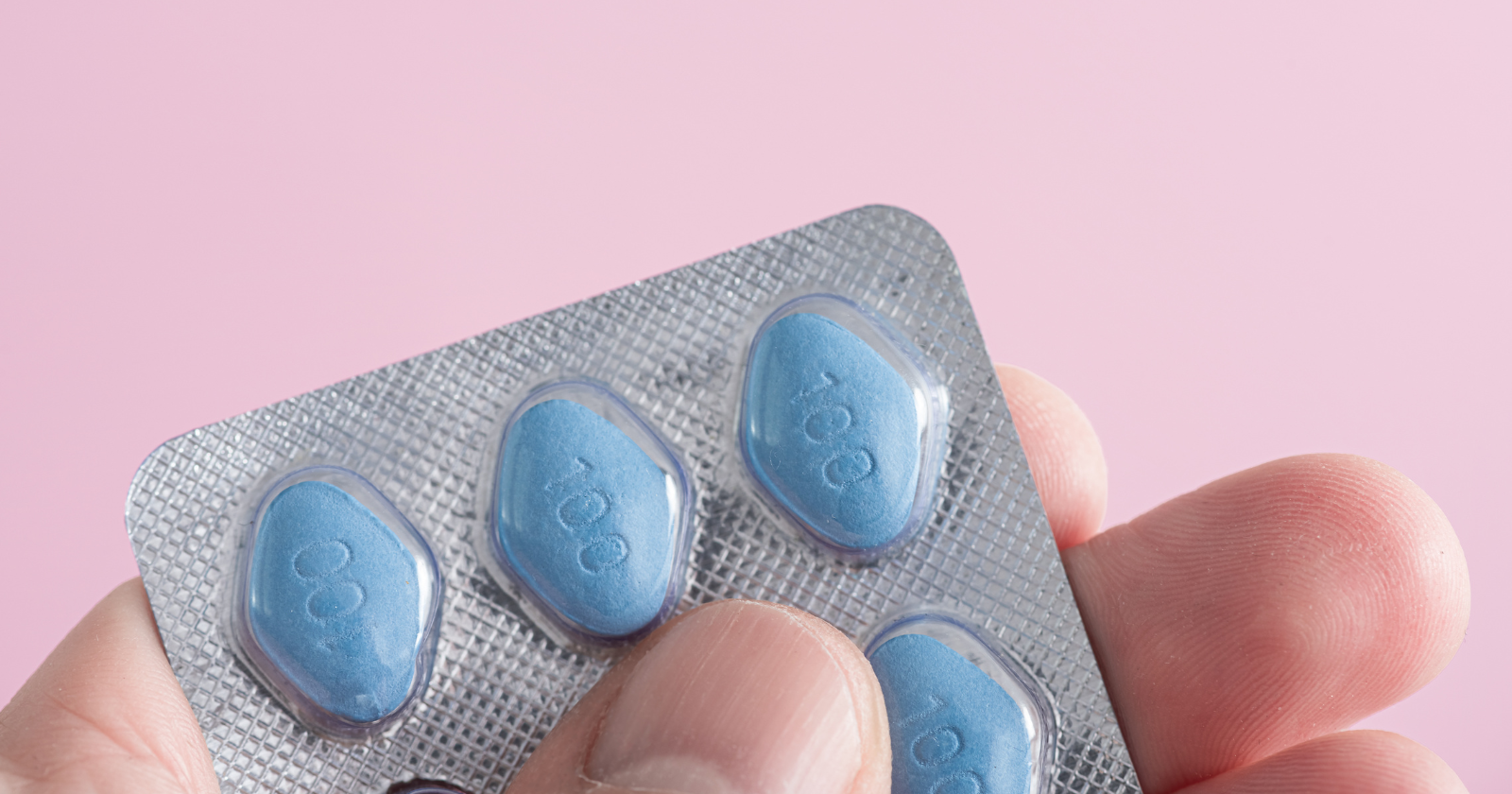
The most commercially successful pharmaceutical product of the late 20th century was, in essential respects, invented by a group of middle-aged Welsh men in a former mining town who refused to give back the leftover medication after their chest-pain trial was over. The Welsh trial nurses who collected the unused sildenafil tablets at the end of the 1991 angina study reportedly noticed that the men were less reluctant than usual to return the pills — they were, by several accounts circulated in subsequent Pfizer presentations, substantially more interested in keeping them. The interviews that the trial team conducted produced consistent reports of an unexpected pharmacological effect that the original trial protocol had not been designed to measure: improved erectile function. The volunteers were not, on the available demographic data, primarily men experiencing pre-existing erectile difficulties. They were middle-aged Welsh men recruited for an angina trial who had been given a compound that was supposed to relax their coronary arteries and who had instead noticed, with various degrees of surprise and pleasure, that the compound appeared to be doing something quite different to a different category of blood vessel entirely. The reports were unusual enough that the Pfizer clinical team felt obliged to formally document them. The documentation, in turn, prompted the company’s senior research leadership to consider whether the failed angina compound might, in fact, have a different commercial future than the one Pfizer had originally been developing it for.
The biochemistry that made the discovery possible was, in retrospect, straightforward. As described in the Royal Pharmaceutical Society’s Pharmaceutical Journal historical summary of sildenafil’s development and approval, the compound the Sandwich chemists had synthesised was a highly selective inhibitor of an enzyme called phosphodiesterase type 5 (PDE5), which the human body uses to break down a signalling molecule called cyclic guanosine monophosphate (cGMP) inside the smooth muscle cells of various blood vessels. Inhibiting PDE5 produces sustained elevations of cGMP, which in turn produces sustained relaxation of the surrounding smooth muscle, which in turn produces dilation of the affected blood vessels. The hypothesis that motivated Pfizer’s original research programme was that this mechanism, applied to the coronary arteries supplying the heart muscle, should produce relief from angina pectoris. The hypothesis turned out to be wrong about the coronary arteries — PDE5 is not, as it happens, particularly abundant in cardiac vascular tissue, and the compound’s effects on coronary blood flow were modest. It was, however, dramatically correct about a different category of vascular tissue. The corpus cavernosum of the human penis contains an unusually high density of PDE5 enzymes. Inhibiting them produces, in the presence of normal sexual arousal, the sustained vasodilation that the early Welsh trial volunteers had been unwilling to give up.
The pivot
The strategic decision Pfizer made in approximately 1992 was, by every available account of the company’s internal deliberations at the time, substantially controversial. The pharmaceutical industry of the early 1990s had no established commercial framework for treating erectile dysfunction as a primary medical condition. The available treatments — penile injections, vacuum pumps, surgical implants — were invasive, uncomfortable, embarrassing for both physicians and patients to discuss, and (most relevantly to Pfizer’s commercial calculations) generated only modest commercial revenue, suggesting that the addressable patient population was small. Erectile dysfunction was, in the medical culture of the period, primarily a topic for urologists and a substantial source of embarrassment for the patients who consulted them. As detailed in a Drugs.com summary of Viagra’s clinical development and commercial trajectory, Pfizer’s pivot was therefore not merely a question of redirecting an existing compound from one indication to another; it was a question of whether Pfizer wanted to create the broader cultural infrastructure — patient awareness, physician comfort, advertising frameworks, insurance coverage — that would be required to convert the unmet need for an oral ED treatment from a hypothetical market into an actual one.
The decision was made. The clinical trials that followed, conducted between 1993 and 1997, focused exclusively on erectile dysfunction rather than the original angina indication. The phase III pivotal trial results were published in the New England Journal of Medicine in 1998. The FDA approved sildenafil for the treatment of erectile dysfunction on 27 March 1998, under the brand name Viagra. The drug went on sale in the United States in April. By the end of its first 12 months on the market, Viagra had generated more than $1 billion in revenue — at the time, the fastest initial sales growth of any prescription drug in the recorded history of the American pharmaceutical industry. The company’s senior research leadership, who in 1992 had been substantially uncertain about whether the ED indication was commercially viable, had substantially underestimated the size of the underlying patient population.
What the pill did to the broader market
The broader cultural and pharmacological effects of Viagra’s 1998 launch have, in the years since, been treated as one of the more consequential single drug introductions in modern medical history. As described in an American Chemical Society publication summarising Viagra’s patent history and its broader pharmacological influence, the success of sildenafil established phosphodiesterase inhibition as a clinically validated pharmaceutical target, opened the commercial pathway for two subsequent FDA-approved competitor drugs (Cialis/tadalafil and Levitra/vardenafil, both approved in 2003), normalised the public discussion of erectile dysfunction to a degree that the medical profession had previously considered impossible, and (perhaps most consequentially in clinical terms) substantially increased the rate at which middle-aged men consulted physicians about erectile difficulties — leading to the incidental detection, in many of those men, of the underlying cardiovascular conditions that erectile dysfunction often precedes by several years. The drug became, in essential respects, an unexpected diagnostic instrument for detecting early-stage vascular disease in male patients who would not otherwise have presented for routine cardiac screening.
The compound itself has also acquired a substantial number of secondary indications across the decades since its original approval. Per an academic analysis of how Pfizer’s pivot from angina to erectile dysfunction redefined the broader pharmaceutical and cultural treatment of male sexual health, sildenafil is now approved (under the alternate brand name Revatio) for the treatment of pulmonary arterial hypertension — an entirely different cardiovascular indication, in which the drug’s PDE5-inhibiting effects on pulmonary blood vessels produce substantial improvements in patients with severe lung circulation problems. It has been studied for the prevention of high-altitude pulmonary oedema. It has been administered (off-label, controversially) to athletes seeking enhanced blood flow during endurance events. It has been investigated as a potential treatment for the cognitive symptoms of multiple sclerosis through its effects on cerebral blood flow. The original Welsh angina volunteers who, in 1991, were unwilling to return their unused sildenafil tablets to the trial nurses had, without realising it, accidentally identified one of the more commercially and culturally consequential side effects in the recorded history of pharmaceutical research. The compound has, since their original 1991 reports, been prescribed several billion times globally; has generated approximately $35 billion in cumulative Pfizer revenue across the first two decades following its 1998 approval; and remains, in its current generic and brand-name forms, one of the more widely-recognised pharmaceutical products of the early 21st century — derived, in essential respects, from a compound that did not work for the disease it was originally designed to treat.
