
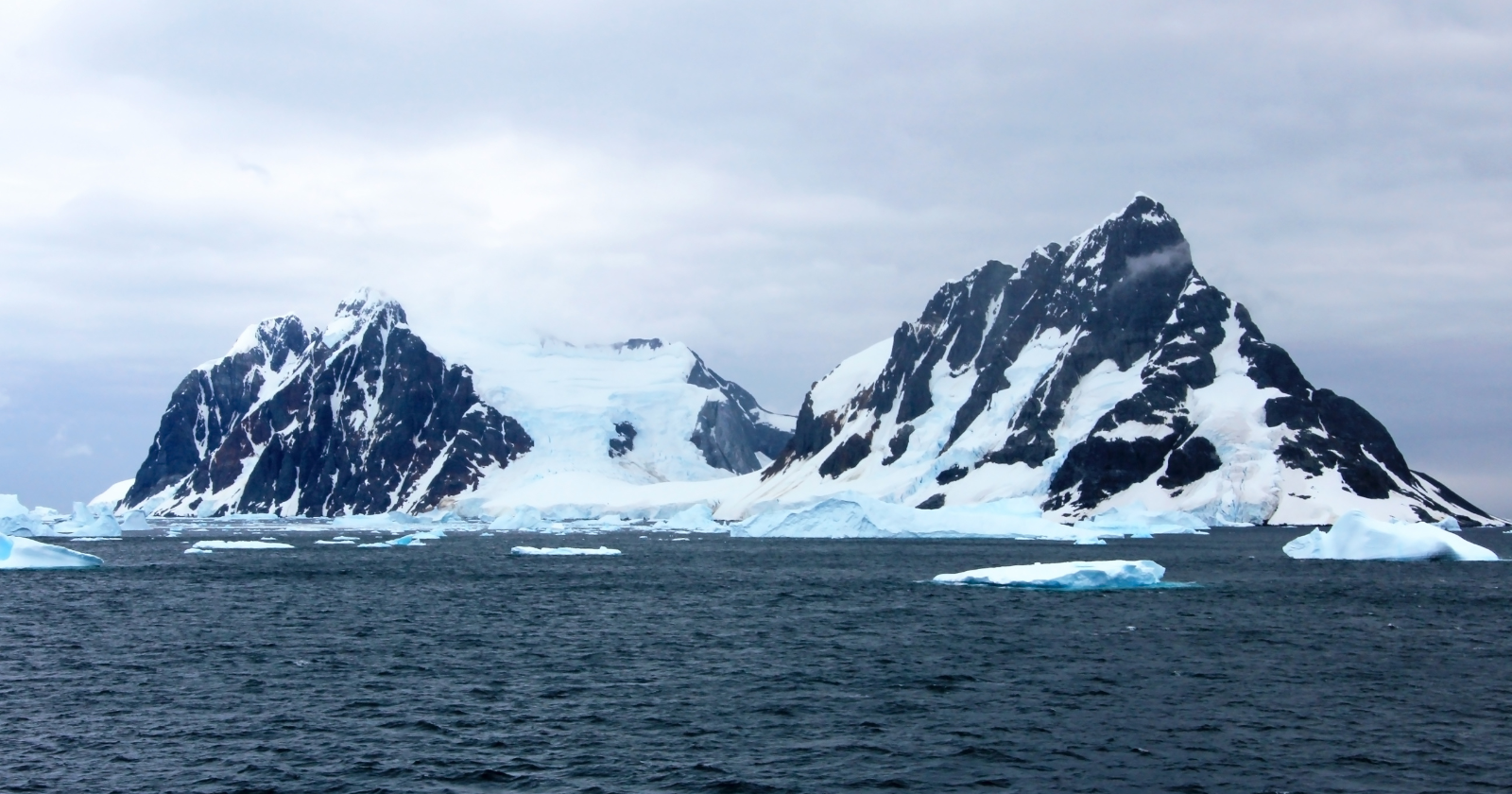
The first dinosaur ever confirmed from Antarctica had been sitting in a drawer for forty years. Mike Thomson, the BAS geologist who picked the fossil up off the surface of James Ross Island in December 1985, was not a dinosaur specialist. He was a geologist mapping the rock strata of the Late Cretaceous marine formations on James Ross Island for stratigraphic purposes — a routine BAS expedition whose primary aim was to produce the rock-dating framework that subsequent palaeontological expeditions to the same region would eventually need in order to interpret their finds. As reported by BBC News’ coverage of the formal identification of the Antarctic titanosaur fossil, Thomson recognised that the bone he had collected belonged to some kind of large reptile, recorded it as such in his notebook, included it in the expedition’s specimen inventory, and assumed that subsequent specialist analysis would identify the species. The specimen-identification process for material returned from BAS Antarctic expeditions was, in the 1985 institutional context, substantially backlogged. The bone went into the geological collection. The expedition team’s working assumption was that the bone was probably from a marine reptile of some kind — a plesiosaur, a mosasaur, an ichthyosaur — given that the rock formation it had been recovered from was marine in origin. The next several decades produced more pressing curatorial priorities.
According to the Natural History Museum’s official announcement of the formal identification of the Antarctic titanosaur fossil, the rediscovery occurred when Mark Evans — the curator of BAS’s geological collections, appointed approximately five years ago — began systematically reviewing the holdings of the Cambridge facility. The Thomson specimen, sitting in its drawer with Thomson’s 1985 field notebook entry as essentially its only documentation, caught Evans’s attention. The bone did not, to Evans’s eye, look like the marine reptile material the original 1985 expedition team had assumed it to be. The shape of the vertebra — the characteristic ball-and-socket articular surfaces, the proportions of the centrum, the position of what appeared to be the neural arch — was characteristic of sauropod dinosaur tail vertebrae, not of the marine reptile groups that the BAS team had been expecting. Evans contacted Paul Barrett, a senior dinosaur palaeontologist at the Natural History Museum in London, and asked him to examine the specimen in person.
What the bone actually tells us
Barrett’s confirmation, delivered after detailed examination of the specimen against the broader comparative literature on Cretaceous sauropod vertebrae, was that the bone was a titanosaur caudal vertebra — specifically, a tail bone from a member of the titanosaur clade, the group of long-necked sauropod dinosaurs that included the largest land animals ever known to have existed. As detailed in Euronews’s coverage of the formal announcement, the largest titanosaur species — Argentinosaurus, Patagotitan, Dreadnoughtus — exceeded 35 metres in length and 60 tonnes in body mass, and inhabited the southern continents (primarily what is now South America and Africa) during the Late Cretaceous. The James Ross Island specimen represents a substantially smaller individual: the size of the vertebra suggests an animal approximately seven metres in length, which is at the low end of the titanosaur size range and may represent either a juvenile of a larger species or an adult of a smaller titanosaur. The rocks the bone was recovered from are dated to the early Campanian stage of the Late Cretaceous, approximately 82 million years ago — a period during which Antarctica was still connected to southern South America via a continuous land bridge, was covered in temperate forests of ferns, palms, and conifers rather than the ice sheet that subsequently developed, and was a substantial ecological habitat for the dinosaur faunas that the broader Gondwanan landmass had been supporting throughout the Mesozoic.
The substantive scientific significance of the identification extends beyond the symbolic significance of being the first confirmed Antarctic dinosaur. Per a ZME Science analysis of the Barrett et al. paper and its broader paleontological implications, the James Ross Island vertebra resembles material that has previously been associated with the South American titanosaur Muyelensaurus pecheni, suggesting that the southern South American and Antarctic Late Cretaceous dinosaur faunas were substantially continuous across the now-vanished Antarctic Peninsula land bridge. The find also bears, indirectly, on a long-standing puzzle in Mesozoic palaeontology: the apparent absence of the later, South American-related titanosaur lineages (such as the rinconsaurians and aeolosaurines that the new Antarctic specimen most closely resembles) in the Australian fossil record, despite the well-documented presence of earlier-diverging Australian sauropods such as Diamantinasaurus and Savannasaurus, and despite Australia having been part of the same Gondwanan continental complex as Antarctica and South America during the relevant period. The Antarctic confirmation suggests that the relevant titanosaur lineages did, at minimum, reach the Antarctic Peninsula — which implies they had the opportunity to disperse further south and east toward Australia. Why they apparently failed to do so (or why the Australian fossil record has so far failed to preserve evidence of them) remains an open question. The James Ross Island fossil, which sat in its Cambridge drawer for forty years between its original 1985 collection and last week’s formal identification, is the first piece of evidence that the question is even worth asking.
