
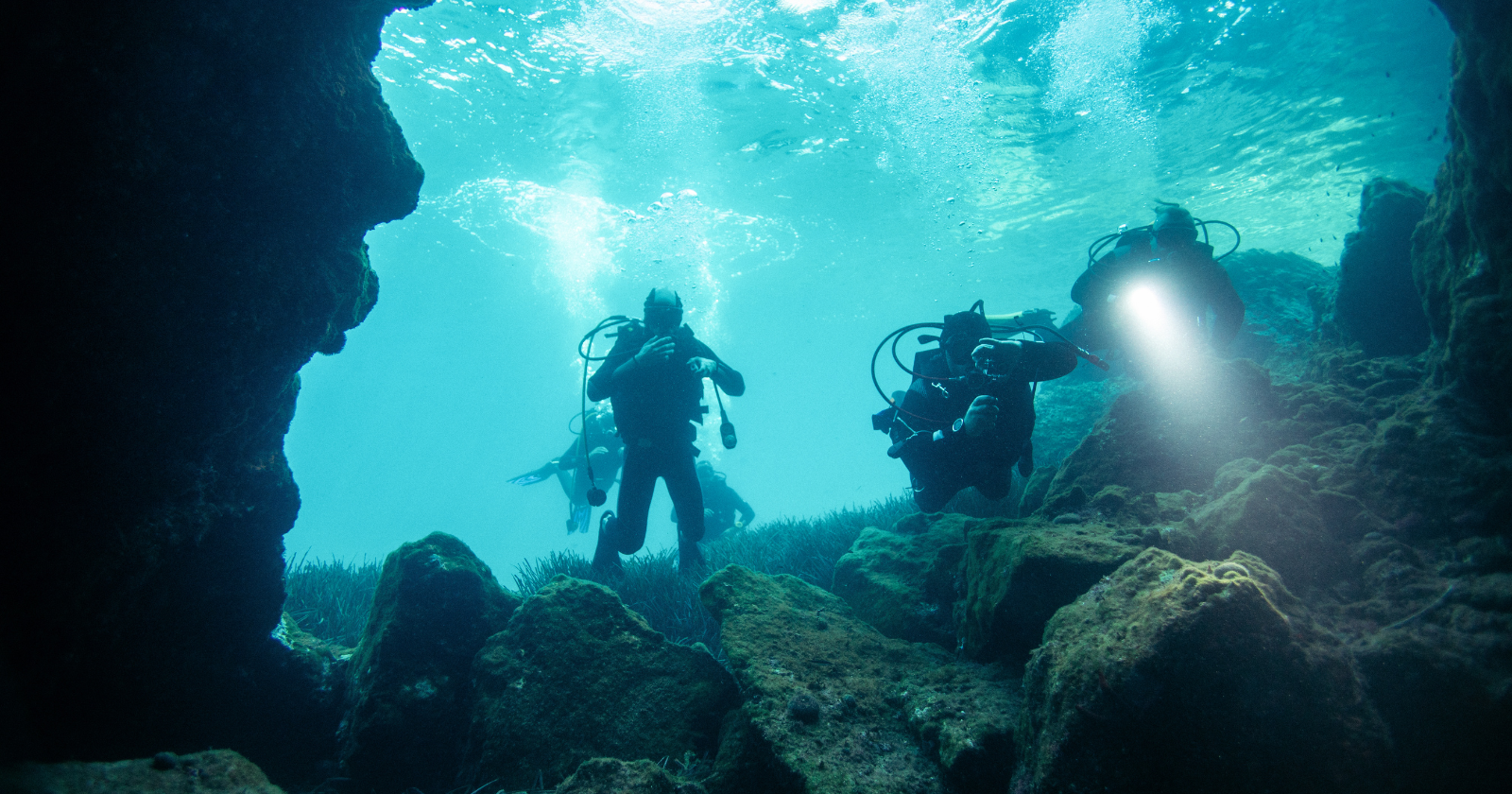
Seven villagers in central Laos were trapped inside a flooded cave from May 19, 2026, after going in to search for gold and being sealed in by flash floods triggered by heavy rain. Five were later brought out alive, two remained missing, and the search inside the cave was suspended on June 6. The account below describes the operation as it stood in late May; see the update at the end. The site is in Xaisomboun province, about 120 kilometers north of the Lao capital Vientiane, in the Long Cheng district. Reaching the cave’s entrance requires a steep four-kilometer hike on foot. The entrance itself is narrow enough that only one person at a time can climb through. The interior, on the available rescue accounts, contains sections of tunnel just 60 centimeters wide.
One member of the original group escaped before the exit was blocked and alerted authorities. The seven inside had not been in contact with anyone since the flood. Rescuers believed they might be on an elevated ledge approximately 30 meters beyond the furthest point the teams had been able to reach. Lao state media reported that the ledge benefited from continuous airflow, which was the basis for the cautious optimism the teams were expressing publicly at the time.
What the rescue is actually facing
The tunnel the rescuers worked their way through is 340 meters long. The CNN coverage of the operation documents the sections at 60 centimeters wide, where rescuers cannot walk and have to crawl. Divers had at that stage navigated approximately 100 meters into the flooded portions of the cave. The remaining 240 meters, including the narrowest sections, was what the operation was working to traverse.
The terrain above ground made the work considerably harder than the underground work alone would suggest. The mountainous region around the cave received heavy rain that, on multiple occasions, forced divers to retreat. The Thai rescuer Chakkit Taengtan, in a video posted to his Facebook page, described the conditions directly: when the teams went down into the cave, the water level was rising, and they had to move out. The rain was what trapped the villagers. The rain was also what prevented the rescue from proceeding at the pace the situation warranted.
Approximately 100 people from Laos and Thailand were at the site, working the cave directly, pumping water out of the flooded sections, and exploring possible air shafts above the cave system that might offer alternative access. The CBS News coverage notes that Bounkham Luanglath, president of the Lao volunteer organization Rescue Volunteer for People, described the situation as a humanitarian emergency and called for further Thai assistance.
Why the Thai divers are there
The Thai divers who worked the cave were not a random international contingent. The divers include members of the same teams that participated in the 2018 Tham Luang cave rescue in northern Thailand’s Chiang Rai province, when twelve members of a youth soccer team and their coach were trapped for eighteen days inside a flooded cave and successfully extracted in an operation that drew global attention. The Hook 31 foundation from Nakhon Ratchasima, which specializes in rescue diving and contributed to the 2018 effort, was one of the Thai groups involved in the Laos operation.
The 2018 rescue produced, in the wider region’s emergency response infrastructure, a small specialized community of divers and rescue workers who had actually performed the kind of work required in Xaisomboun. The community has, in the years since, also responded to other emergencies in the wider region, including the 2018 collapse of the Xe-Namnoy hydropower dam in southern Laos, in which the same Thai teams rescued fourteen people including a baby. The community is, in some real way, what the wider region has in the way of dedicated cave-rescue capacity. It reassembled in central Laos for this operation.
What is and is not currently known
At the time of the original reporting, the status of the seven was unknown. No contact had been established, no proof of life had been reported, and the 30-meter gap between the furthest reached point and the suspected location had not been closed. The teams worked continuously from the moment the alarm was raised, but conditions did not allow them to proceed faster than they did.
The villagers had been entering the cave to look for gold despite repeated safety warnings from Lao authorities. The Washington Post coverage notes that Xaisomboun province is known for its sweeping valleys and rich mineral reserves, which is the reason villagers frequently visit the site. The warnings had not prevented the entries. The operation was, in some real way, the structural consequence of the gap between the warnings and the economic pressures that produce them.
The acknowledgment this article wants to leave
Seven villagers entered a cave in central Laos in May 2026 to look for gold. The rain came. The exit closed. One member of the group got out before it did. The teams that went in for the others did what the conditions allowed, and they included some of the same divers who saved the soccer team in 2018, who had become, by structural necessity, one of the small handful of groups in the wider region equipped to do this kind of work.
The work was slow. The work was dangerous. It was conducted on a timeline the trapped villagers may or may not have had. The most recent reports from AP describe the operation continuing into a seventh day, with the teams exploring air shafts above the cave system as an additional possible route. The work to reach the people inside was done by teams who had, in some real way, done this before, and who knew what it costs.
Update, June 2026: This report was published while the operation was under way. Five of the villagers were brought out of the cave alive and two remained missing. On June 6, 2026, the Xaysomboun Provincial Disaster Management Committee suspended the search, citing persistent heavy rain, water levels the pumps could not bring down, rockfalls at the cave entrance and sediment blockages inside the cave system. The Lao News Agency (KPL) reported that cave-diving specialists from seven countries took part in the operation before it was called off.
